South Korea has moved to formalize talks with AMD, Nvidia and Intel over the AI semiconductor supply chain, underscoring how shortages of memory, substrates and other components could slow one of the industry’s fastest-growing markets.
South Korea Meets AMD, Nvidia, Intel on AI Supply Chain

The government meeting matters because AI chip demand is no longer constrained only by cutting-edge processors. As data centers expand, the bottlenecks are increasingly shifting to high-bandwidth memory, LPDDR and package substrates — inputs that determine whether chipmakers can ship systems at scale and at acceptable margins. For investors, that means the AI trade is widening beyond GPU makers to memory suppliers, substrate producers and the broader ecosystem that turns silicon into deployable infrastructure.
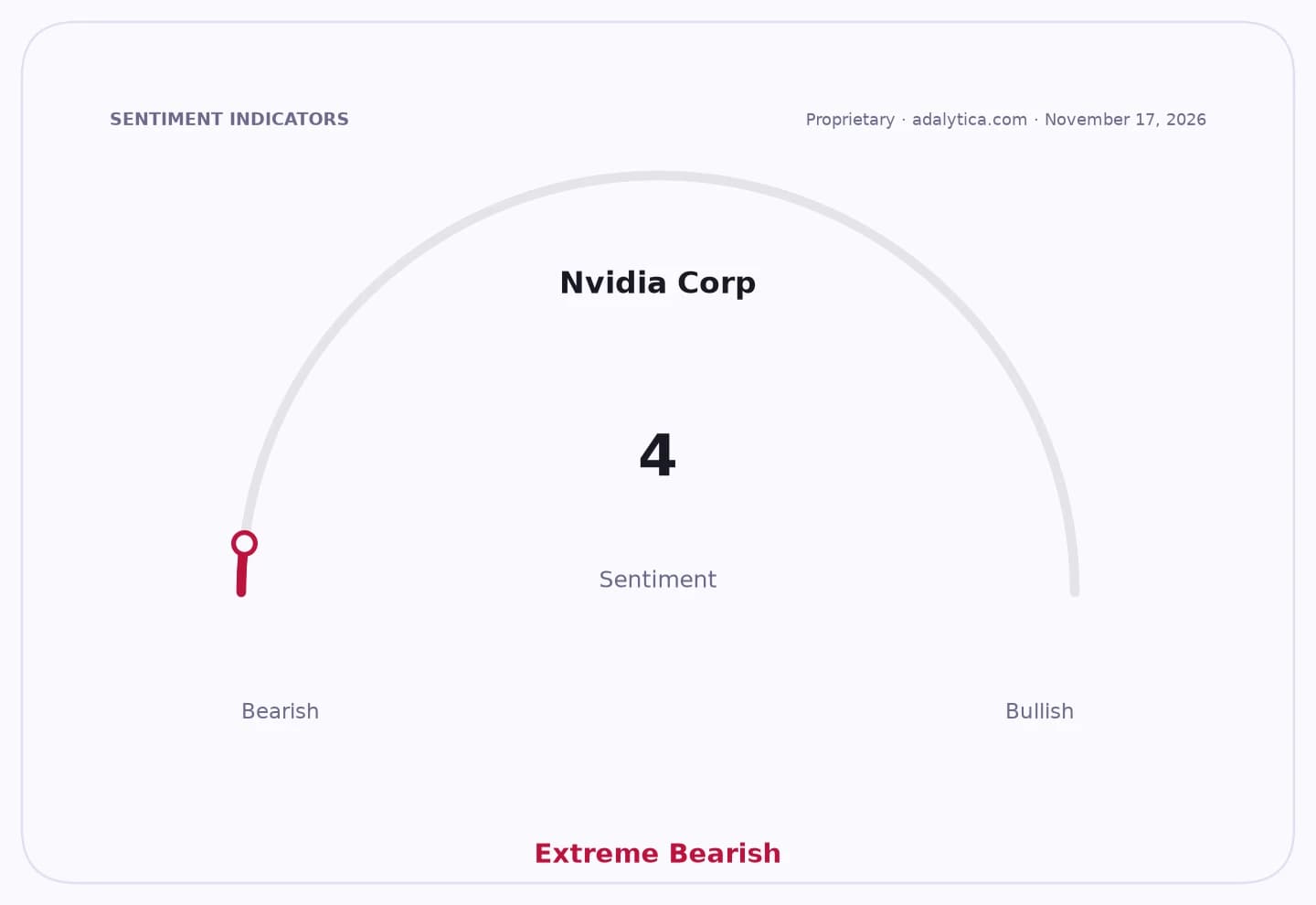
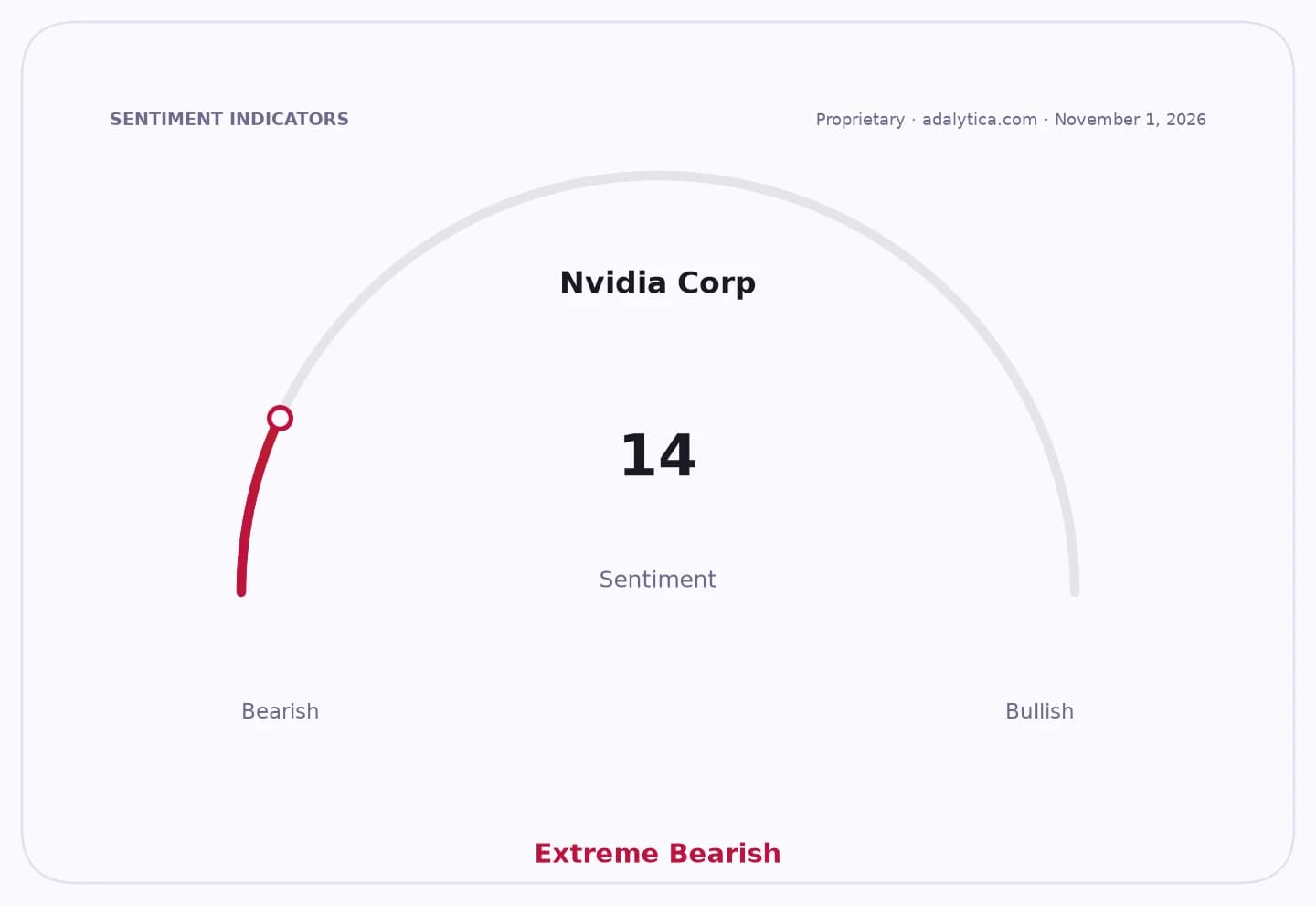
Sentiment Indicators
South Korea’s science ministry said it convened 24 companies in Seoul, including the local units of AMD, Nvidia and Intel, alongside domestic NPU developers such as FuriosaAI, Rebellions and DeepX. The discussion was built around a simple but economically important problem: global partnerships are accelerating, but supply-chain fragility could prevent those deals from translating into revenue.
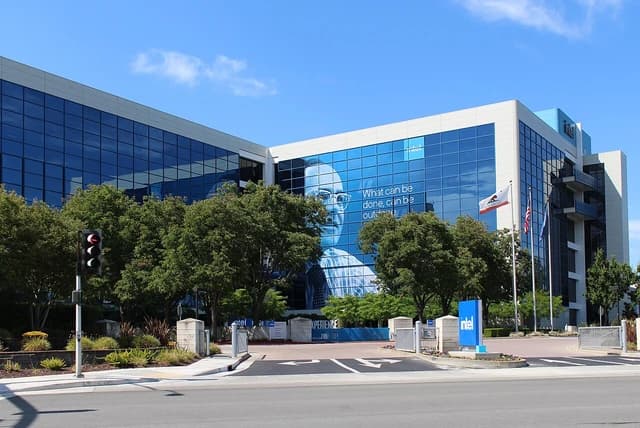
AMD has signed a memorandum of understanding with FuriosaAI and MangoBoost to build an open, heterogeneous AI infrastructure platform. Nvidia is working with SK Telecom and Rebellions on an AI infrastructure project based on NVLink Fusion. Intel has launched a “K-AI Full-Stack Alliance” with 23 Korean companies. Those collaborations point to a wider shift in the AI market, where hyperscalers and national industrial policy are increasingly pulling chipmakers into regional ecosystems rather than one-off hardware sales.
Nvidia Corp
The stakes are especially high for smaller firms. The ministry said startups and fabless companies with limited purchasing power are struggling to secure supply, even as demand for AI data-center buildouts lifts orders for HBM, LPDDR and advanced substrates. That creates a two-tier market: large buyers with negotiating leverage can lock in supply, while smaller designers face higher costs, longer lead times and a greater risk of delayed product launches.
That dynamic matters for the semiconductor cycle. If memory and packaging capacity remain tight, gross margins can be squeezed across the stack even when AI accelerator demand is strong. It also raises the risk that some of the industry’s most visible partnership announcements will stay at the pilot stage unless suppliers, customers and government agencies coordinate on volumes, pricing and qualification timelines.
The policy backdrop is becoming more complicated as well. Officials discussed shifting US AI and data-center policy, as well as the impact of global investment strategies, a reminder that export controls and geopolitical alignment are now part of the commercial calculus. South Korea is trying to position domestic AI semiconductors for overseas expansion while also pushing more local AI data-center construction, effectively seeking to turn external uncertainty into industrial opportunity.
Nvidia’s recent share-price swings reflect how sensitive the market has become to those crosscurrents. The stock has fallen sharply from a recent peak above $227 in late August to about $155.38 on Nov. 24, while its 50-day moving average sat around $204.95, a sign of weakened momentum even as the company remains central to the AI capex trade. AMD has also been volatile, dropping to $413.27 on Nov. 24 from above $550 on its 50-day average, reflecting investor uncertainty over the durability of AI demand and the speed of commercialization. Intel, meanwhile, has continued to trade around the high-$50s after a year of extreme swings, underscoring how investors are still trying to separate AI relevance from execution risk.
| Entity | Gains | Losses |
|---|---|---|
| AMD, Nvidia, Intel | ▲Broader ecosystem access | ▼Supply-chain execution risk |
| Korean memory and substrate makers | ▲Higher demand, pricing power | ▼Capacity strain |
| Startups and smaller fabless firms | ▲Government attention | ▼Limited bargaining power |
| AI data-center builders | ▲Potential policy support | ▼Higher component costs |