South Korea will freeze next year’s official home price realization rate at 69.0%, but the bigger market consequence is that the burden of rising property values is shifting away from luxury-heavy Gangnam districts and toward mid- to lower-priced neighborhoods in Seoul and fast-rising southern Gyeonggi Province.
South Korea freezes home price realization rate at 69%
The decision means the government’s benchmark for calculating property holdings taxes will stay unchanged for a fifth straight year, limiting an automatic jump in tax bills at a time when home prices have already risen sharply. But with Seoul apartment prices up 8.91% through the third week of November, and the main gains concentrated outside the traditional high-end enclaves, investors and homeowners are facing a far more uneven tax map next year.
Officials opted to keep the realization rate steady after unveiling tax reforms in August that already point to heavier levies on expensive homes and non-primary residences. Raising the ratio on top of those changes would have compounded holding costs, especially in a market where prices remain elevated but the leadership of the rally has changed.
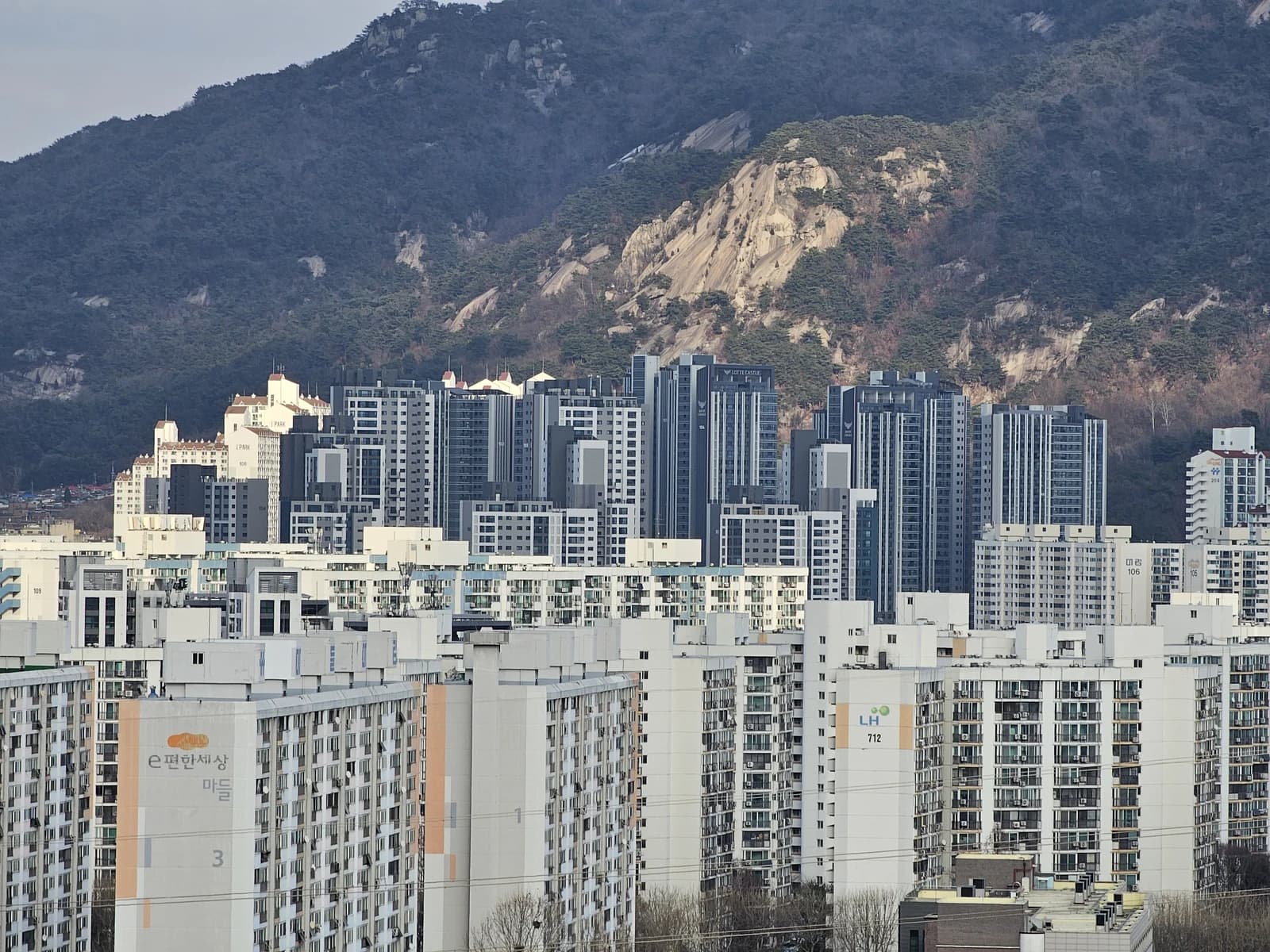
That shift matters because last year’s tax pain was concentrated in Gangnam and the city’s affluent river belt, where prices surged the most. This year, the stronger gains are coming from places such as Seongbuk, Seodaemun, Guro, Gangseo, Dongdaemun, Gwanak and Nowon, where annual price increases were far smaller in 2024 but have accelerated enough to feed a new round of official appraisals.
South Korea’s official apartment prices are based on January 1 market values multiplied by the realization rate, which will remain at 69.0% for 2026. The policy locks in the fifth consecutive year without an increase, but it does not prevent individual tax bills from rising where market prices have climbed sharply.
The biggest market risk now sits in southern Gyeonggi, where semiconductor-driven demand has pushed prices higher in places including Hwaseong, Suwon and Gwangmyeong. Gwangmyeong has become a clear example of the pressure building outside Seoul’s traditional premium districts, with a 84-square-meter apartment in the Cheolsan Xi Heritage complex recently sold for 2.01 billion won, while another unit is now listed at 2.1 billion won.
That makes the tax outlook more complicated for policymakers and investors alike. Analysts say homes priced above roughly 2 billion won in Seoul’s river-belt and some parts of southern Gyeonggi could face a bigger jump in comprehensive real estate tax exposure even without any increase in the realization rate, simply because market values have moved closer to the thresholds used in the tax system.
The contrast with Gangnam is stark. Price growth in Gangnam-gu and Seocho-gu has softened as tax concerns and the government’s reform package weigh on demand, while some expensive reconstruction complexes are seeing price corrections. By September, Seoul’s average transaction price index had risen 10.3% from end-2024, but the northeast of the city was up 13.9% versus just 2.9% in the southeast that includes Gangnam, underscoring how the rally has broadened away from the most expensive postcodes.
For investors, the implication is straightforward: the policy freeze reduces the chance of a broad, mechanical tax shock, but it does not stop a redistribution of tax pressure toward regions where prices have run hardest this year. That may further cool demand in the non-Gangnam Seoul market and parts of Gyeonggi even as it eases the policy burden on some of the capital’s most expensive districts.
The next catalyst is how the government’s broader tax overhaul, including changes to the fair market value ratio and deduction thresholds, is applied in the final 2026 calculations.
| Entity | Gains | Losses |
|---|---|---|
| Homeowners in Gangnam | ▲Lower tax pressure | ▼Less upside in valuations |
| Non-Gangnam Seoul owners | ▲Policy freeze benefit | ▼Higher future tax exposure |
| Southern Gyeonggi buyers | ▲Stability from no ratio hike | ▼Rising official appraisals |
| Government | ▲Avoids immediate tax backlash | ▼Less room to broaden revenue |