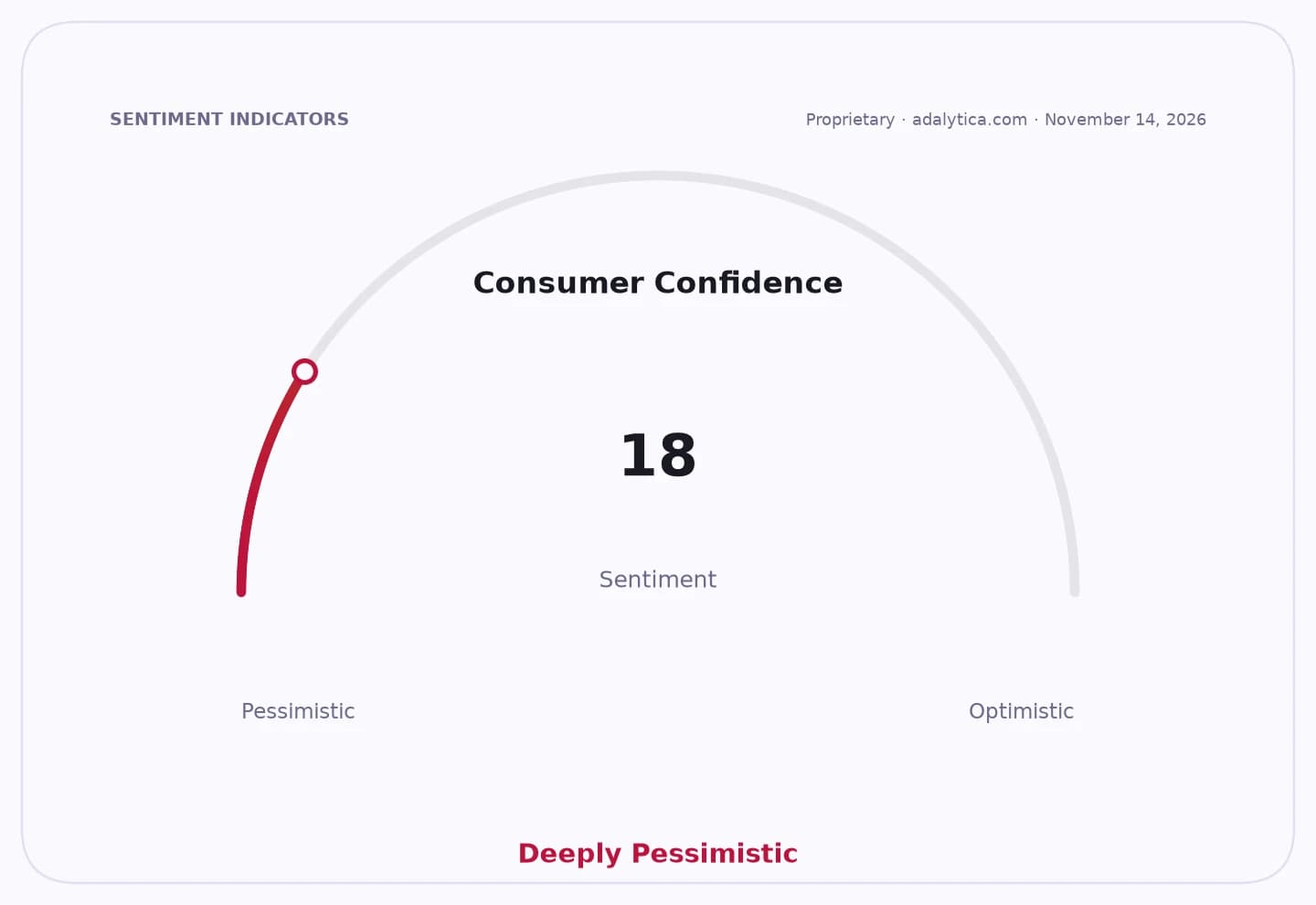
South Korea’s consumer confidence slipped for a second straight month in November, underscoring how equity-market losses and still-elevated borrowing costs are weighing on household sentiment and, by extension, the outlook for domestic demand.
South Korea consumer confidence falls in November
The Bank of Korea said its headline consumer sentiment index fell 2.3 points from October to 103.1, based on a survey of 2,500 households conducted Nov. 9-16. The deterioration was driven largely by a sharp pullback in stock prices and higher loan rates, both of which are eroding the wealth effect for consumers and leaving borrowers with less room to spend.
Sentiment Indicators
Consumer Confidence
The setback matters because South Korea’s economy remains heavily exposed to household consumption and to the confidence channel that links asset prices to spending. A weaker reading does not automatically translate into an immediate collapse in demand, but it does suggest consumers are becoming more cautious just as higher rates are still filtering through the economy. That raises the risk of softer retail activity and weaker discretionary spending heading into year-end.
The survey captured a period of notable market stress. The Kospi tumbled 15% in the first three weeks of November as investors worried about the profitability of massive artificial intelligence infrastructure investment and grew uneasy about possible Democratic control of both houses of the US Congress after the midterm election. For Korean households, that matters because domestic equities and technology exposure are central to perceived household wealth, making market volatility quickly visible in sentiment.
The Bank of Korea also said consumers’ assessment of current economic conditions fell to 78 in November from 82 in October, while expectations for the future slipped to 86 from 88. That combination points to both immediate caution and a more subdued outlook, a mix that can restrain spending even before it shows up in hard data.
For policymakers, the reading complicates the backdrop for monetary decisions. High borrowing costs are already restraining sentiment, and the latest survey suggests the transmission to households is still underway. If financial conditions remain tight and equities remain under pressure, consumer confidence could stay fragile, limiting any near-term rebound in domestic demand.
Investors will watch whether the decline in sentiment feeds into lower consumption, weaker bank lending demand and softer earnings for retailers and other domestically focused companies. The key question is whether the stock-market shock proves temporary or becomes part of a broader slowdown in household activity.
| Entity | Gains | Losses |
|---|---|---|
| Korean households with savings | ▲Potentially better valuations on cash holdings | ▼Lower wealth effect from falling stocks |
| Borrowers | ▲None | ▼Higher debt-service burden |
| Domestic retailers | ▲None | ▼Softer discretionary spending |
| South Korean policymakers | ▲More room to argue for caution | ▼Harder to sustain growth momentum |