Swiss households are turning more cautious again, and that matters because consumer spending is one of the cleanest pressure points for an economy that relies on domestic demand and high-value purchases.
Swiss consumer confidence falls to minus 44.9 in October
The Swiss consumer confidence index fell to minus 44.9 in October, its weakest reading since November 2023 and down from about minus 36 in September. The biggest drag was households’ view of their own finances: the assessment of the past 12 months sank to minus 53.8 from minus 40.7 a year earlier, while expectations for the months ahead fell to minus 44.7 from minus 32.2.
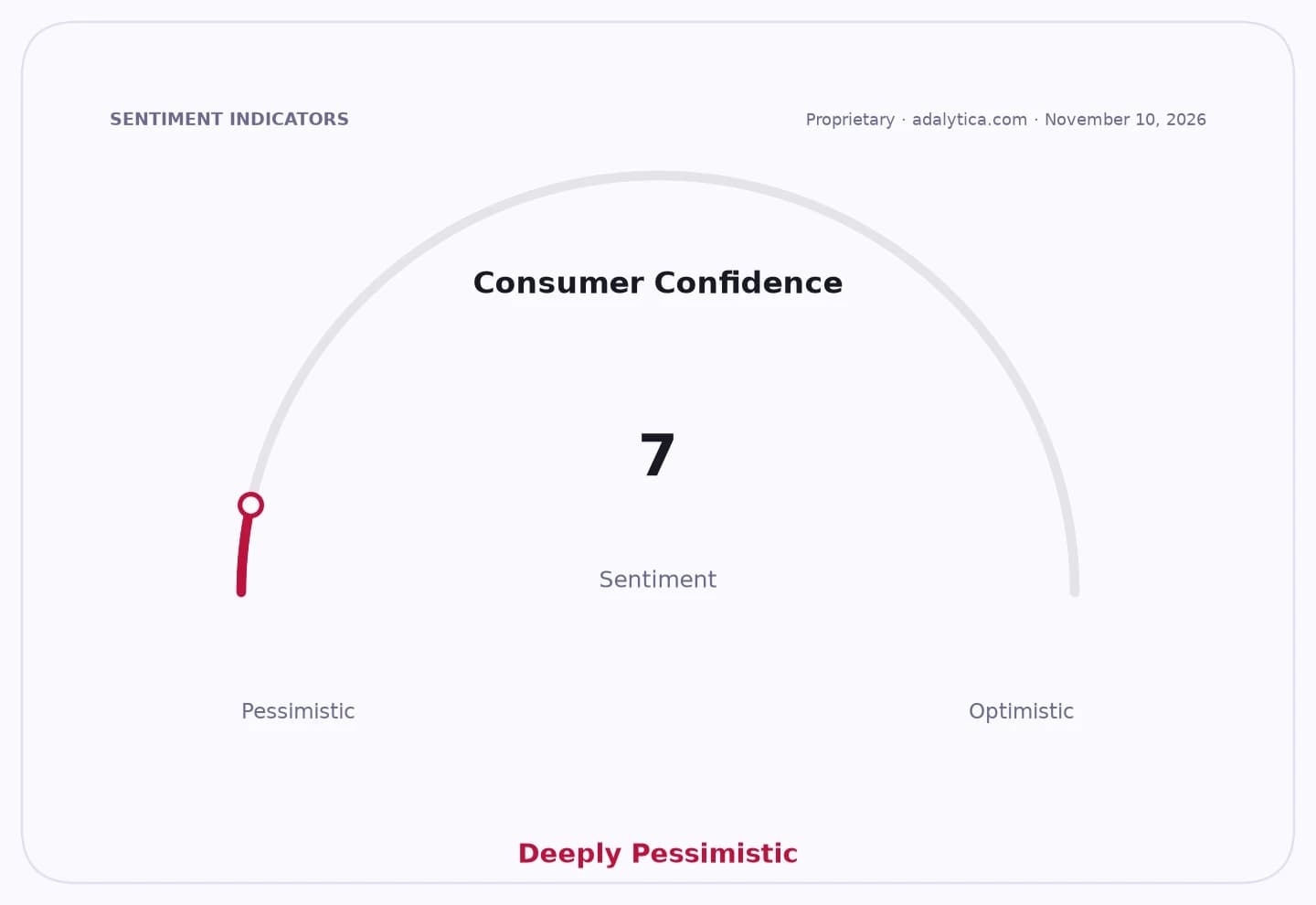
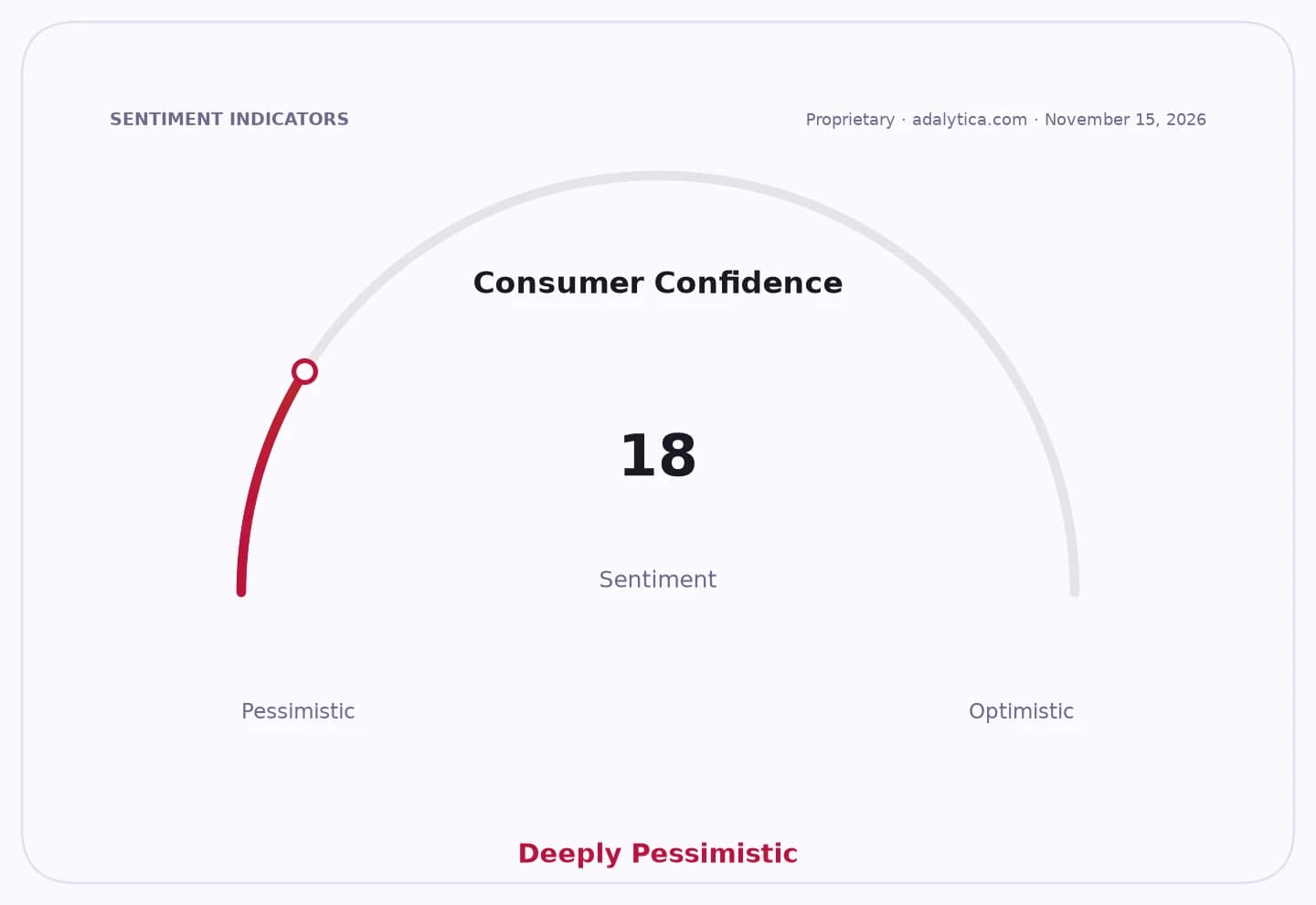
Sentiment Indicators
That is not just a mood shift. It is a warning sign for retailers, durable-goods sellers and service businesses that depend on Swiss consumers willing to spend on appliances, electronics and other big-ticket items. The willingness-to-buy gauge slid to minus 32.7 from minus 25.7, showing households are increasingly deferring discretionary purchases rather than stretching budgets.
The drop also carries macro weight because Switzerland has often been seen as a relatively resilient consumer market, supported by low unemployment and a strong currency. But even in a stable labor market, confidence can be eroded by perceptions of weaker household finances, higher living costs or a more uncertain outlook for income. The latest survey suggests those concerns are starting to bite.
SECO’s survey, which covered 2,717 people aged 16 and above, is closely watched as an early read on consumption trends. The one small bright spot was a marginal improvement in expectations for the broader economy, but that did little to offset the deterioration in personal-finance sentiment that typically drives actual spending decisions.
For investors, the message is straightforward: the market may be underestimating how quickly caution can show up in sales, margins and inventory plans. Swiss consumer-facing stocks, import-sensitive retailers and premium goods names are now facing a less forgiving backdrop, while defensive sectors and businesses tied to essentials should look relatively better positioned if households continue to pull back.
The broader implication is that Switzerland’s consumer engine is losing some momentum just as investors are already focused on sticky global uncertainty. If confidence keeps sliding, the next move is likely not a collapse in demand but a quieter, more persistent slowdown in discretionary spending — the kind that can weigh on earnings before it shows up in headline GDP data.
| Entity | Gains | Losses |
|---|---|---|
| Swiss retailers | ▲Stable essentials demand | ▼Big-ticket sales |
| Defensive consumer stocks | ▲Relative cash-flow support | ▼Cyclical spending exposure |
| Swiss households | ▲Less risk of overextending | ▼Confidence and spending power |
| Premium goods and appliance makers | ▲— | ▼Deferred purchases |