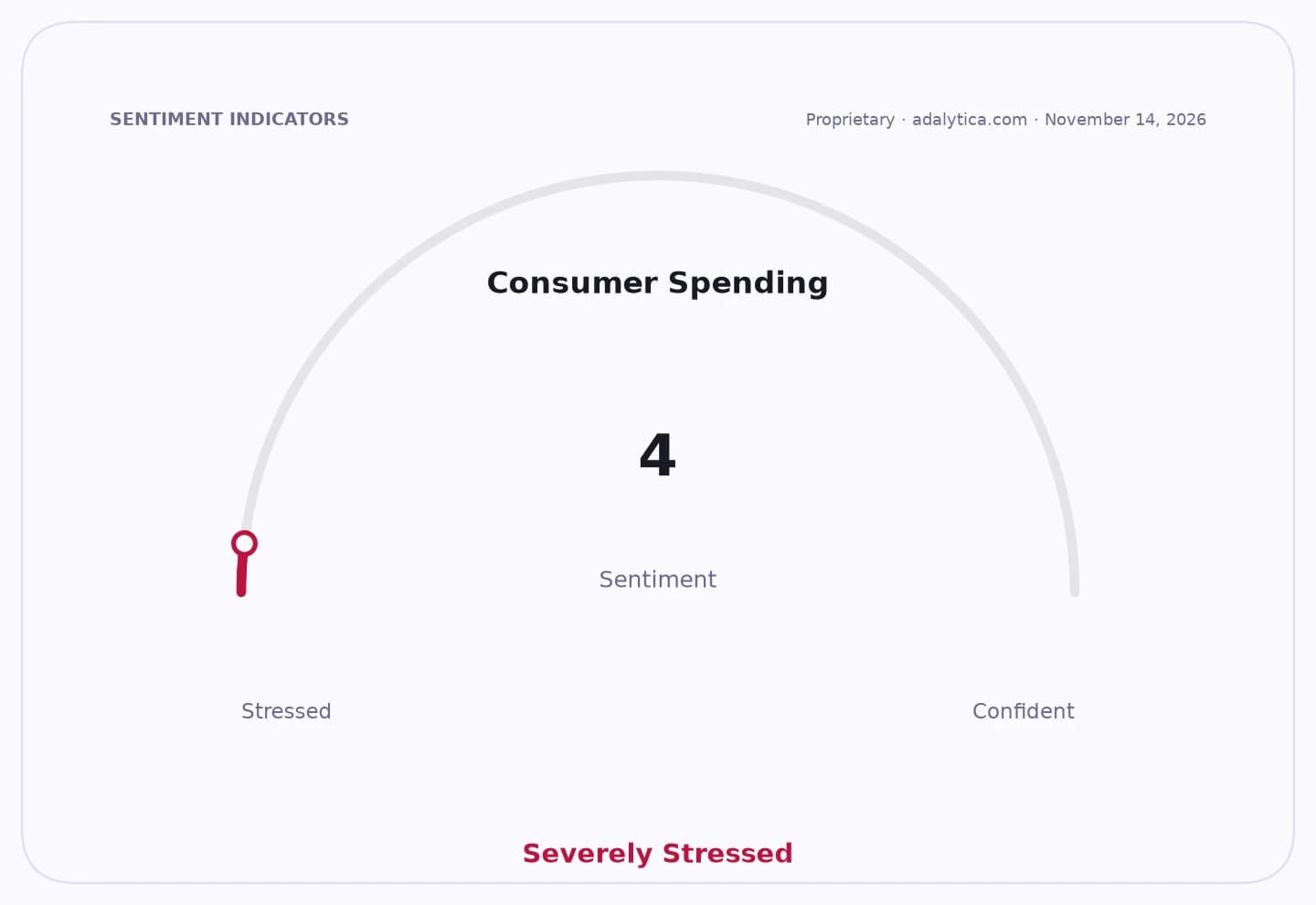
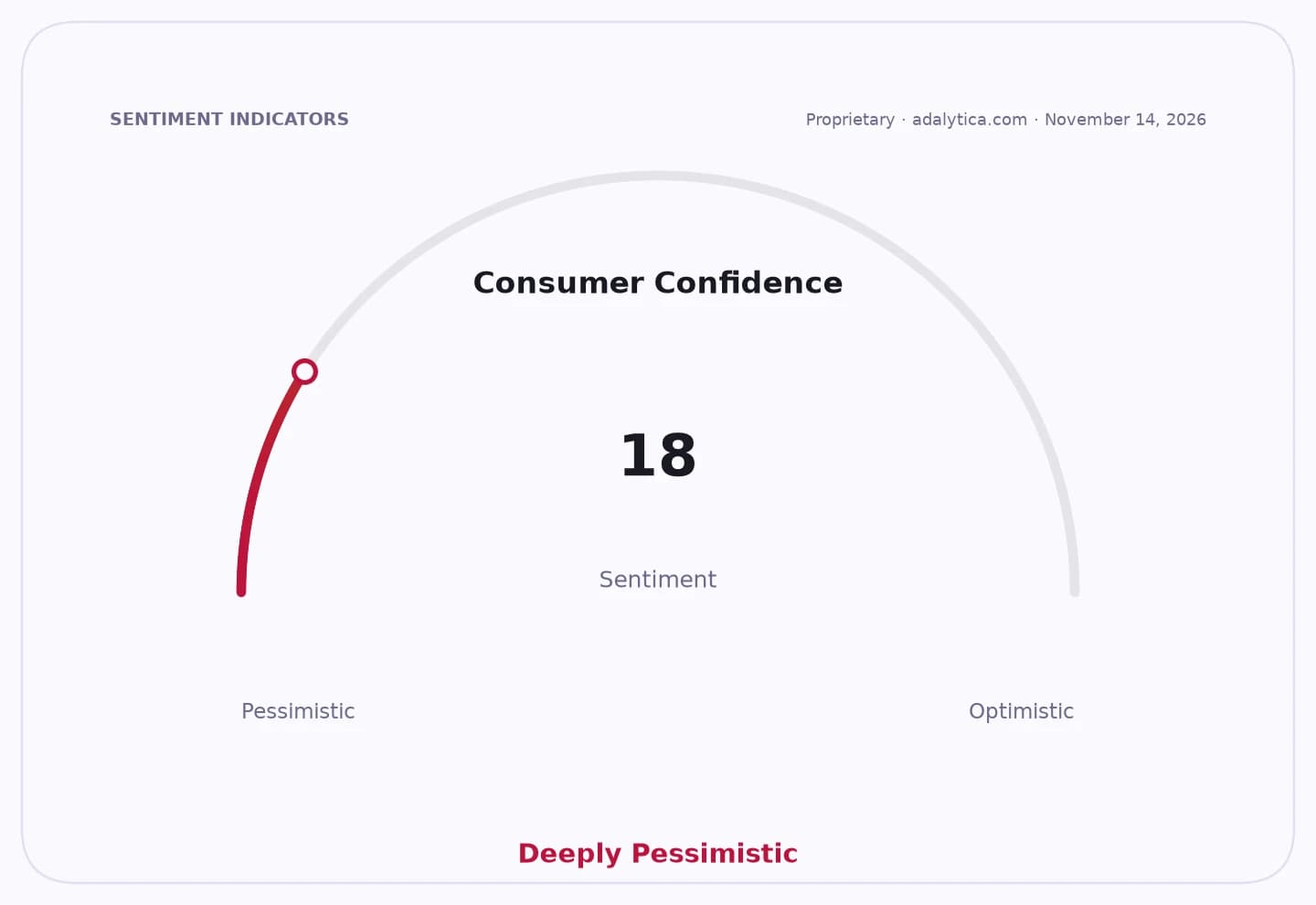
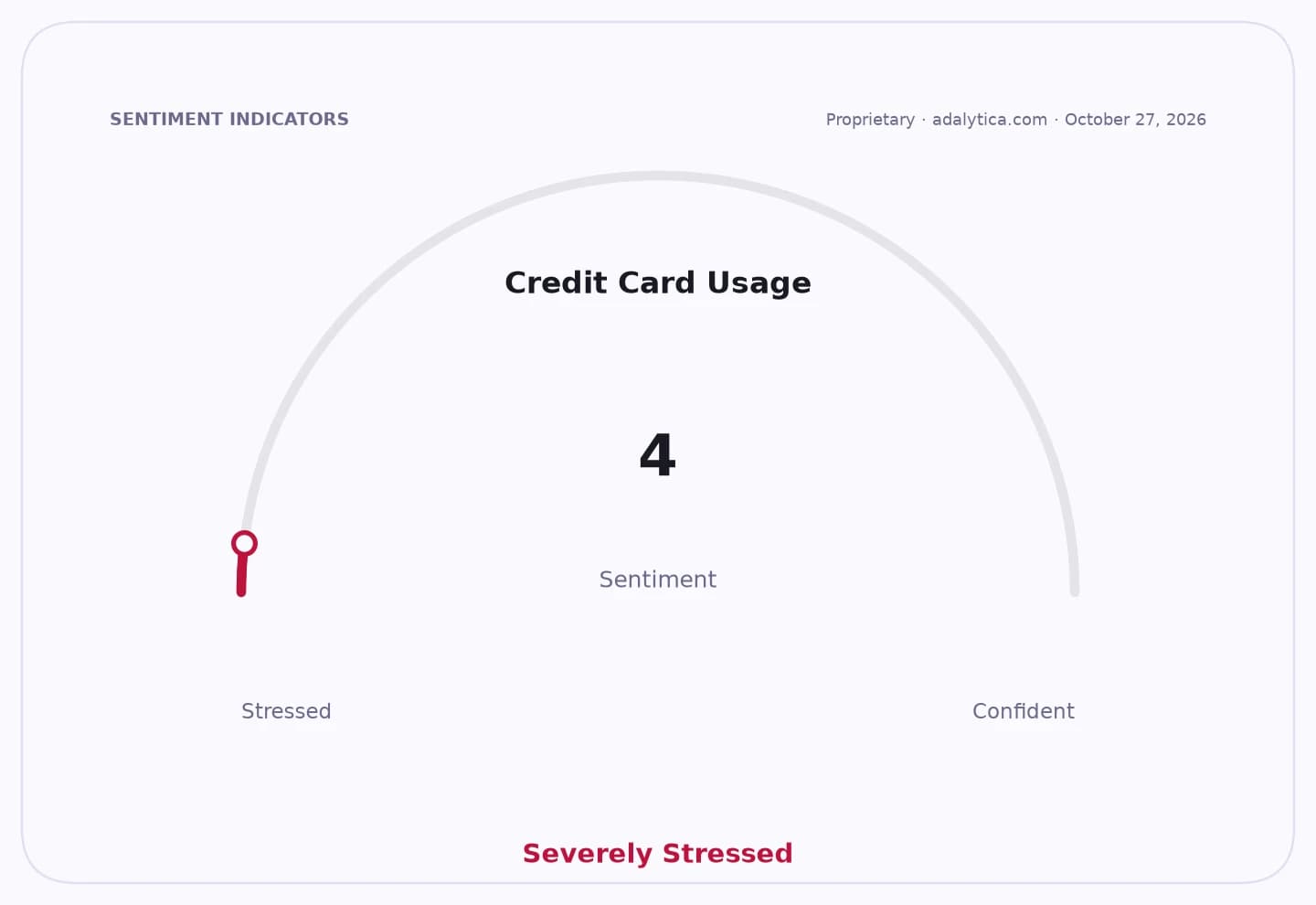
Argentina’s small- and mid-sized retailers saw sales fall 1.6% from a year earlier in October, underscoring how stressed household finances are still depressing consumption even after a slight monthly uptick.
Argentina Small Retail Sales Fell 1.6% in October
The data from business group CAME show the decline was not just an isolated month but part of a broader contraction: retail sales were down 2% in the first 10 months of the year, with shoppers concentrating on essentials and low-ticket purchases. That is economically significant because private consumption is one of the few immediate channels through which tighter real incomes, credit constraints and higher costs show up in activity, and the weakness points to a fragile recovery at best.
Sentiment Indicators
The report describes a “dual dynamic” in which some categories benefited from Mother’s Day spending and seasonal clothing turnover, while demand faded later in the month as families remained budget constrained. Merchants said they were forced to absorb higher operating costs, tariffs and replacement prices, while competing with wholesale channels and imported goods sold through online platforms.
The mix is especially damaging for smaller stores, which rely on turnover rather than pricing power. The survey found 51.9% of businesses said conditions were unchanged from a year earlier, 41% said they were worse and only 7.1% reported improvement. Even where sales were holding up, it was typically through cash discounts and short-term bank installments, a sign that financing, not demand strength, was driving transactions.
Sector performance was uneven. Footwear and leather goods and textiles and apparel each rose 3.6% on the year, while pharmacy sales fell 3.7%, food and beverages declined 3.5% and hardware and construction materials slipped 3.4%. Online sales from brick-and-mortar retailers climbed 17.7%, highlighting how channels are shifting even as overall demand remains soft.
For investors, the reading reinforces the view that Argentina’s consumer-led rebound remains incomplete and vulnerable to income volatility, debt burdens and tighter credit. A sustained squeeze on discretionary spending is a headwind for retailers, consumer staples distributors and mall operators, while it can delay any broad-based improvement in corporate margins if firms are still forced to discount to move inventory.
The outlook among merchants remains cautious. Nearly half expect sales to be flat over the next year, while 54.9% said it is not a good time to invest. That suggests companies are likely to preserve cash rather than expand aggressively, limiting the near-term boost to employment and capital spending that would normally follow a healthier consumer cycle.
| Entity | Gains | Losses |
|---|---|---|
| Cash-driven shoppers | ▲Lower prices/promotions | ▼Access to credit |
| Large wholesalers/online import channels | ▲Market share gains | ▼Small local retailers |
| Footwear & apparel retailers | ▲Seasonal demand | ▼Broad consumer spending weakness |
| Argentine small retailers | ▲Some online growth | ▼Falling sales and margins |