Argentina’s consumer confidence improved in October, but the recovery was modest and left sentiment still below year-ago levels, underscoring how fragile household demand remains after months of weakening expectations.
Argentina consumer confidence rises in October
Consumer Spending
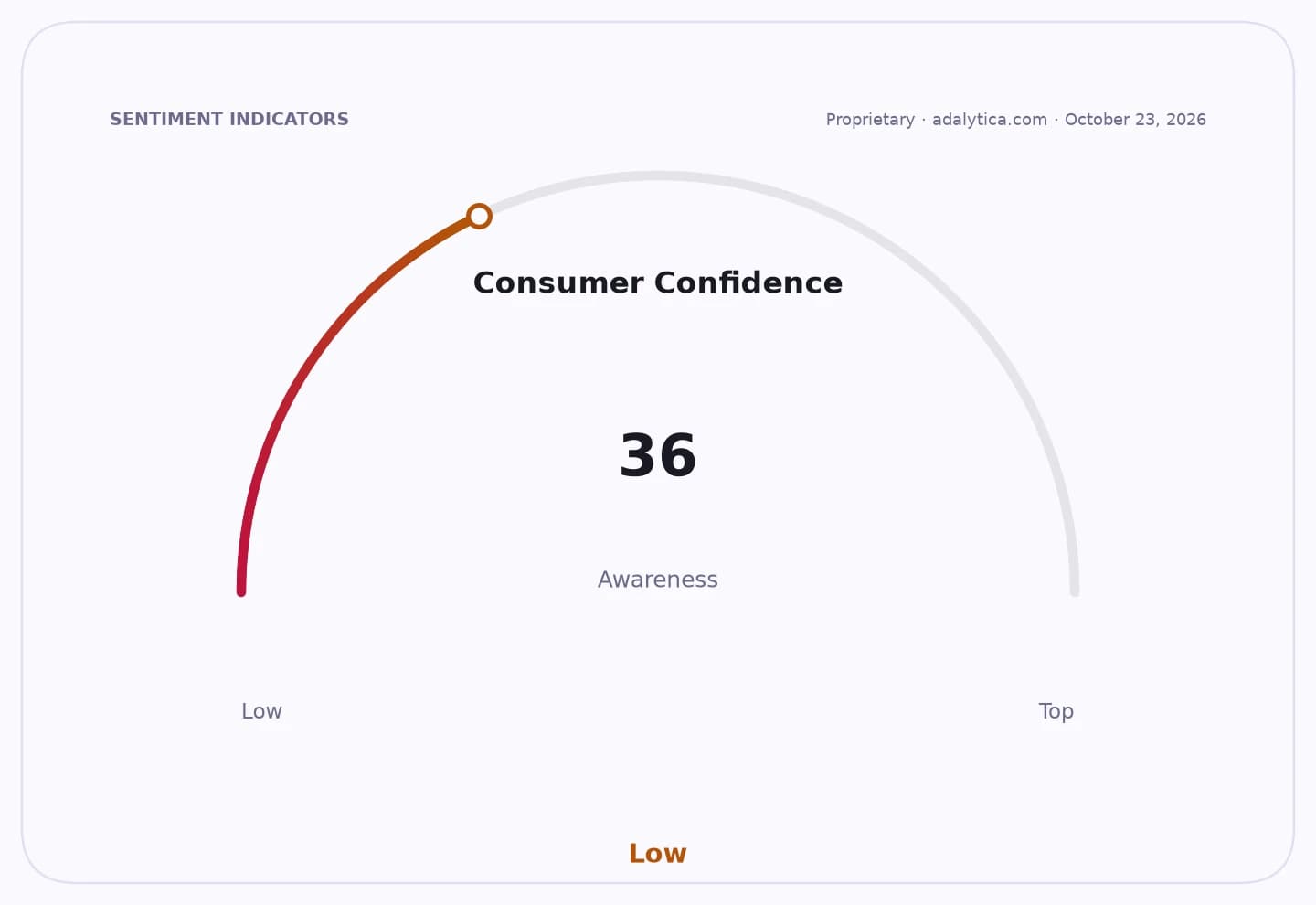
The University of Di Tella’s consumer confidence index rose 0.81% from September to 41.52 points, according to a survey conducted between Oct. 5 and Oct. 16, but was still down 1.9% from the same month a year earlier. That combination — a small monthly rebound after recent losses, but no real annual recovery — suggests consumers are stabilizing rather than turning decisively more optimistic.
Sentiment Indicators
The reading matters because household confidence is one of the clearest leading indicators for spending, and in Argentina, where consumption is a major engine of growth, even marginal shifts can affect retail sales, durable goods purchases and broader domestic activity. The report showed the biggest improvement in the durable goods and real estate component, which jumped 8.77% in October, hinting that some consumers may be regaining willingness to consider larger-ticket purchases.
But the rest of the breakdown was weaker. Personal situation fell 2.59% and the macroeconomic component dropped 1.57%, suggesting households are still uneasy about inflation, incomes and the broader policy backdrop. Present conditions improved 5.88%, yet future expectations declined 2.61%, a split that points to short-term relief without conviction about the outlook.
Regional data showed confidence rising only in Buenos Aires city, up 6.77%, while the Greater Buenos Aires area and the interior both slipped slightly. By income, higher-income households were more upbeat, up 1.99%, while lower-income households fell 1.30%, reinforcing the picture of a recovery that is uneven and concentrated among better-positioned consumers.
For investors, the key question is whether October’s uptick marks a floor in sentiment or just a pause in a longer downtrend. A firmer consumer backdrop would support retailers, banks and domestic-facing companies, but the continued year-on-year decline and the weakness in expectations argue against a strong near-term demand rebound.
The broader narrative is one of tentative stabilization rather than renewed expansion: Argentine consumers are less pessimistic than they were in September, but not yet confident enough to suggest a durable acceleration in spending.
| Entity | Gains | Losses |
|---|---|---|
| Argentine retailers | ▲Better odds of near-term sales | ▼Weak demand recovery |
| Consumers with higher incomes | ▲Slightly improved confidence | ▼Lower-income households |
| Durable goods sellers | ▲Higher purchase intent | ▼Broader household caution |
| Domestic growth outlook | ▲Signs of stabilization | ▼Momentum still fragile |