Brazilian voters are still more hopeful than pessimistic about the economy, but that optimism has started to lose momentum, a shift that matters for consumer spending, policy expectations and the tone of the election campaign.
Brazil voters' economic optimism eases in BTG poll
In the BTG Pactual/Nexus survey released Monday, the share of respondents who expect the economy to improve over the next six months fell to 51.4% from 54.3% a week earlier, while the proportion saying they do not know or did not answer jumped to 20% from 15.9%. The share expecting deterioration was unchanged at 12.4%, suggesting the main change was not a turn toward outright pessimism but a rise in hesitation.
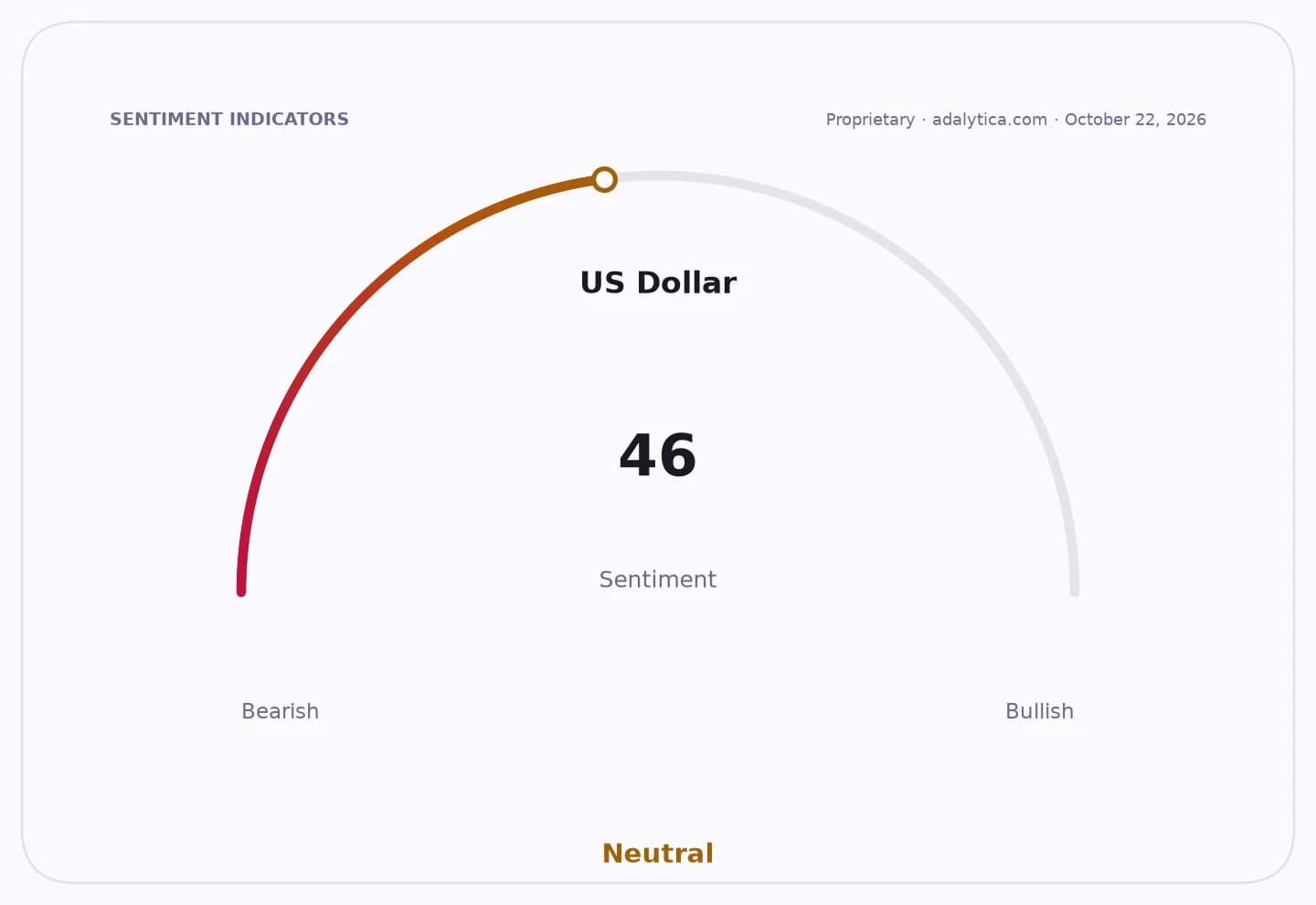
Sentiment IndicatorsⓘProprietary · adalytica.com · October 23, 2026
This is a snapshot — live sentiment, awareness and momentum for 130+ markets update continuously in the dashboard.Open AlphaPulse
That matters because expectations often feed directly into household behavior. When consumers become less certain, they tend to delay discretionary purchases, become more cautious on credit and savings, and wait longer before making big-ticket commitments. That can cool activity even if current conditions have not yet weakened.
The poll also shows a split between how voters see the present and how they see the future. More than half, 51.1%, still described the economy as bad or very bad, little changed from 50.6% a week earlier, while only 17.1% called it good or excellent. Yet the forward-looking reading remained more constructive than the current assessment, underscoring a familiar pattern in Brazilian sentiment: dissatisfaction with today, but hope for improvement ahead.
The deterioration in confidence was more visible in personal-finance expectations. The share saying their own finances are in good shape slipped to 31.6% from 34.1%, while the neutral reading climbed to 47.6% from 44.6%. Looking six months ahead, the share expecting improvement in their finances eased to 49.6% from 51.4%, and the share that did not know rose to 15.9% from 12.5%.
For markets, the key issue is whether softening sentiment eventually bleeds into weaker consumption and less resilient growth. Brazil has recently benefited from a firmer external backdrop, including stronger trade links and lower country-risk perceptions, but domestic confidence remains crucial for demand-led sectors such as retail, banking and consumer finance. A more cautious electorate can also complicate the political narrative around economic management in the run-up to the vote.
The poll suggests the economy is not losing support so much as losing clarity. Expectations of improvement are still in the majority, but the rise in uncertainty is a warning sign that the recovery story is becoming less convincing to voters. If that hesitancy persists, it could weigh on spending intentions and add volatility to campaign messaging on inflation, jobs and income.
The BTG/Nexus survey interviewed 2,002 voters by telephone from Oct. 16 to 18, with a margin of error of two percentage points. The change is modest, but in a tightly watched election environment, a shift toward indecision is often the first sign that confidence is starting to fray.
| Entity | Gains | Losses |
|---|---|---|
| Brazilian government | ▲room to defend growth narrative | ▼confidence if uncertainty persists |
| Consumers | ▲lower fear of outright downturn | ▼clarity on near-term outlook |
| Retail and banks | ▲stable demand if optimism holds | ▼spending if caution rises |
| Opposition candidates | ▲evidence of voter unease | ▼if growth narrative remains intact |