Colombia’s consumer engine appears to be losing steam, with August retail data showing the first broad-based monthly weakening in discretionary spending since late 2024 and raising the prospect that household demand for goods has reached an inflection point.
Colombia Retail Sales Slow as Discretionary Spending Weakens
Credit Card Usage
The clearest warning came from the categories most exposed to day-to-day consumer budgets. Footwear sales fell 9% from a year earlier, alcoholic beverages dropped 6.1%, clothing declined 5.9% and computer and telecom equipment also contracted, according to a Banco de Bogotá report. Five of 19 retail branches posted annual declines, the most since September 2024, even as total retail sales rose 7.3% because of a strong contribution from vehicle sales.
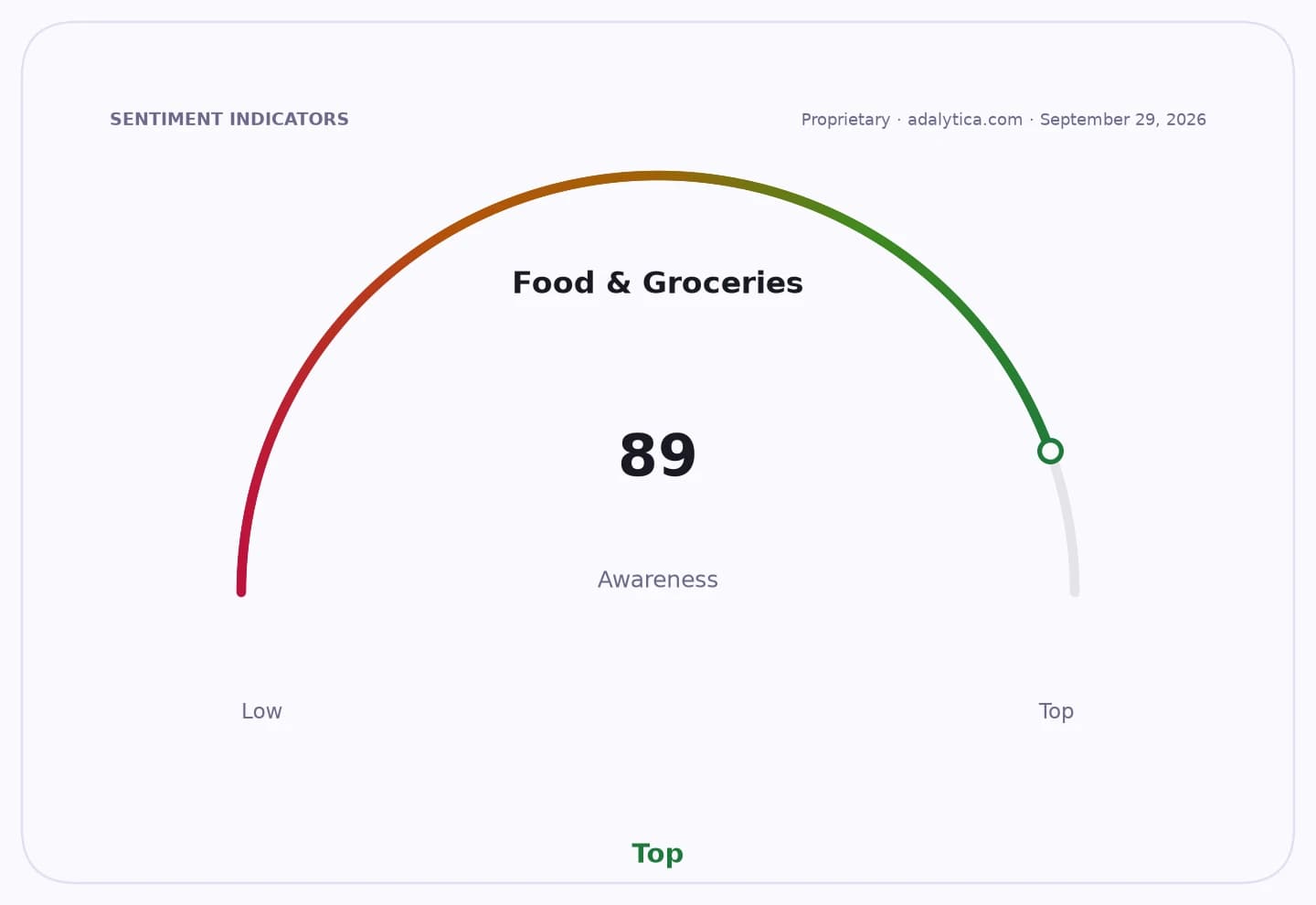
Sentiment Indicators

Stripping out vehicles, the picture was materially softer. Retail growth slowed to 1.9% in August from 2.3% in July, suggesting the headline gain masked a deterioration in underlying household demand. For investors, that matters because vehicles are a volatile, credit-sensitive category, while apparel, footwear, liquor and small electronics are better gauges of routine consumer spending and confidence.
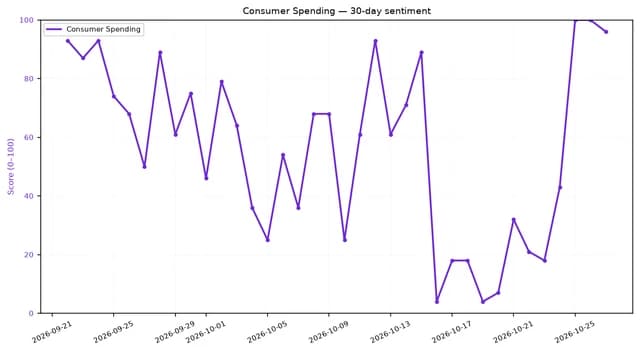
The data point to a consumer sector that is shifting from recovery to consolidation. Banco de Bogotá said the cycle of spending on durable and semi-durable goods may be peaking after a strong run through 2025 and the first half of 2026. That view is reinforced by signs of strain in household income: a softer labor market, a stronger peso that can reduce remittance and services income in local terms, and tighter financial conditions that make it harder for households to keep spending on credit.
Price pressures are adding another layer of drag in some categories. Tobacco inflation exceeded 13% in August and alcohol inflation was 6.3%, both above the 6.2% headline rate, which likely squeezed demand for those products. But the weakness in clothing and footwear is less about prices and more about exhaustion in demand. Inflation in vestuario was 3.3% and in footwear 2.3%, both below the overall rate, indicating consumers are simply buying less.
The same pattern appears in electronics. Sales of information and telecom equipment fell for the first time in two and a half years after growing close to 35% in the first quarter, then slowing sharply in July before turning negative in August. With inflation in that segment at minus 4.3%, the decline cannot be blamed on price increases, strengthening the case that households are becoming more selective after a period of catch-up spending.
There are still pockets of resilience. Sales of household vehicles jumped 35.8%, while other vehicles rose 26.2% and non-alcoholic beverages advanced 18.1%. But the concentration of growth in a handful of categories, rather than across the broader retail basket, suggests demand is becoming more uneven. Food sales rose only 1.2%, another sign that discretionary momentum is fading.
That matters for the wider economy because retail has been one of the cleaner reads on domestic demand. Banco de Bogotá said the adverse backdrop for commerce now looks more entrenched, citing tighter conditions for households, the economic effects of the earthquake and expectations for fiscal adjustment in coming months. The bank sees GDP growth of 2.4% in 2026 and 2.1% in 2027, forecasts that imply a moderate expansion but not enough to restore the stronger consumer momentum seen earlier in the cycle.
For investors, the implication is that Colombia’s growth story may become more dependent on vehicles, essential goods and policy support, while discretionary retailers face tougher comparisons and weaker volume growth. A prolonged slowdown in household goods spending would also be a warning sign for banks, consumer lenders and distributors that benefited from the earlier recovery.
The key question now is whether August was a one-off pause or the start of a broader retrenchment. If labor-market weakness persists and fiscal tightening bites, the softness in footwear, liquor, clothing and electronics may prove to be the first sign that Colombian households are pulling back.
| Entity | Gains | Losses |
|---|---|---|
| Vehicle sellers | ▲Strong sales growth | ▼Volatile demand mix |
| Discretionary retailers | ▲Little near-term benefit | ▼Slower underlying volumes |
| Households with debt | ▲Temporary relief from selective spending | ▼Tighter budgets |
| Colombia economy | ▲Vehicles support headline sales | ▼Broader consumer momentum slows |