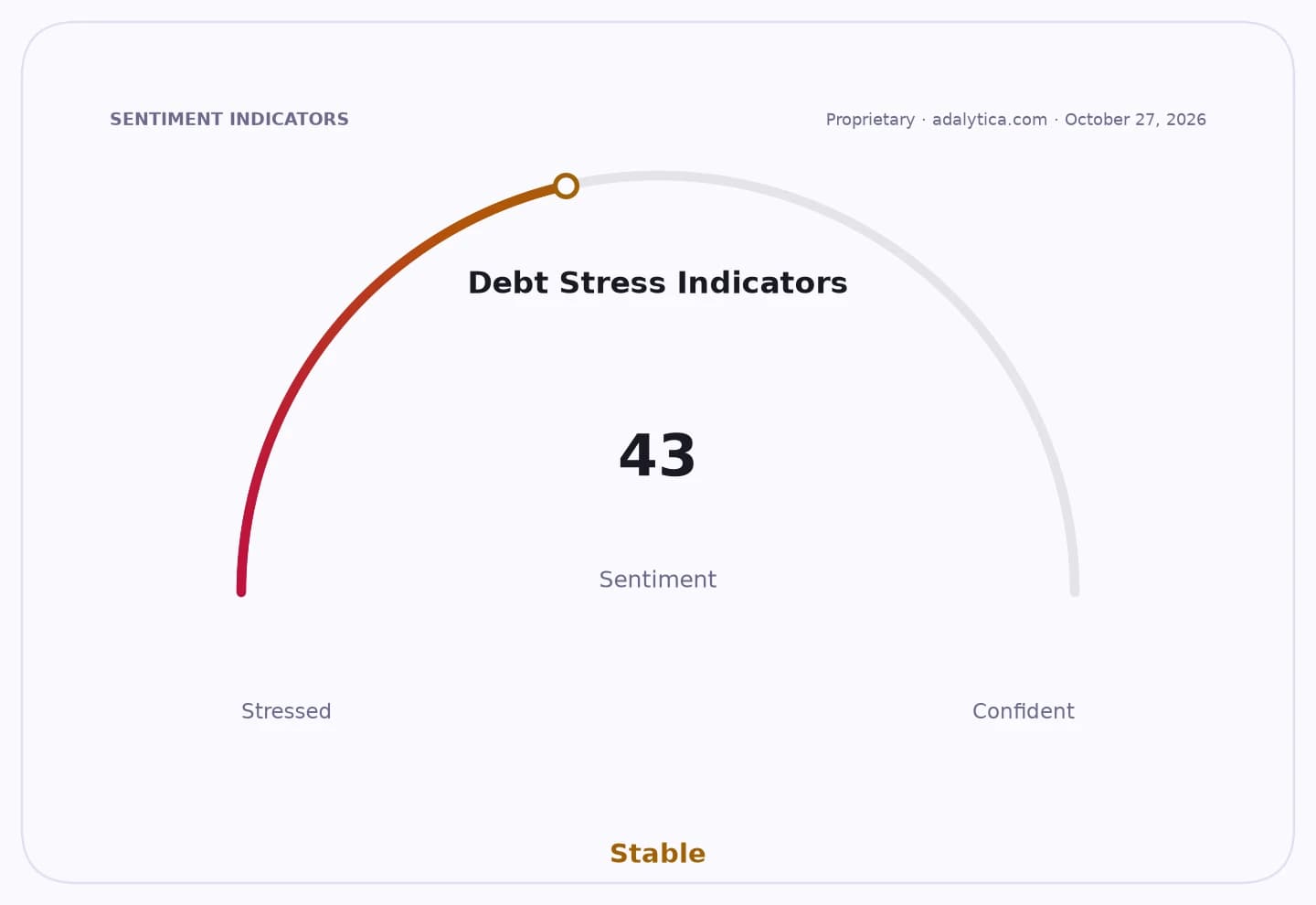
Colombia’s consumer engine is still running, but the load is shifting from incomes to debt, a less durable mix that could shape the country’s growth, bank earnings and policy path into the holiday season.
Colombia Spending Rises on Credit Growth

That is the most important takeaway from Raddar’s latest household-spending gauge: real spending rose 2.69% in September from a year earlier, down sharply from 4.59% a year ago, even as nominal outlays reached COP 104.68 trillion. The slowdown matters because household demand remains one of Colombia’s main growth supports, and the new data suggest families are keeping consumption alive by leaning harder on credit rather than on stronger balance-sheet income.
Sentiment Indicators
The credit impulse is clear. Consumer loans, free-use lending, credit cards and mortgages expanded 14.8% year on year in September, with credit-card lending jumping 26%. That is a powerful near-term cushion for retailers, lenders and payment networks. It is also a warning sign: debt-fueled spending can extend demand in the short run, but it leaves households with larger repayment obligations later, squeezing future consumption if rates stay high and income growth disappoints.
The macro backdrop is not especially forgiving. Raddar said real spending for January through September rose 2.60%, below the 3.75% increase in the same period of 2025, while third-quarter consumption advanced just 2.46%. At the same time, the labor market is under strain, with 126,000 fewer employed people in August than a year earlier and a larger pool of unemployed and out of the labor force. That combination argues for slower, more fragile consumption growth than the headline nominal numbers imply.
There are some offsets. Real purchasing power of the minimum wage rose 15.7% year on year, and real income per employed person increased 2.23% for a fourth straight month. But the spending mix shows where pressure is building: food, which accounts for more than 30% of household outlays, climbed 4.16% in real terms, leaving less room for discretionary categories even as entertainment, fashion and appliances posted smaller gains.
For investors, the story is not just about Colombian shoppers. It is about who captures the next leg of demand and who gets trapped by it. Banks stand to benefit first from credit growth, but the market should also watch for a later-stage hit to asset quality if borrowers start rolling over debt to maintain consumption. Bancolombia and other lenders are positioned to enjoy volume growth now; the key question is whether margin support from lending can outrun any rise in delinquency as the cost of living and debt service absorb a bigger share of household cash flow.
The investment implication is straightforward: Colombia’s consumer cycle is still alive, but it is being financed more than it is being powered. That usually favors lenders and payment rails in the short term, while setting up a more selective second half for retailers, discretionary names and any bank exposed to weaker borrowers. If year-end spending gets a boost from the holiday season, the market may reward the credit winners first — but the smarter trade is to watch for the point when loan growth starts outrunning income growth.
| Entity | Gains | Losses |
|---|---|---|
| Colombian banks | ▲Faster loan growth | ▼Higher future delinquency risk |
| Card lenders/payment networks | ▲More transaction volume | ▼Borrower stress later |
| Retailers | ▲Holiday-season demand support | ▼Slower discretionary spending |
| Households | ▲Short-term consumption access | ▼Bigger debt burden |