Argentina’s Cyber Monday ended with sales that rose in peso terms but fell 20% in real terms, underscoring how inflation and weak purchasing power continue to squeeze household demand even during the country’s biggest online shopping event.
Argentina Cyber Monday sales fell 20% in real terms
Consumer Spending
The three-day campaign generated 682.185 billion pesos, a nominal increase of 6.7% from 2025, but that was far short of the 33.4% rise in consumer prices over the period, according to the Argentine Chamber of Electronic Commerce, or CACE. The gap between nominal revenue and inflation is the key story: retailers collected more pesos, but those pesos bought less, leaving the event with less real economic activity than a year earlier.
Sentiment Indicators
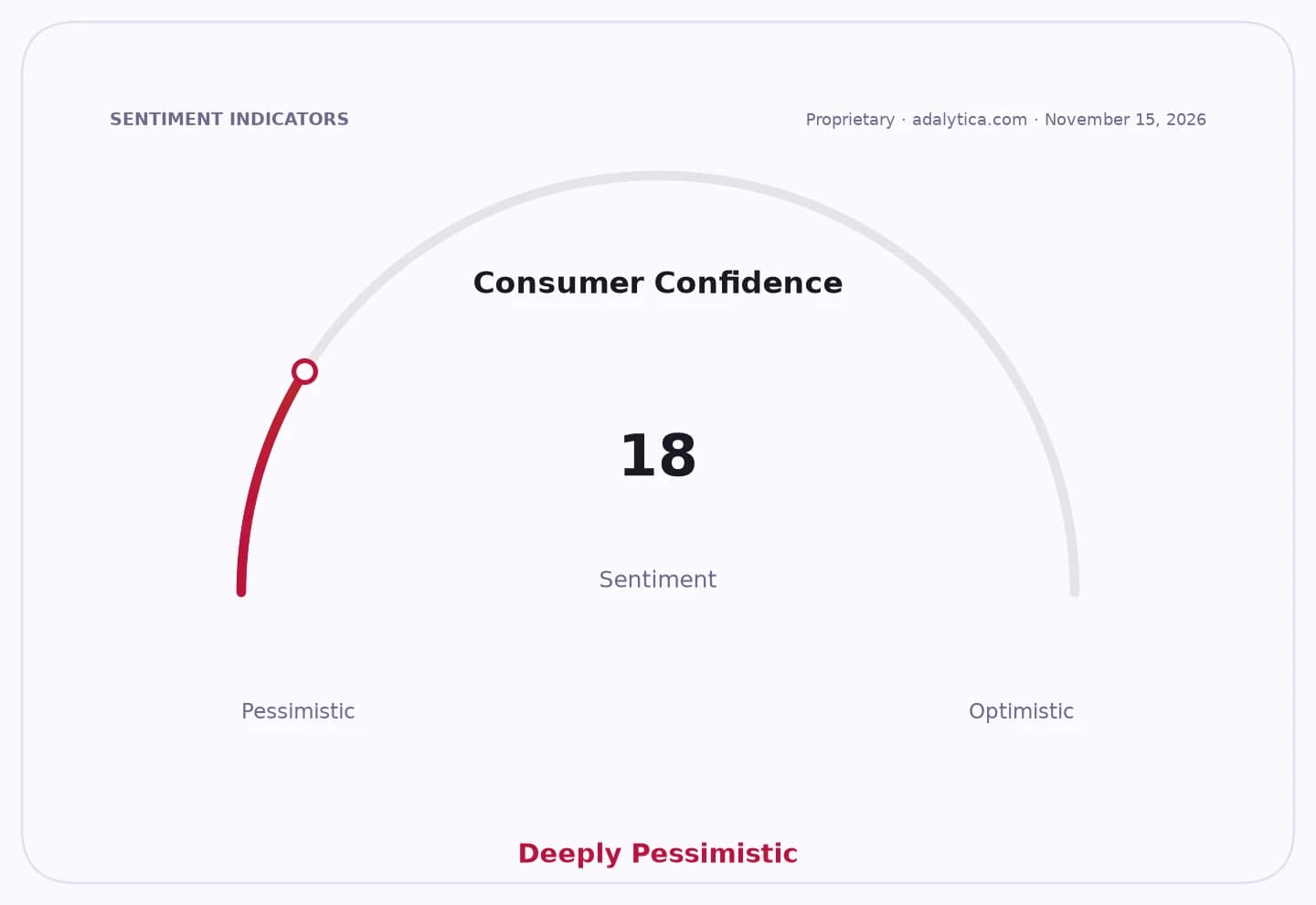
Consumer Confidence
The retreat matters beyond a single sales promotion. Cyber Monday is one of the clearest gauges of discretionary spending in Argentina, where consumers are increasingly trading down to essentials. CACE said sales were concentrated in food, personal-care products and everyday items rather than higher-ticket goods such as appliances and premium electronics. That shift explains why the number of products sold rose 20.7% to more than 14.6 million, even as the number of orders fell 7.1% to about 6.5 million and the average ticket slid 14.4% in real terms to 105,039 pesos.
For investors, the data point to a consumer market that remains volume-driven but margin-challenged. Retailers are leaning more heavily on financing, with up to 12-month installment plans emerging as a key tool to sustain purchases, but that support often comes at the cost of lower cash conversion and potentially weaker profitability. The fact that roughly 800 companies took part, almost 100 fewer than last year, also suggests some merchants are pulling back as trading conditions deteriorate.
The broader read-through is consistent with a household sector prioritizing necessity spending and stretching budgets in a high-inflation economy. CACE said the event drew 8.2 million visitors to the official site, indicating continued demand for promotions, but not enough to offset the erosion in real spending power. Unless inflation slows and consumer confidence improves, upcoming retail campaigns are likely to show the same pattern: higher nominal turnover, lower real sales, and a consumer base still hunting for discounts on basic goods.
| Entity | Gains | Losses |
|---|---|---|
| Budget-conscious consumers | ▲cheaper essentials | ▼access to discretionary goods |
| Retailers selling staples | ▲higher unit volumes | ▼lower real revenue |
| Sellers of appliances/electronics | ▲traffic from deals | ▼demand from higher-income buyers |
| Argentine consumers overall | ▲installment financing | ▼purchasing power |