South Korea’s household debt kept climbing in the third quarter, but the pace of borrowing slowed to its weakest in more than a year, a sign that higher rates and tighter credit are finally starting to bite even as financial stress spreads through banks.
South Korea Household Debt Growth Slows in Q3
Outstanding household debt rose to 2,030.5 trillion won by September, after increasing 9.8 trillion won in the quarter, the smallest quarterly gain since early 2025. That still leaves household leverage at a record level, but the deceleration matters because consumer borrowing has been one of the key supports for domestic demand in Asia’s fourth-largest economy. If households are increasingly constrained, spending growth becomes harder to sustain just as policymakers are trying to keep growth on track.
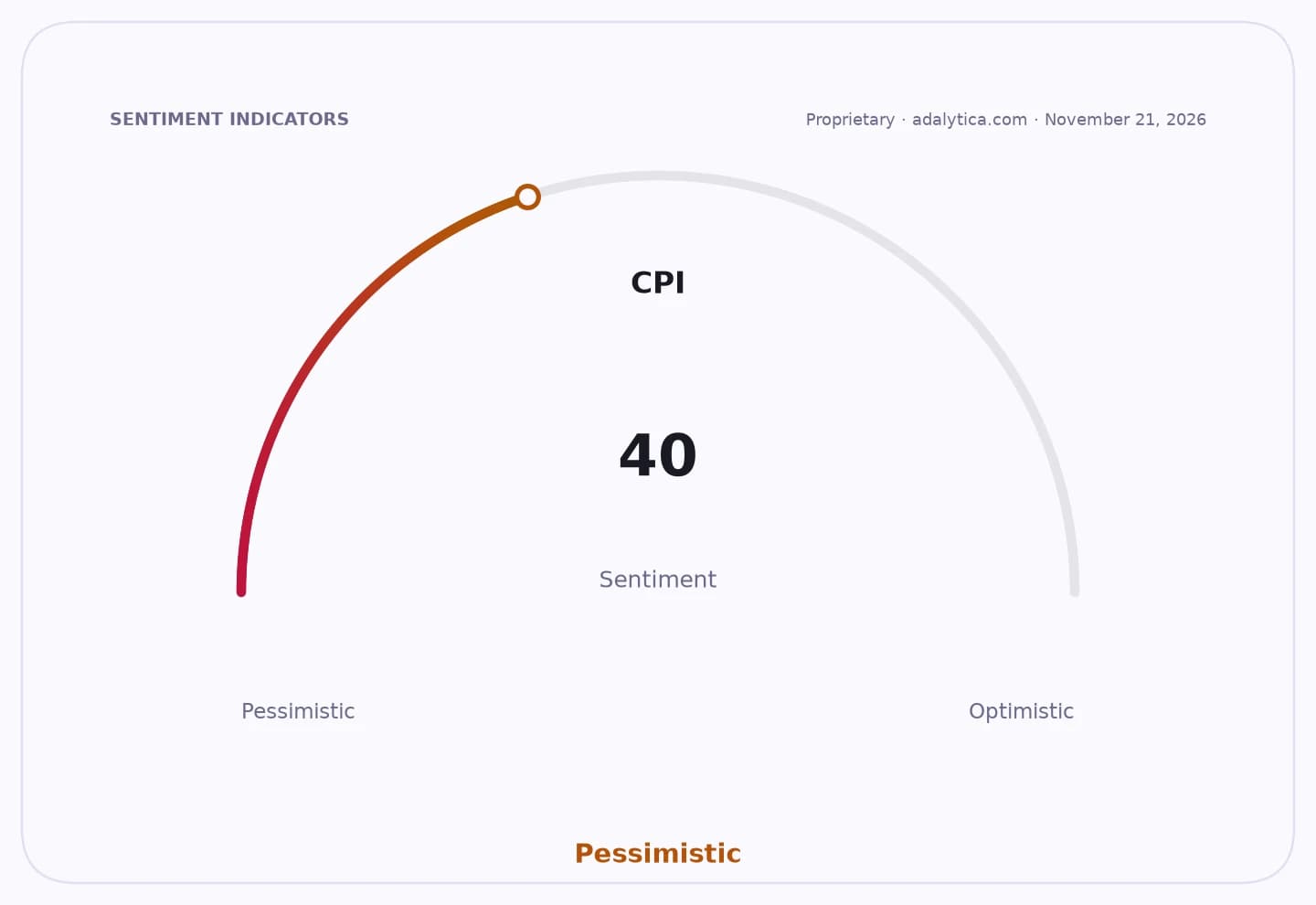
Sentiment Indicators
The moderation also suggests the credit cycle is turning. The decline in the pace of debt growth was linked in part to stock market adjustments, which likely weakened household appetite for risk-taking and margin-style borrowing. At the same time, bad debt at banks jumped nearly 27% over nine months, underscoring that the burden is not just on borrowers. Lenders now face rising recovery costs, more loan workouts and pressure to sell assets to clean up balance sheets.
That combination is important for investors because it shifts the story from sheer debt accumulation to asset-quality risk. Banks, consumer lenders and card companies are more exposed if delinquency rates continue to climb, while any slowdown in household credit creation could cap growth in retail spending and housing-related demand. South Korean equities tied to domestic consumption may also face a tougher backdrop if borrowers pull back, even as official efforts to encourage debt restructuring for distressed individuals may soften the blow for the weakest households.
The policy response points to a wider concern that private-sector balance sheets are under strain. The government’s push to expand restructuring options for credit card and loan borrowers suggests authorities are trying to prevent a slow-moving deterioration in credit quality from becoming a broader financial stability issue. For now, the data do not point to a collapse in household spending, with consumer demand still projected to remain solid this season. But the mix of record debt, slower credit growth and rising bad loans argues that the next phase for Korea’s consumer economy will depend less on borrowing and more on whether incomes and employment can carry demand on their own.
| Entity | Gains | Losses |
|---|---|---|
| South Korean regulators | ▲More time to manage risk | ▼Pressure to contain defaults |
| Banks | ▲Slower loan growth in some segments | ▼Rising bad-debt costs |
| Distressed households | ▲Restructuring options | ▼Higher repayment strain |
| Consumer-focused retailers | ▲Near-term demand support | ▼Weaker credit-fueled spending |