South Korea’s new transport minister is being handed a politically loaded mission: turn housing sentiment around before rising Seoul rents and apartment prices do more damage to the government’s approval ratings.
South Korea Housing Supply Push Faces Seoul Rent Pressure
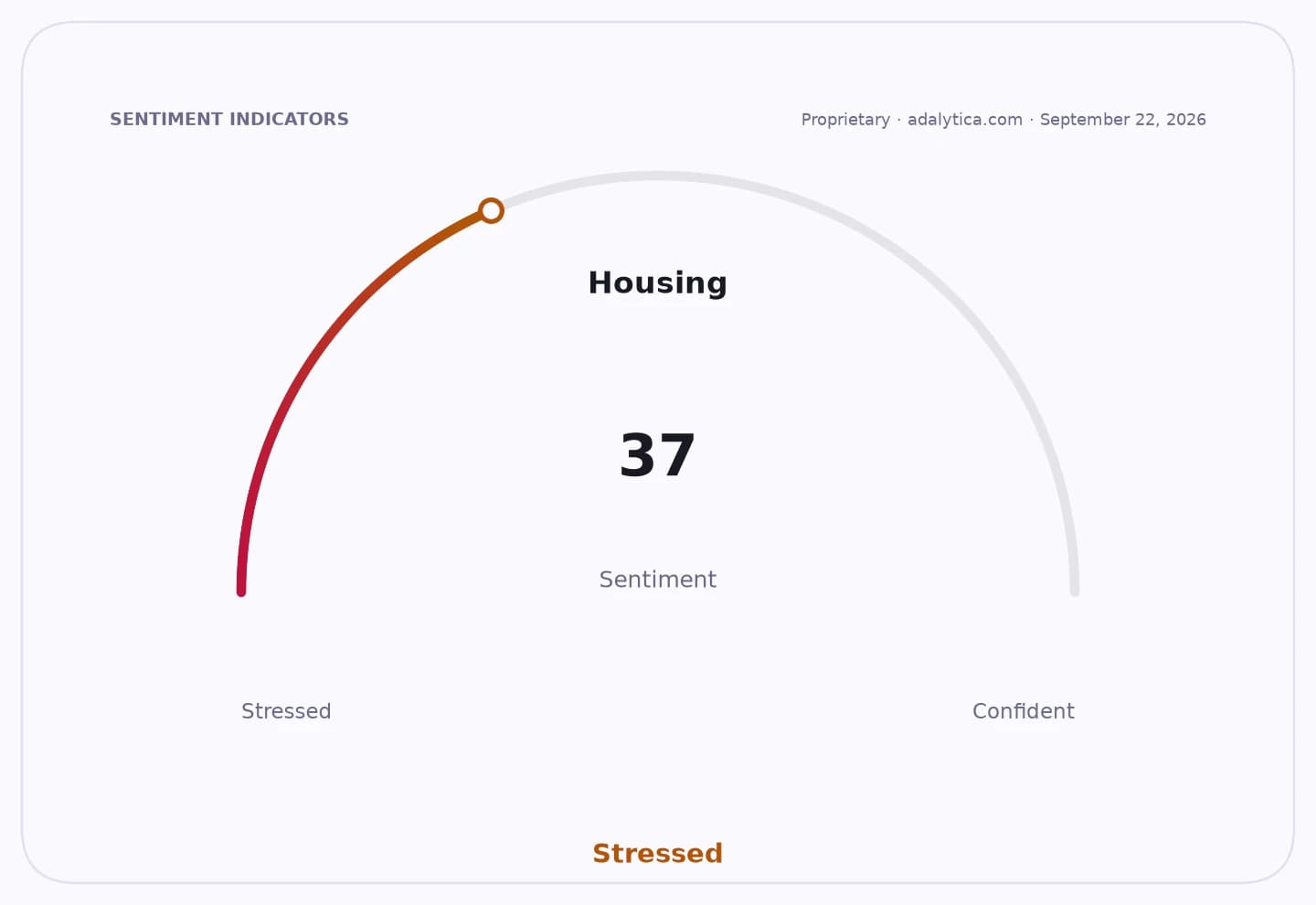
That is the real market story here. Housing has become the government’s most visible economic failure in the public mind, and the new minister’s job is not just to manage policy but to restore confidence in the real estate outlook. If she cannot accelerate supply in the Seoul metro area, stabilize the rental market and reduce volatility in home prices, the political fallout could intensify and the sector’s valuation gap could persist.
Sentiment IndicatorsⓘProprietary · adalytica.com · September 26, 2026
This is a snapshot — live sentiment, awareness and momentum for 130+ markets update continuously in the dashboard.Open AlphaPulse
The government has set an ambitious target to break ground on more than 1.5 million homes in the greater Seoul area by 2030, relying on public land, redevelopment and urban infill. That is the kind of supply pipeline investors should watch closely, because housing shortages do not correct themselves quickly in a tightly regulated market. Permitting delays, inter-agency disputes and local resistance are the bottlenecks that matter now.
The urgency is rising because the rental market is already flashing stress. Seoul apartment jeonse, or lump-sum lease, prices had climbed 7.79% year to date as of the second week of September, almost five times the pace seen a year earlier. In the city’s middle- and lower-priced districts, rents for 84-square-meter units are nearing 1 billion won, a level that deepens affordability pressure and keeps the political heat on policymakers.
That is why the new minister’s first real test is execution, not rhetoric. She has said the key to rental stability is sufficient supply, and the market will soon decide whether that translates into faster approvals and more shovels in the ground. The plan also depends on coordination with Seoul Mayor Oh Se-hoon over contentious sites such as parts of the Yongsan park area, where the central government and city still disagree on how much land can be used for housing.
For investors, the implications run beyond Korean politics. A credible supply push would be a tailwind for builders, land developers, construction materials and housing-related financials, while cooling rent inflation could eventually ease broader inflation pressure. But if execution slips, the market is likely to keep pricing in prolonged housing scarcity, higher living costs and continued pressure on consumer sentiment.
The backdrop is already fragile. A Gallup Korea poll found President Lee’s disapproval rating at 56%, the highest since he took office, with housing policy cited as the top reason. That makes the housing file a macro issue, not just a sector issue.
The next catalyst is whether the ministry can convert promised supply into actual starts. If it can, sentiment in real estate may finally begin to turn. If it cannot, Korea’s housing market will remain a political liability and an affordability trap — and that is exactly the kind of setup where the market underestimates how long the pain can last, and where the eventual beneficiaries of a real supply cycle could see asymmetric upside.
| Entity | Gains | Losses |
|---|---|---|
| Homebuilders and contractors | ▲More project starts | ▼Permit delays |
| Landowners and redevelopment firms | ▲Higher transaction activity | ▼Policy uncertainty |
| Seoul renters and buyers | ▲Easier affordability over time | ▼Near-term price pressure |
| Government and ruling party | ▲Better housing sentiment | ▼Approval-rating damage |