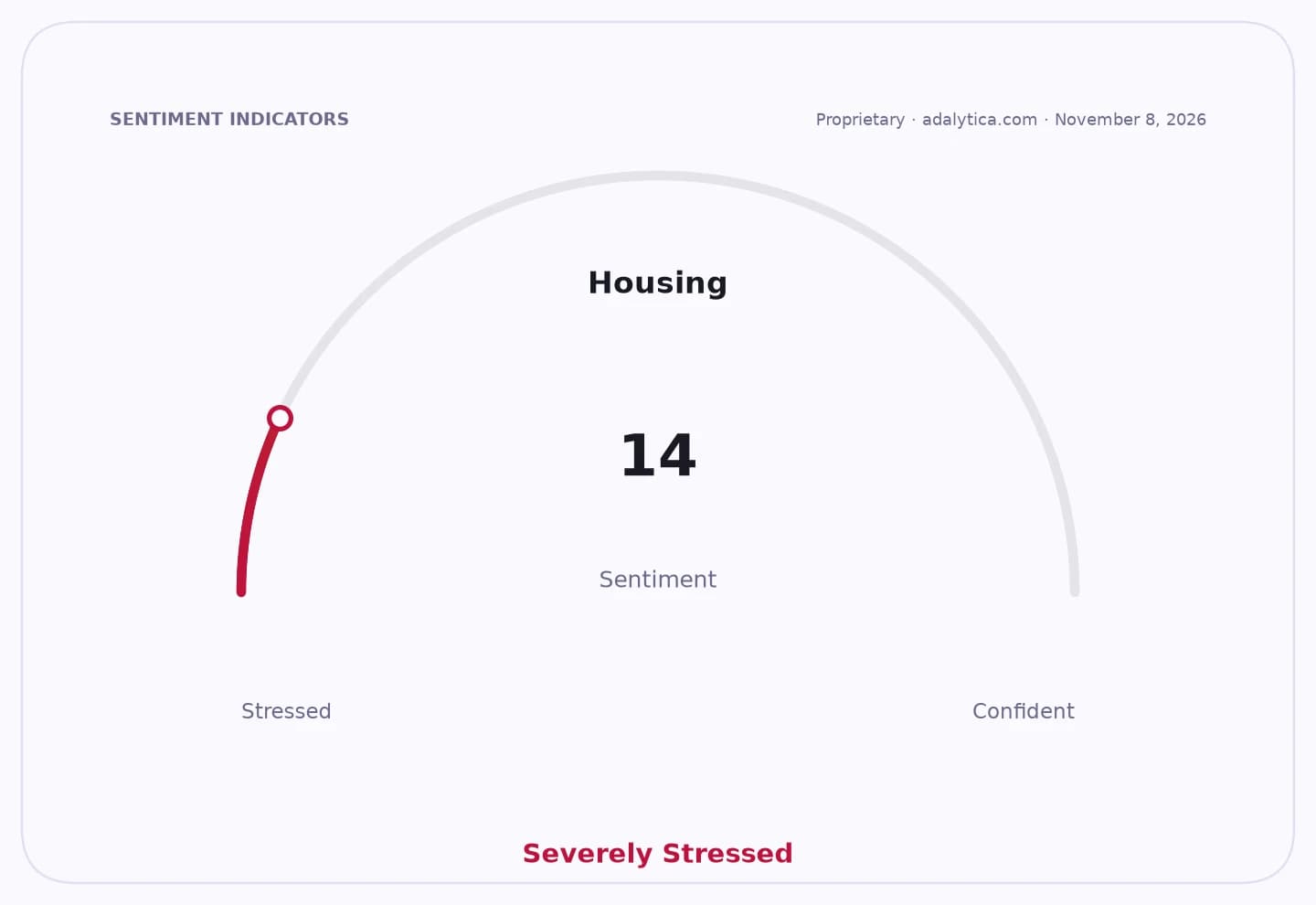
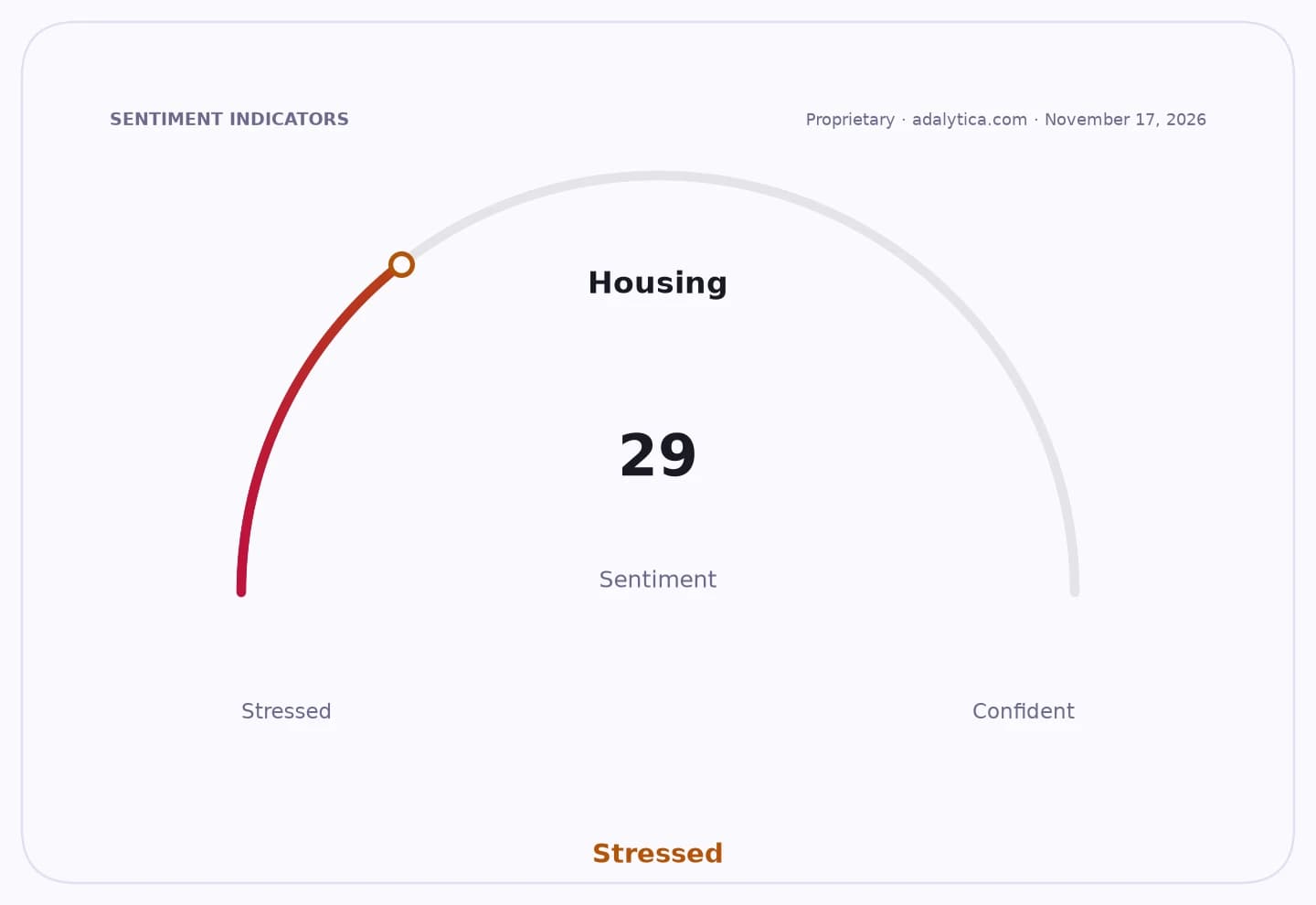
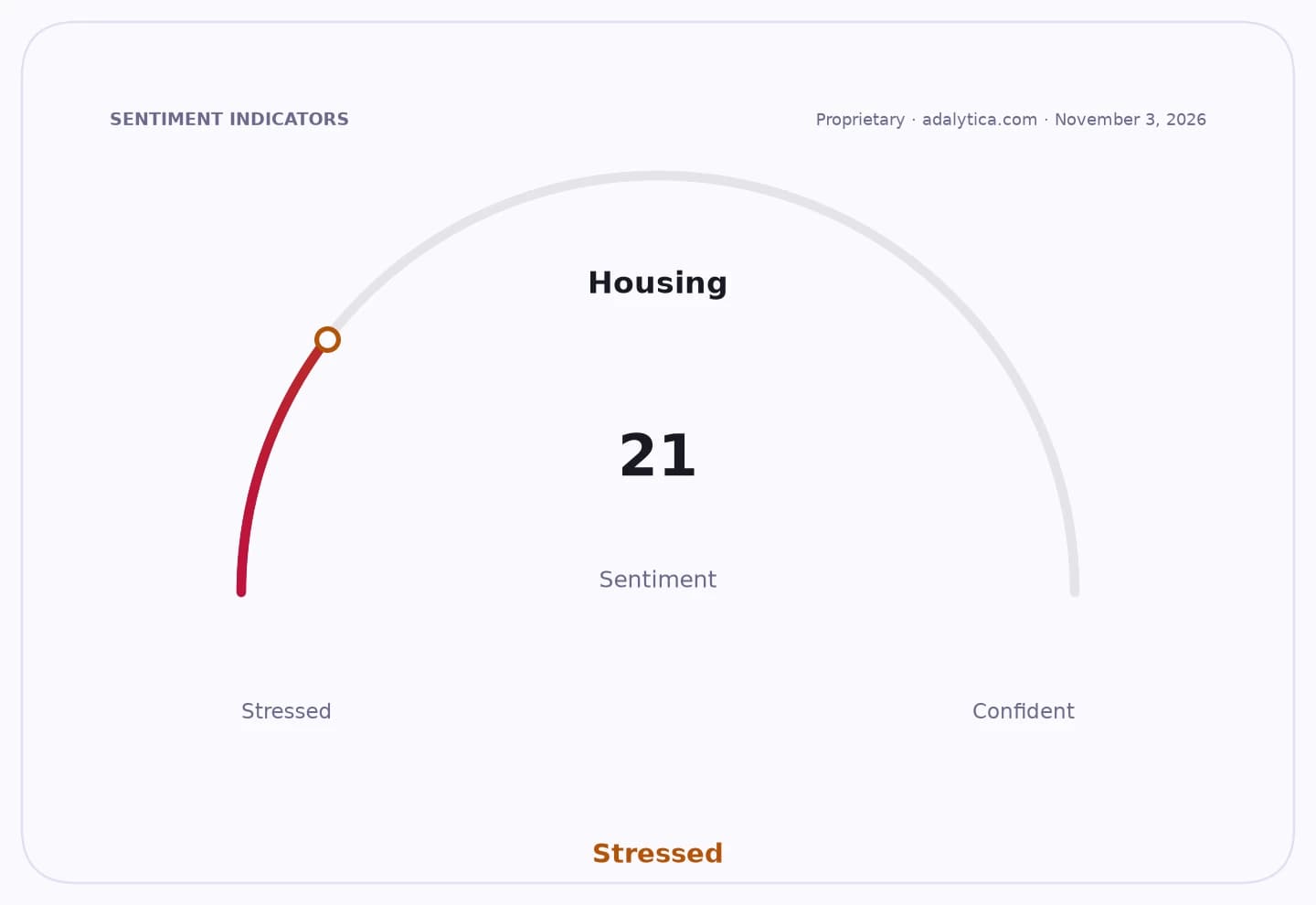
Southern California home sales have fallen to their weakest pace in at least two decades, underscoring how elevated prices and still-high borrowing costs have pushed the region into a prolonged affordability freeze.
Southern California home sales hit 20-year low
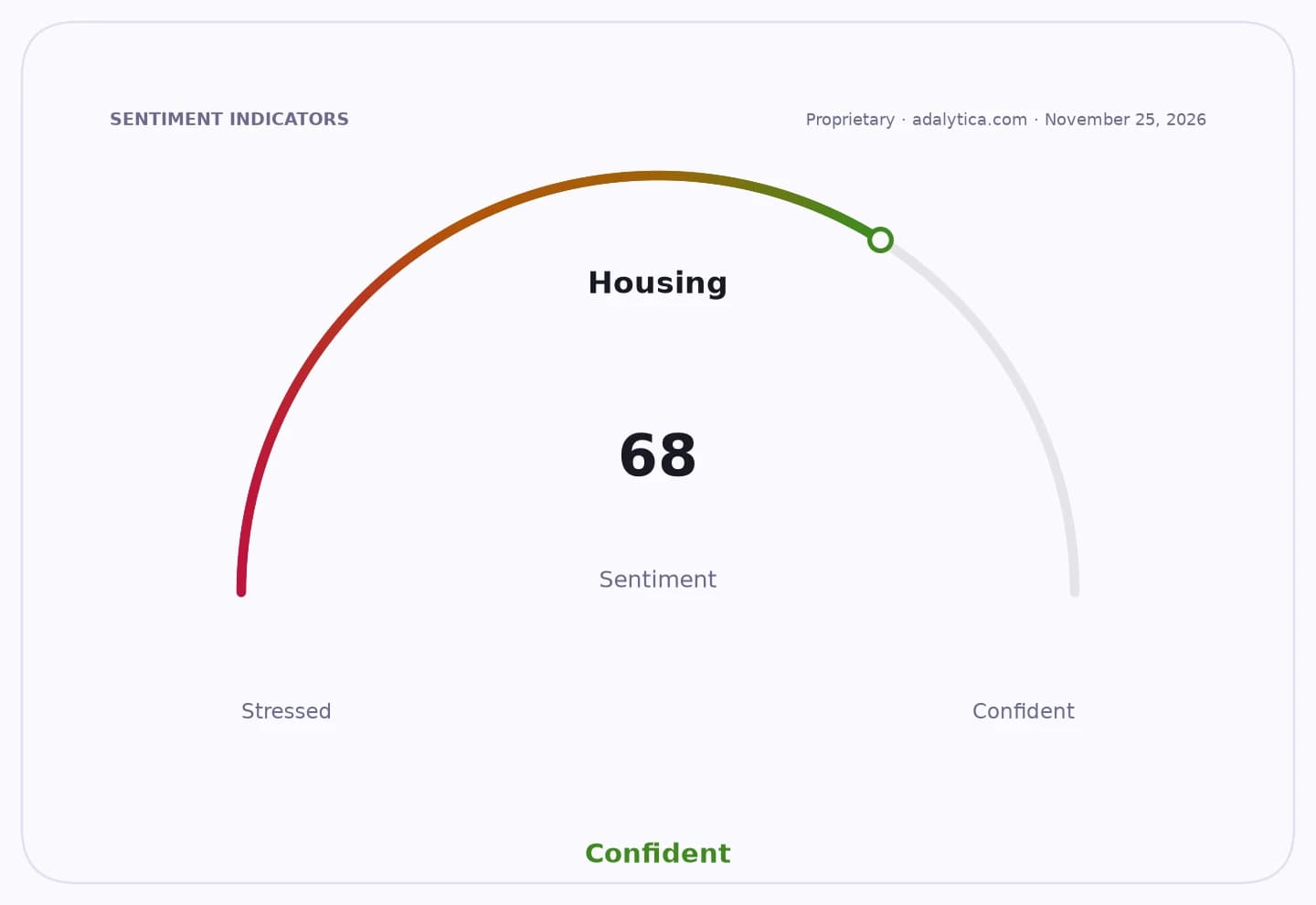
Housing
In the 12 months through August, 139,919 homes changed hands across Los Angeles, Orange, Riverside, San Bernardino, San Diego and Ventura counties, according to Attom data. That is the lowest level in the database going back to 2005 and 34% below the region’s average sales pace over the past 21 years. The slump is broad-based: San Bernardino sales are running 39% below their historical average, Riverside 36% lower and the other major counties down between 31% and 33%.
Sentiment Indicators
The significance goes beyond a weak housing print. Southern California is one of the country’s most expensive and economically important housing markets, and its freeze is a clear signal that affordability has become the binding constraint on transaction volumes. That matters for builders, mortgage lenders, brokers, landlords and local consumer spending, because fewer sales mean fewer move-related purchases, less turnover in housing stock and weaker fee and commission revenue across the real-estate chain.
What makes the downturn notable is that current sales are still 5% below the worst levels of the Great Recession. For 33 of the past 36 months, homebuying in the region has been slower than during the late-2000s crash, a striking marker of how little traction the market has gained despite some slowing in price growth.
Prices remain the core obstacle. The median Southern California home sold for $810,000 in August, Attom data show, the 11th-highest on record and only 2% below the June 2025 peak. While prices are no longer rising as fast as they did after the pandemic, they are still far above what wage growth and household budgets can comfortably absorb. Median prices are up 18% since August 2021, versus a 21% increase in average weekly wages over the same span.
The math is punishing for would-be buyers. A household purchasing at the median price with a 10% down payment and financing at August’s average 30-year mortgage rate of 6.7% would face a monthly payment of about $5,693, including taxes, insurance and fees, according to the calculation in the report. That is 75% higher than five years ago, when rates averaged 2.9%, and it requires about $81,000 in cash upfront. If mortgage rates remain near November’s 7.2% level, the monthly cost would be roughly $272 higher even if home prices do not rise further.
That is helping keep renters in the market and buyers on the sidelines. Apartment List estimated the typical two-bedroom rent in Southern California at $2,212 a month in August, or 61% less than the estimated homeownership cost. In Orange County, renting is 69% cheaper than buying on that basis; in Los Angeles it is 65% cheaper and in San Diego 64% cheaper. Zillow data cited in the report show rental searches rising while home-buying searches fell over the past year in Los Angeles, Orange and San Diego counties.
The stall in Southern California is part of a broader U.S. housing market still pinched by financing costs. A recent Zillow filing said existing home sales nationally remain around a 30-year low, while other housing-related companies have warned that elevated mortgage rates are weighing on activity. That backdrop has already shown up in housing equities, where homebuilder ETFs such as XHB and ITB have been volatile but remain sensitive to shifts in rates and affordability.
For investors, the regional data reinforce a familiar but important tradeoff: if mortgage rates stay near current levels, sales volumes are likely to remain depressed even if prices stop rising. That would favor landlords, rental platforms and select housing services firms over agents, lenders and builders tied to transaction growth. A meaningful recovery in Southern California home sales will likely require either lower mortgage rates, material price declines, or both.
| Entity | Gains | Losses |
|---|---|---|
| Renters | ▲Lower relative housing costs | ▼Less chance to buy |
| Landlords | ▲Stronger rental demand | ▼None from weaker sales |
| Homebuyers | ▲Potential bargaining power later | ▼Affordability remains stretched |
| Brokers, lenders, agents | ▲None | ▼Fewer transactions and commissions |