The housing market just delivered its sharpest setback in more than two years, and the message for investors is clear: affordability, not demand, remains the binding constraint on U.S. home sales.
Spain Housing Sales Fall 13.4% in September
Spain’s housing market contracted 13.4% year on year in September to 54,548 transactions, according to the national statistics institute, marking the biggest drop since May 2024 and leaving sales down 3.6% for the first nine months of the year. The decline is especially important because it came off a record comparison base from last year, but it still underscores how quickly activity is weakening in a market already squeezed by high prices and limited supply.
Sentiment Indicators
The damage is broad-based. Every region except Navarra posted fewer transactions, with the steepest drops in some of the country’s priciest markets: the Basque Country fell 23%, the Balearic Islands 22% and Madrid 21%. Catalonia held up relatively better, with sales down 8%. That regional pattern matters because it shows this is not just a statistical quirk or a one-off slowdown in one local market. It is a nationwide affordability story, and the weakness is strongest where valuations are richest and financing strain bites hardest.
For investors, that means the housing-cycle trade is becoming more selective. When transactions slump while prices are still rising, the market is telling you that liquidity is drying up before it tells you prices must fall. That is a warning sign for developers, brokers, mortgage lenders and construction-linked names, but it can also create opportunity in the right niches: rental housing, build-to-rent platforms, and landlords with pricing power and low vacancy.
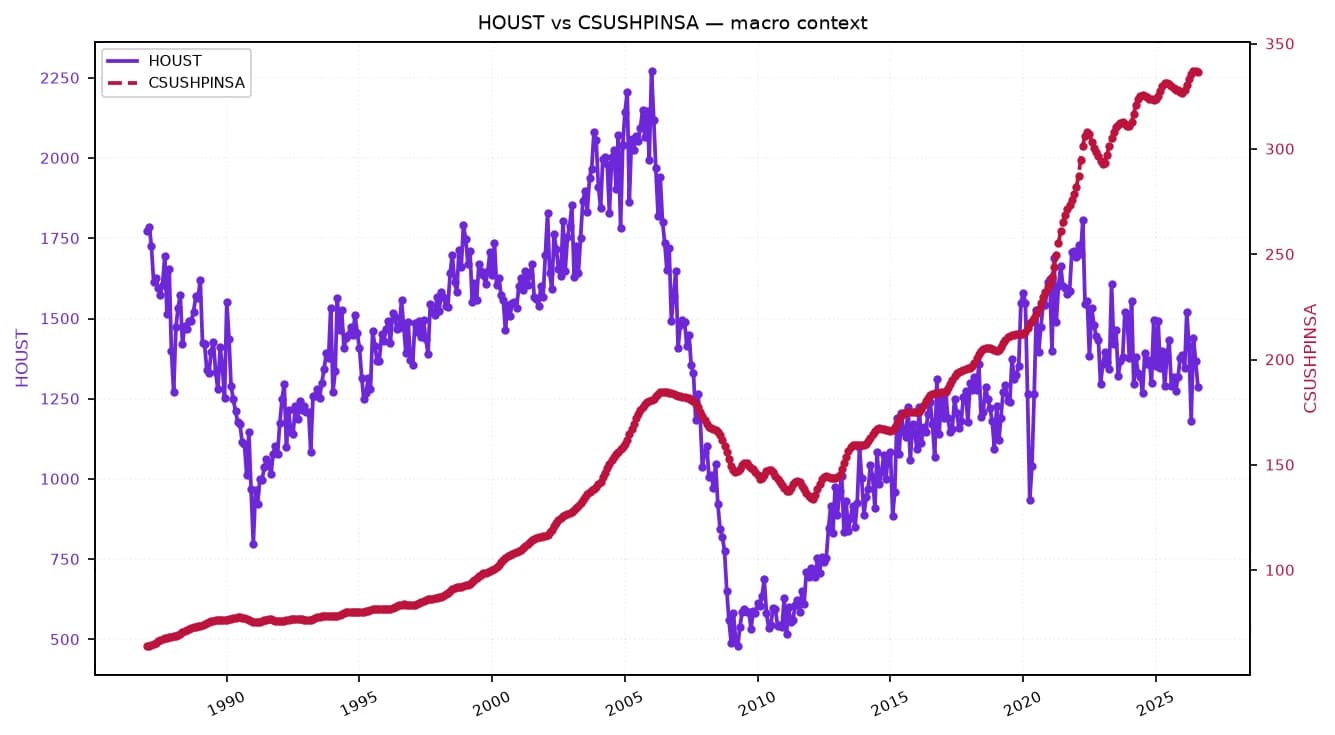
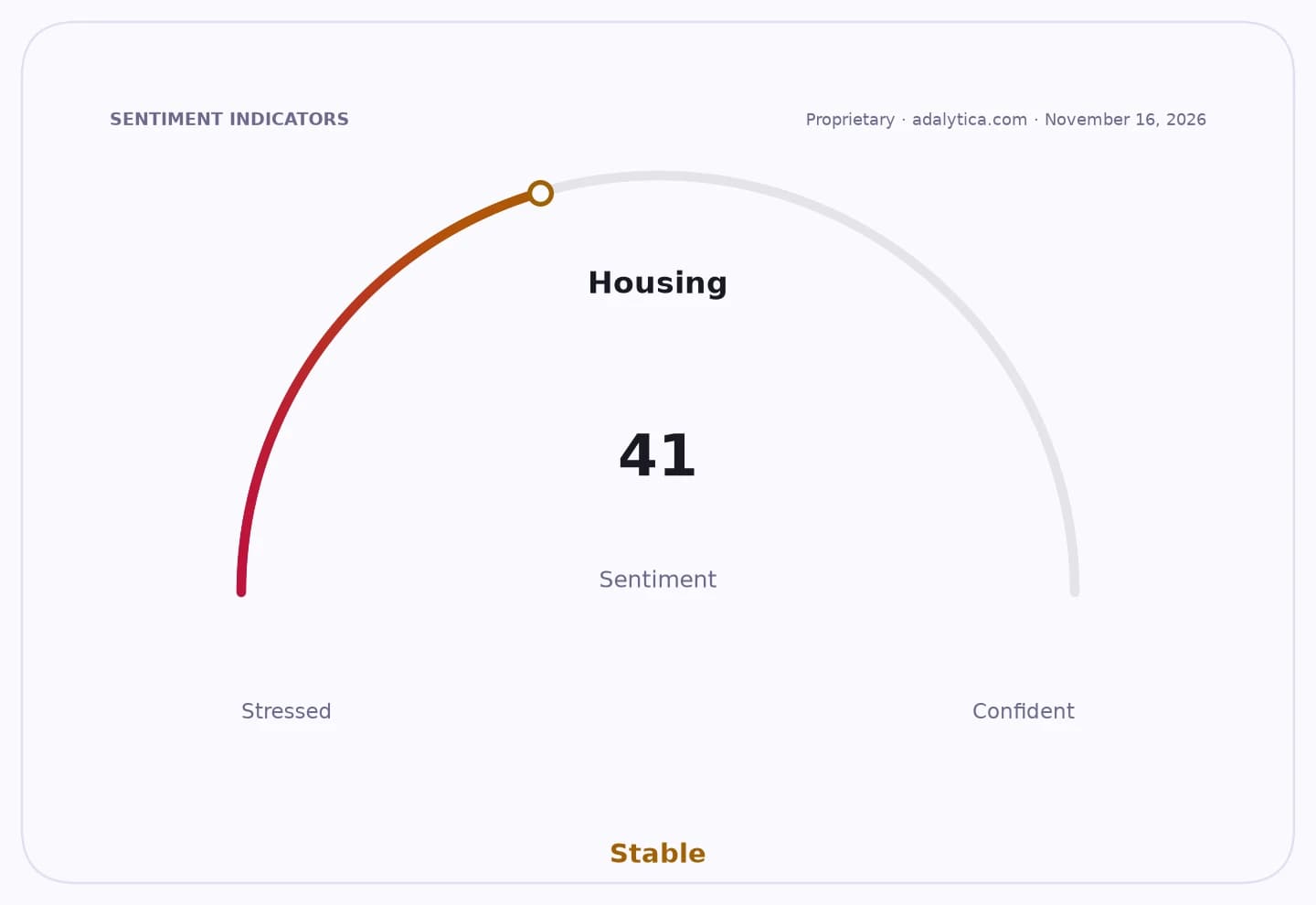
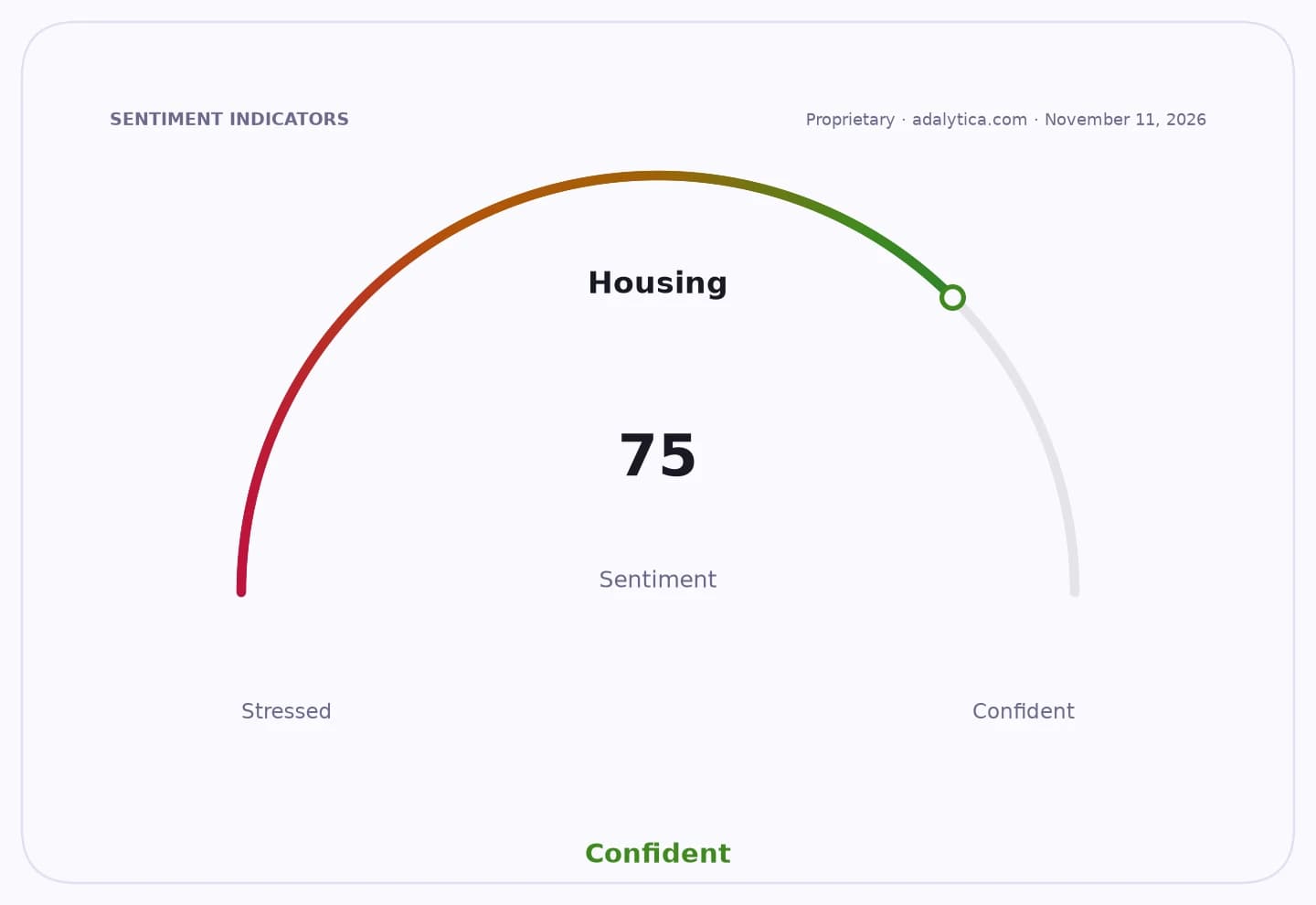
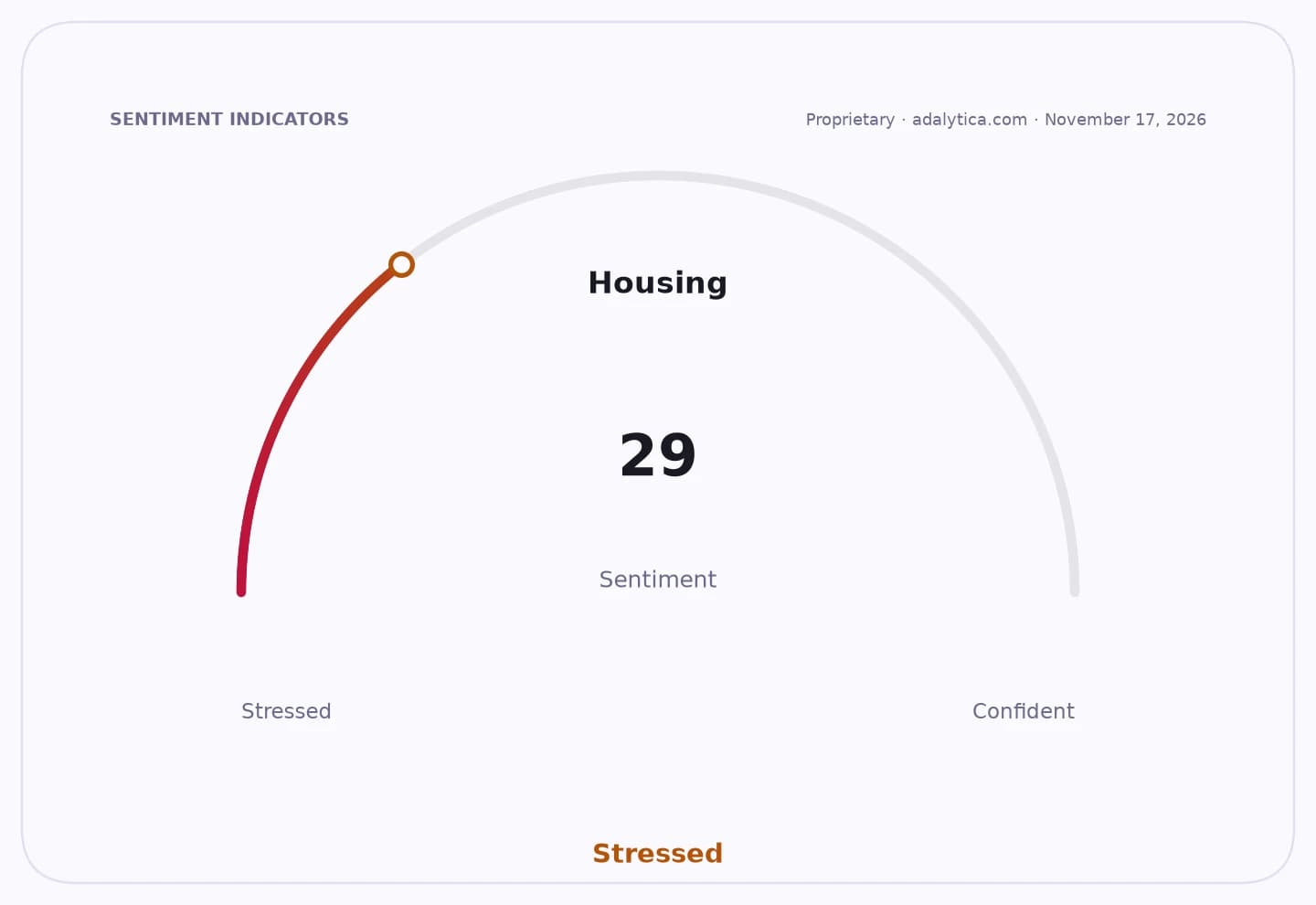
The read-through is consistent with what U.S. housing signals have been showing: elevated borrowing costs and stretched affordability suppress turnover even when underlying household formation remains intact. In the data provided, U.S. existing home sales are running around 4 million units, a 30-year low, while housing-related sentiment tracked by Adalytica sits in fear territory. That combination argues for a prolonged stagnation phase rather than a clean recovery. The market underestimates how long rates can stay high enough to freeze mobility and suppress turnover.
That is why homebuilder and housing-exposed ETFs deserve close attention even after recent rebounds. Funds such as XHB and ITB can rally when rate expectations ease, but the bigger, more durable opportunity may lie in the second-order winners: rental REITs, property managers, and suppliers tied to renovation and maintenance rather than new purchase activity. If buyers stay sidelined, existing stock becomes more valuable, and the cash flows from rentals and housing services become comparatively more attractive.
The key catalyst ahead is simple: unless mortgage rates come down enough to unlock affordability, home sales can remain depressed even if the broader economy avoids recession. For investors, that means the trade is not “buy housing” in the abstract. It is to own the parts of the housing stack that benefit from frozen turnover, constrained supply and sticky rents — and to stay cautious on anything that depends on a rapid return of first-time buyers.
| Entity | Gains | Losses |
|---|---|---|
| Rental REITs | ▲More demand for leases | ▼Weaker transaction volumes |
| Homebuilders | ▲Potential rate relief upside | ▼Slower new-home absorption |
| Mortgage lenders | ▲Refinancing upside if rates fall | ▼Fewer purchase loans |
| Home sellers | ▲Higher scarcity over time | ▼Lower turnover and pricing power loss |