Apartment owners and housing investors are getting a reminder that the rental market is still a live trade, not just a place to park capital. American Homes 4 Rent, one of the largest single-family rental landlords in the U.S., has pushed back above both its 50-day and 200-day moving averages, and the broader homebuilder ETF XHB is also trading above its long-term trend, even as housing sentiment sinks into fear.
AMH and XHB rise above key moving averages
Housing
That matters because housing is where rates, affordability and household formation all collide. When investors start leaning back into rental and homebuilding names after a rough patch, they are usually pricing in a steadier revenue backdrop for landlords and a more constructive setup for builders, even if the macro picture is still uneven. For long-term investors, that can be a useful signal: the housing complex often turns before the headlines do.
Sentiment Indicators
AMH closed at $32.52 on Nov. 16, slightly higher on the day and above its 50-day average of $31.37 as well as its 200-day average of $31.22. The stock’s recent climb from the low $30s suggests buyers are still willing to pay up for cash-generating rental housing, even after a volatile year that saw the shares fall as low as $26.92 in March. Momentum indicators also look firm, with the 14-day RSI in the high-50s and the MACD still positive, which in plain English means the stock has recovered enough to attract follow-through buying without looking wildly extended.
XHB tells a similar story for the wider housing trade. The fund closed at $101.01, comfortably above its 50-day average of $98.36, though still just below its 200-day line of $104.06. That puts the sector in a middle ground: not a clear breakout, but no longer in the kind of panic selling that often accompanies a real housing downturn. For investors, that is important because homebuilders and housing suppliers tend to respond quickly to shifts in mortgage costs, consumer confidence and order trends.
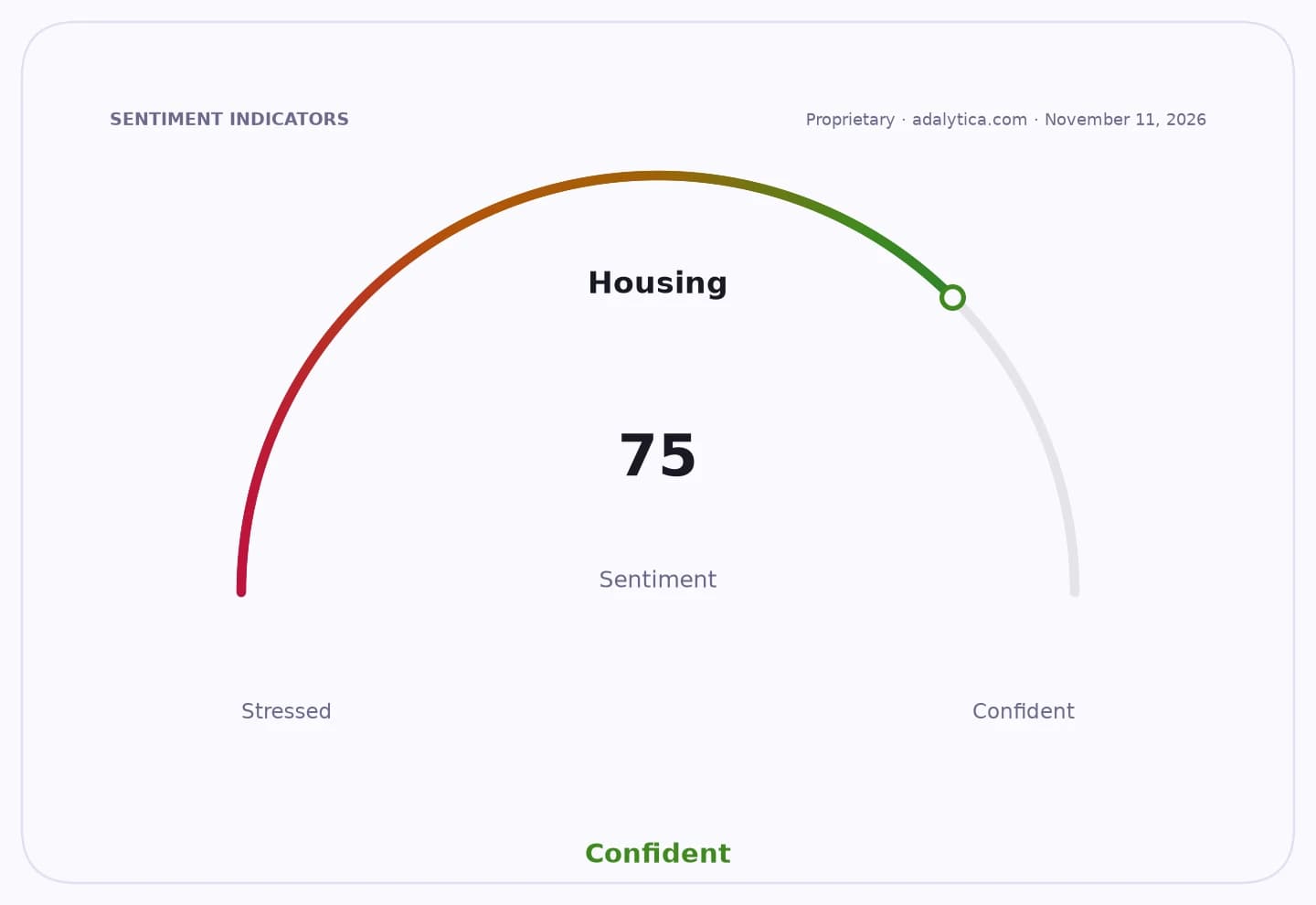
The other striking piece of the puzzle is sentiment. Adalytica’s Housing Fear & Greed Index shows “Fear” at 29, with awareness in “Extreme Fear,” while its housing and rent inflation sentiment reading is neutral at 41. In investing terms, that combination can matter more than a headline rally. When sentiment is this weak, even modest stabilization in rates, rents or demand can have an outsized effect on share prices.
For AMH specifically, the investment case remains tied to a simple long-term idea: people need places to live, and rental housing can compound steadily when occupancy stays healthy and rents rise gradually over time. That makes the stock less about chasing a fast move and more about owning a resilient business through cycles. The risk, of course, is that higher borrowing costs, softer rent growth or a weaker labor market could pressure the sector again. But for patient investors, housing weakness often creates the kind of entry points that look obvious only in hindsight.
The bigger takeaway is that housing is still a stock-picking market, not an all-or-nothing bet. REITs like AMH can benefit from stable rental demand even when homebuilders and related suppliers wobble, while broad housing funds such as XHB can gain if the market starts to believe the worst of the affordability squeeze is behind it. Investors building wealth over 3 to 10 years should keep watching whether this recovery holds, because if it does, the next leg in housing may come from fundamentals rather than sentiment.
| Entity | Gains | Losses |
|---|---|---|
| AMH shareholders | ▲Trend recovery; rental income thesis | ▼Rising-rate risk |
| XHB holders | ▲Broader housing rebound potential | ▼Housing volatility |
| Homebuyers | ▲More eventual supply if builders recover | ▼Still-tight affordability |
| Skeptical investors | ▲Potential re-entry opportunity | ▼Missed upside if housing stabilizes |