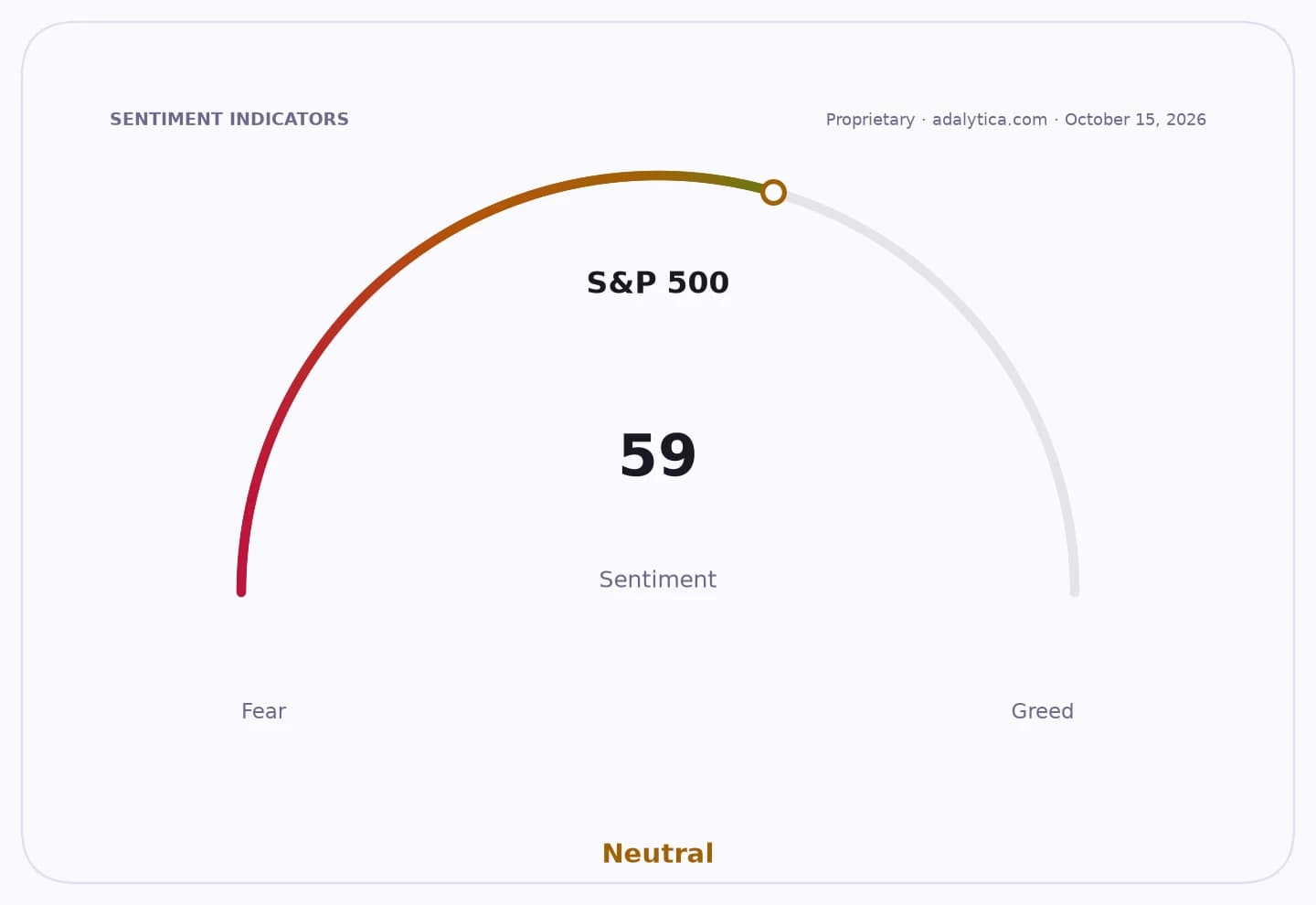
Citadel is still positive on U.S. equities, but the bigger message for investors is that the easy money in buying the index may be fading just as earnings season opens a wider gap between the strongest companies and everyone else.
S&P 500 Earnings Season Drives Stock Picking

That matters because markets are being pulled in two directions at once. On one side, earnings estimates are still rising even as valuations have come down, a combination that usually supports stocks over time. On the other, the rally is becoming more selective, with performance increasingly driven by a handful of companies and sectors that can still deliver upward earnings revisions. In that kind of tape, broad index exposure can leave investors owning plenty of stocks that look cheap for a reason.

Scott Rubner, Citadel’s markets strategist, said roughly 47% of the S&P 500’s market value is set to report between Oct. 28 and Nov. 3, making the next few weeks the key test for the bull case. He also pointed to a constructive backdrop in areas such as memory chips and AI infrastructure, where 12-month earnings-per-share estimates have climbed 25% since the end of June even as valuation multiples have contracted 34% and 22%, respectively. That is the sort of setup long-term investors should pay attention to: improving fundamentals, lower prices, and still-strong secular demand.
The market is already hinting that stock-picking matters more than index hugging. Citadel said 76% of S&P 500 names have outperformed the index since the relative low in the equal-weighted S&P on Oct. 7, with better breadth across defensive, cyclical and rate-sensitive groups. That kind of rotation is healthy, but it also means leadership is no longer as concentrated as it was earlier in the year. For investors, that creates opportunity — and risk. The winners can compound quickly, but the losers can lag badly if earnings miss or guidance disappoints.
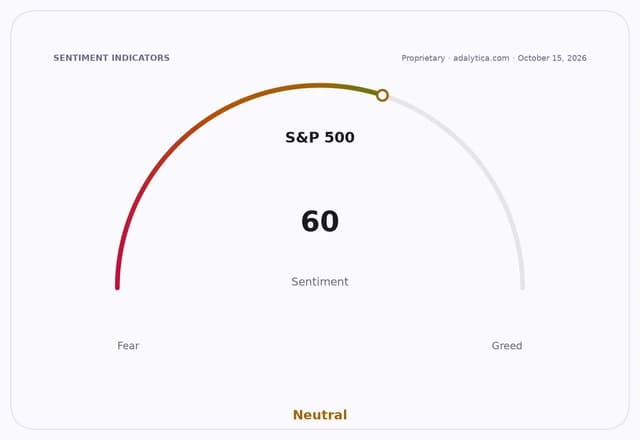
Buybacks may add another tailwind. Citadel said 85% of the S&P 500 by weight will have exited blackout periods by Nov. 9, which should gradually restore a key source of support for share prices. At the same time, implied volatility on the S&P 500 is near annual lows, making downside protection relatively inexpensive. That is useful for investors who want to stay invested without pretending volatility has disappeared. Conventional indicators on the major indexes reflect that same mixed tone: SPY is above its 50-day and 200-day moving averages, but short-term momentum has cooled, while the Russell 2000 has struggled and remains well below its summer highs.
The broader narrative here is not that Citadel has turned cautious. It is that a bull market can still reward patience while becoming less forgiving. In year-three and year-five time frames, that usually argues for owning quality businesses with rising earnings, strong cash flow and durable moats, rather than assuming the index itself will do the heavy lifting. If you are building wealth slowly and sensibly, this is a market for selectivity, diversification and discipline. Stock-picking is back in style — and long-term investors should take that seriously.
| Entity | Gains | Losses |
|---|---|---|
| High-conviction stock pickers | ▲Better odds of beating the index | ▼More research work |
| Quality growth stocks | ▲Reward for earnings upgrades | ▼Less room for weak stories |
| S&P 500 index buyers | ▲Broad market exposure | ▼Less upside from dispersion |
| Cash-rich companies with buybacks | ▲Added price support | ▼Firms in blackout periods |