SpaceX is seeking about $40 billion in funding to buy Nvidia chips for an artificial-intelligence expansion, a move that underscores how expensive the race for computing power has become and why investors are increasingly treating AI infrastructure as a financing story, not just a technology one.
SpaceX seeks $40 billion for Nvidia chips

The company is in talks with banks and asset managers, including PIMCO, and is considering roughly $10 billion of bank debt alongside about $30 billion of investment-grade bonds, according to people familiar with the matter. Apollo is expected to lead the deal and help place the debt with a broad range of investors.
Sentiment IndicatorsⓘProprietary · adalytica.com · October 9, 2026
This is a snapshot — live sentiment, awareness and momentum for 130+ markets update continuously in the dashboard.Open AlphaPulse
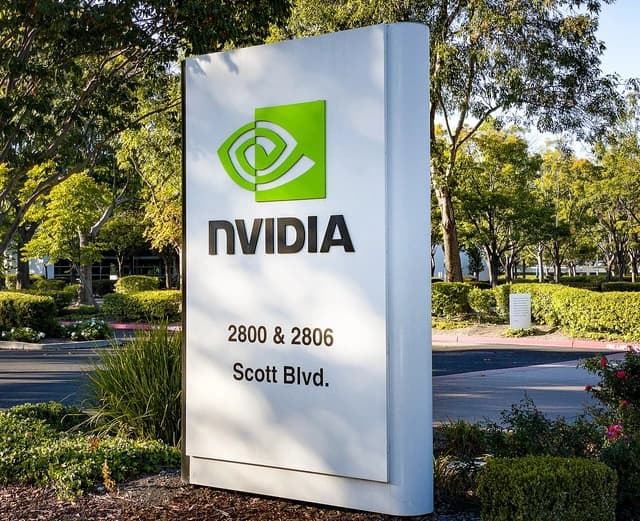
The scale of the plan highlights the capital intensity behind AI, where access to advanced processors has become a strategic bottleneck. Morgan Stanley estimates external financing for AI infrastructure will total $1.5 trillion by 2028, as technology companies pour money into data centers, power systems and the chips needed to train and run large models.
For SpaceX, the proposed financing would deepen Elon Musk’s push to tie his businesses more tightly to Nvidia hardware. Musk has said the company intends to use Nvidia chips exclusively for its data centers, and he recently said xAI’s Colossus 2 site could have more than twice as many Nvidia chips by December.

The deal also reinforces Nvidia’s grip on the AI supply chain. The chipmaker has already lined up financing partnerships with Apollo, BlackRock, Blackstone, Brookfield, Goldman Sachs and KKR to mobilize more than $500 billion for AI infrastructure projects, showing how lenders and private capital are moving to accommodate the sector’s funding needs.
The news puts a spotlight on investor appetite for AI-linked credit at a time when financing costs remain elevated, with the 10-year U.S. Treasury yield around 5.3%. SpaceX shares fell about 2% in early trading, while Nvidia rose 0.5%, suggesting the market still sees chip demand as the cleaner beneficiary.
For investors, the key question is whether this wave of borrowing can be absorbed without stressing balance sheets or pricing power. If the funding is completed, it would mark one of the largest private-market bets yet on AI infrastructure and further tie capital markets to the chip spending boom.
| Entity | Gains | Losses |
|---|---|---|
| Nvidia | ▲More chip demand | ▼Less inventory flexibility |
| SpaceX | ▲AI buildout capacity | ▼Higher debt burden |
| Apollo/PIMCO/lenders | ▲Fee income, spread | ▼Credit exposure |
| Competing AI developers | ▲Validation of sector funding | ▼Tougher chip access |