Spanish households are shifting money out of low-yield bank balances and into accounts, funds and state debt as inflation erodes purchasing power again, with cash and deposits still making up 32% of household financial wealth but steadily losing share.
Spain households move cash into funds and bonds

The shift matters because Spain’s savers are not chasing risk so much as trying to preserve real returns. A renewed inflation spike tied to Middle East tensions, alongside the Bank of Spain’s 3.9% inflation forecast, is pushing families to look for anything that pays above the rise in prices.
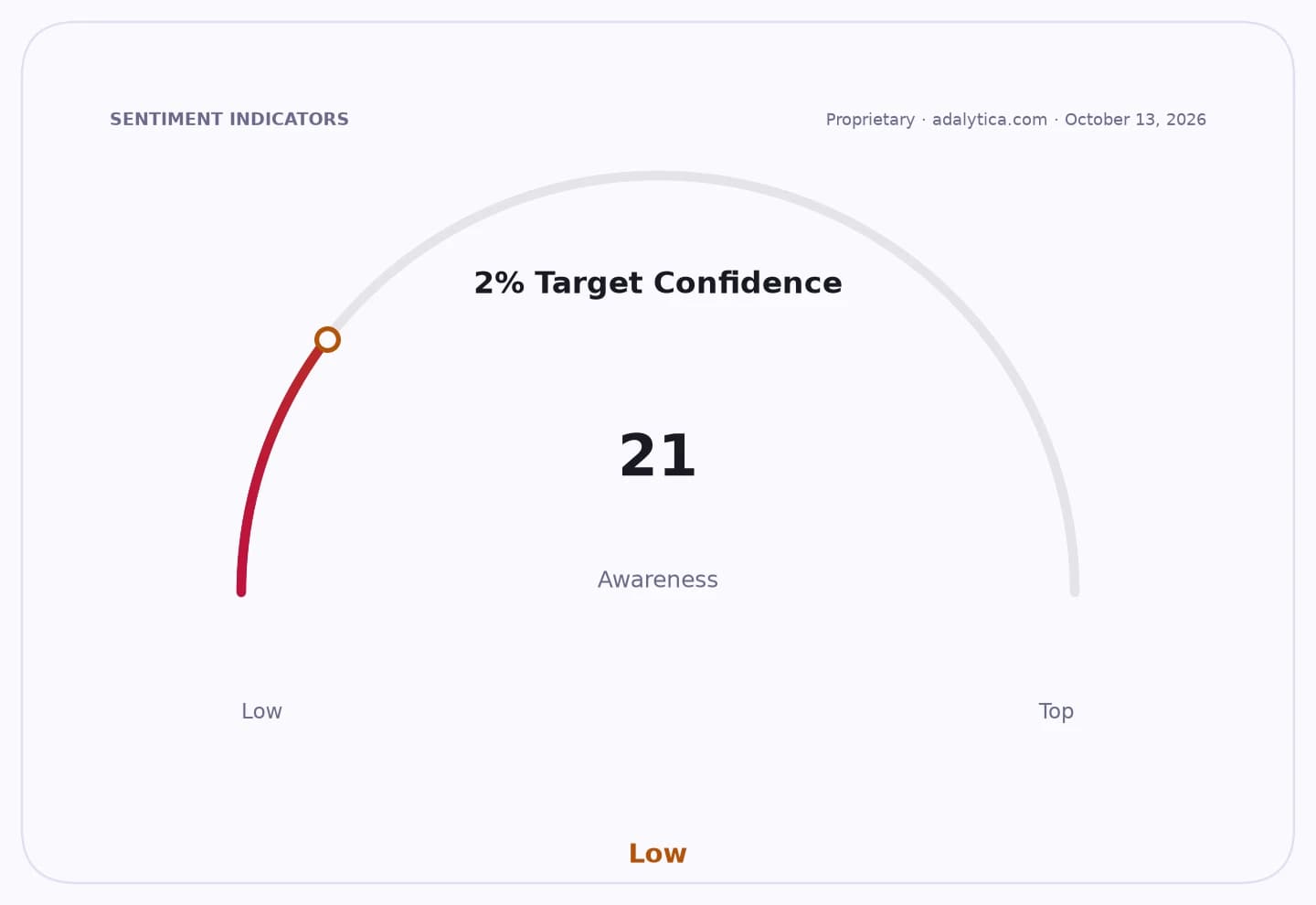
Sentiment IndicatorsⓘProprietary · adalytica.com · October 21, 2026
This is a snapshot — live sentiment, awareness and momentum for 130+ markets update continuously in the dashboard.Open AlphaPulse

Household net wealth has climbed to 2.8 trillion euros, but about a third still sits idle in current accounts and is exposed to erosion from higher prices. That conservative allocation is changing: the share held in cash and deposits has fallen from 38.6% in 2022 to 32% in June 2026, while investment funds have risen to a record 17.5% of assets, followed by equities at 14.3% and pensions and insurance at 11.4%.
The biggest winners are products that offer yield without forcing savers far out on the risk curve. Neobanks and digital platforms such as Revolut, Trade Republic and N26 are offering 2.5% to nearly 4% on remunerated accounts, drawing clients away from traditional banks that have kept current-account rates near 0.1% despite the European Central Bank’s rapid tightening cycle.
That has cracked the long-standing dominance of Spain’s branch-based banking model. More than 950 billion euros still sits in transferable deposits at the big banks, but the rise of digital competitors has forced incumbents to roll out cash bonuses for payroll transfers and other promotions to slow the outflow.
Spain’s state has also become a key refuge for retail money. Direct household holdings of Treasury bills jumped from 212 million euros in 2021 to more than 25.9 billion euros at the end of 2023, and investors still held 19.6 billion euros in bills and 16.3 billion euros in bonds at midyear, with auction yields recently back above 3%.
The clearest structural winner, though, is the fund industry. Households put 25.18 billion euros into mutual funds in the first half of the year, lifting assets to 639 billion euros, while almost three-quarters of investors say they expect to use index funds over the next 12 months to cope with volatility and persistent inflation.
For investors, the story is about pricing power, not just savings behavior. Banks face pressure to pay more for funding, asset managers are benefiting from inflows and fees, and online platforms are gaining market share from a consumer base that is becoming more rate-sensitive as inflation stays sticky.
The next test is whether inflation cools enough to reverse the rush for yield, or whether Spain’s savers keep moving money toward remunerated accounts, Treasury paper and funds that can at least keep pace with prices.
| Entity | Gains | Losses |
|---|---|---|
| Neobanks and digital brokers | ▲More retail inflows | ▼Traditional branch banks |
| Investment funds and index products | ▲Record household inflows | ▼Idle cash balances |
| Spanish households | ▲Better yields, some inflation protection | ▼Purchasing power in low-rate accounts |
| Big Spanish banks | ▲Less, if any, from deposit stickiness | ▼Margin pressure from higher funding costs |