Workers earning Spain’s minimum wage are set to keep paying personal income tax unless the government secures another legal fix in parliament or after the next election, reviving a politically charged fight over how far the country should let wage gains flow through to take-home pay.
Spain minimum wage workers may still pay income tax
The issue matters because Spain’s minimum wage has risen far faster than the income-tax thresholds that were originally built around a much lower pay floor. The SMI has climbed 66% since 2018, from 735.90 euros a month to 1,221 euros in 2026, and that rise has now pushed the debate beyond wages and into tax policy, household spending power and the credibility of the government’s broader worker-friendly agenda.
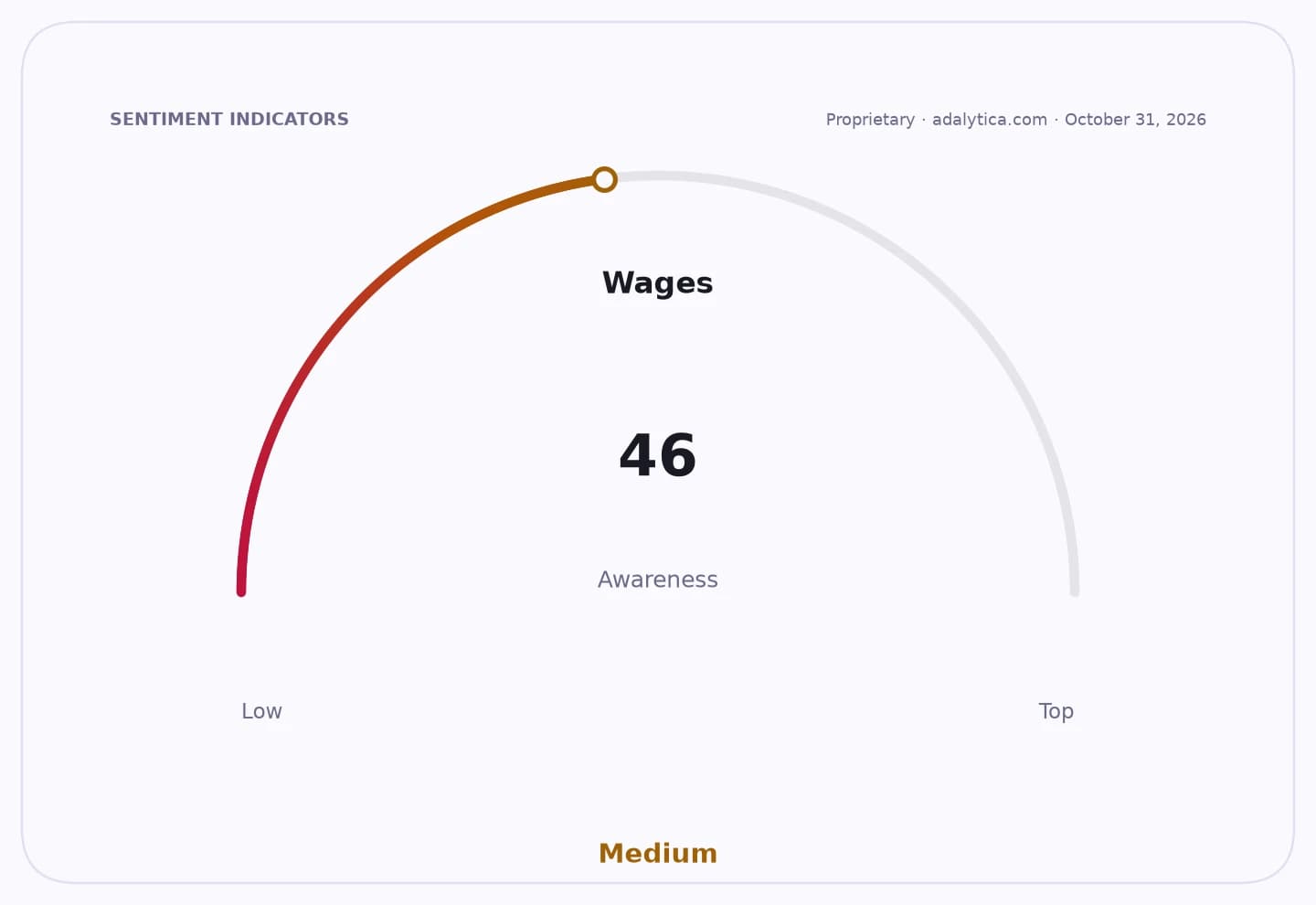
Sentiment Indicators
For investors, the implications are less about one payroll line item than about the shape of Spain’s labor market and consumer demand. If minimum-wage earners lose part of their pay rise to IRPF, the boost to disposable income is smaller, which can temper spending among lower-income households that tend to spend rather than save. That matters for retailers, supermarkets, utilities and other domestically exposed businesses that depend on resilient consumption.
It also underscores the friction inside Spain’s coalition politics. The wage increase itself can be approved by the government through a royal decree and does not need parliamentary ratification. The tax exemption is different: it requires a legal change, and sources cited by Europa Press said there is no fixed date for that adjustment. In other words, Madrid can raise the minimum wage on its own, but it cannot guarantee the net pay outcome without a separate legislative maneuver.
That distinction has been at the center of repeated clashes between the finance ministry and the labor ministry. For households, it is a reminder that a higher headline wage does not always translate into a higher after-tax income. For policymakers, it is a test of whether Spain wants to preserve the political symbolism of the minimum wage as a pay floor untouched by tax, or accept that the tax code now needs to keep pace with wage growth.
The timing is what makes this politically delicate. The government plans to raise the SMI before the November 29 election, but the exemption fix could slip to the Permanent Deputation or into 2027, when a new Congress may take over. That leaves investors watching not just the next wage decision, but whether Spain’s next parliament leans toward a cleaner exemption, a narrower deduction or no fix at all.
| Entity | Gains | Losses |
|---|---|---|
| Minimum-wage workers | ▲Higher gross pay | ▼Lower net pay without exemption |
| Spanish retailers and consumer firms | ▲Stronger wage floor supports demand | ▼Spending boost fades if taxed |
| Government coalition | ▲Can claim wage gains | ▼Faces fresh political infighting |
| Tax authorities | ▲Higher income-tax intake | ▼Pressure to grant relief |