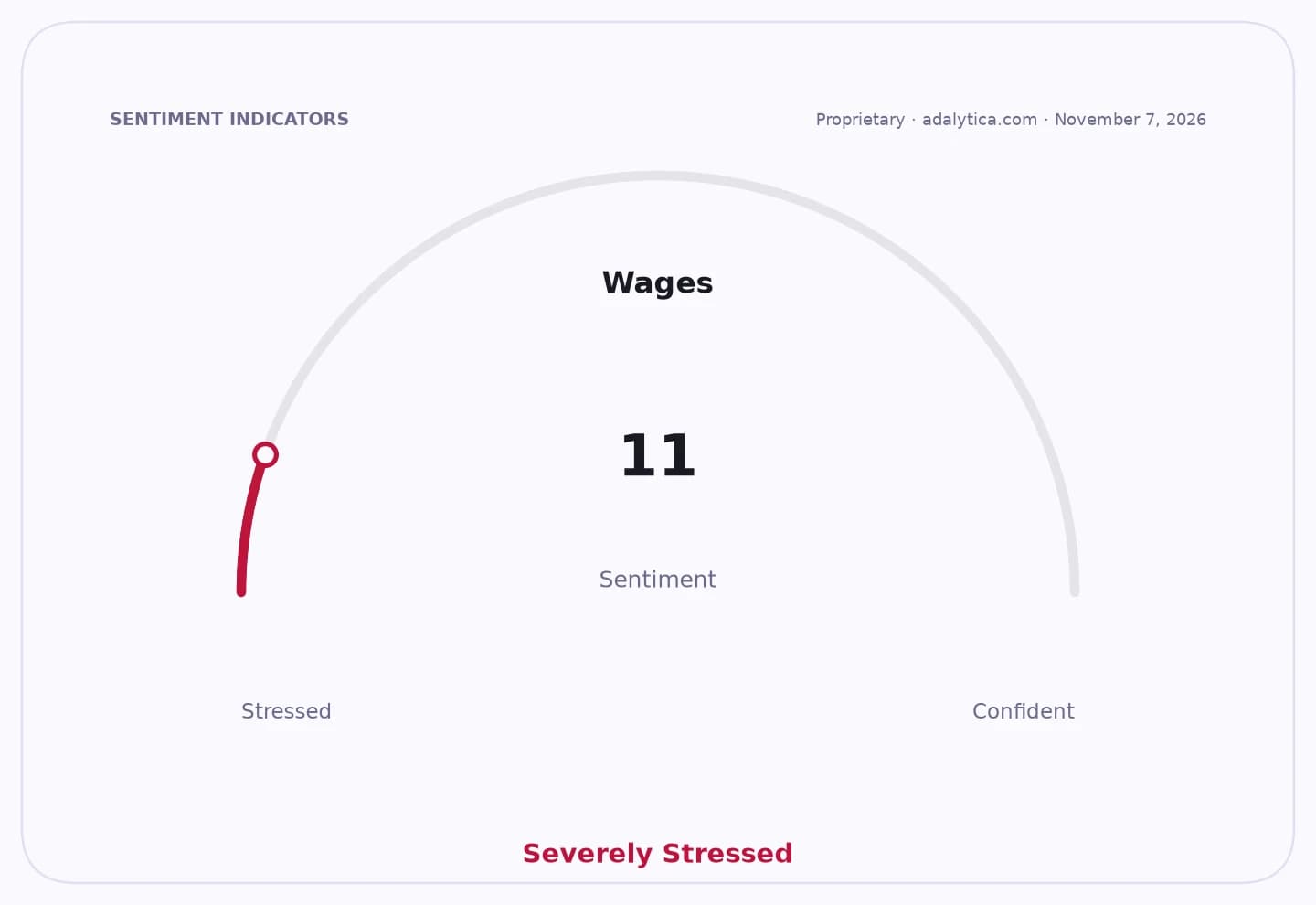
Spain is preparing to raise the minimum wage by 5.3% in 2027, a move that would push monthly pay to 1,286 euros and keep low-wage workers out of personal income tax — a combination that would boost take-home pay without immediately raising the tax bill.
Spain minimum wage rise to 1,286 euros in 2027
That matters because the minimum wage is not just a labor-policy headline; it is a direct lever on household spending power in an economy where roughly 2.5 million people are paid at or near the floor. If approved, the new level would take annual gross pay to 18,004 euros, up from 1,221 euros a month today, or about 65 euros more each month in 14 installments.
Sentiment Indicators
The government’s pitch is straightforward: protect purchasing power while supporting consumption. For workers at the bottom of the pay scale, the fact that the increase would remain exempt from IRPF is just as important as the wage rise itself, because it means the benefit would land more cleanly in net income. In a period when inflation has been eroding budgets across Europe, that extra cash tends to flow quickly into essentials such as food, transport and rent.
For investors, the key question is not whether this is politically popular — it is — but who absorbs the cost. Employers with a large share of low-paid staff face higher labor expenses, although the draft says only wages below the new annual minimum would need to be adjusted. That reduces the immediate shock, but it still squeezes margins in labor-intensive sectors such as retail, hospitality and personal services.
The move also underscores how European wage policy is becoming a bigger factor in inflation and earnings forecasts. Spain’s labor ministry says the proposal is still open to consultation, with a final cabinet decision needed before it becomes law. The planned increase sits between the government’s expert panel recommendation of 4.9% and the 7% demanded by unions, which suggests the final number may still move. But the direction is clear: higher floors, more protection for workers, and continued pressure on businesses to do more with less.
Long-term investors should view this less as a trading event than as part of a broader shift in Europe toward firmer wage support. That can be good for consumption over time, but it also makes selectivity more important, especially among companies with thin labor-cost buffers. The stocks best placed to handle it will be those with pricing power, strong cash flow and the ability to pass through higher wages without losing customers. For everyone else, it is a reminder that labor costs are becoming a structural issue worth watching.
| Entity | Gains | Losses |
|---|---|---|
| Minimum-wage workers | ▲Higher take-home pay | ▼None directly |
| Spanish households | ▲More disposable income | ▼Potentially higher prices |
| Labor-intensive employers | ▲None | ▼Higher wage bills |
| Consumer-facing companies | ▲Support from spending power | ▼Margin pressure from payroll costs |