Spain’s cheapest mortgages for October 2026 begin at 2.55% TIN, but the real story for homebuyers is that even the “best” deals still come with conditions, fees and cross-selling requirements that can quickly lift the true cost of borrowing.
Spain Mortgage Rates October 2026 Best Offers
That matters because housing affordability remains under pressure across developed markets. Mortgage rates are still elevated by historical standards, U.S. 30-year mortgage rates were running around 7.4% in mid-October and are forecast to edge higher, while the 10-year Treasury was holding near 5.1%. In that kind of environment, every decimal point on a mortgage offer can determine whether a household can buy now, wait longer or walk away.
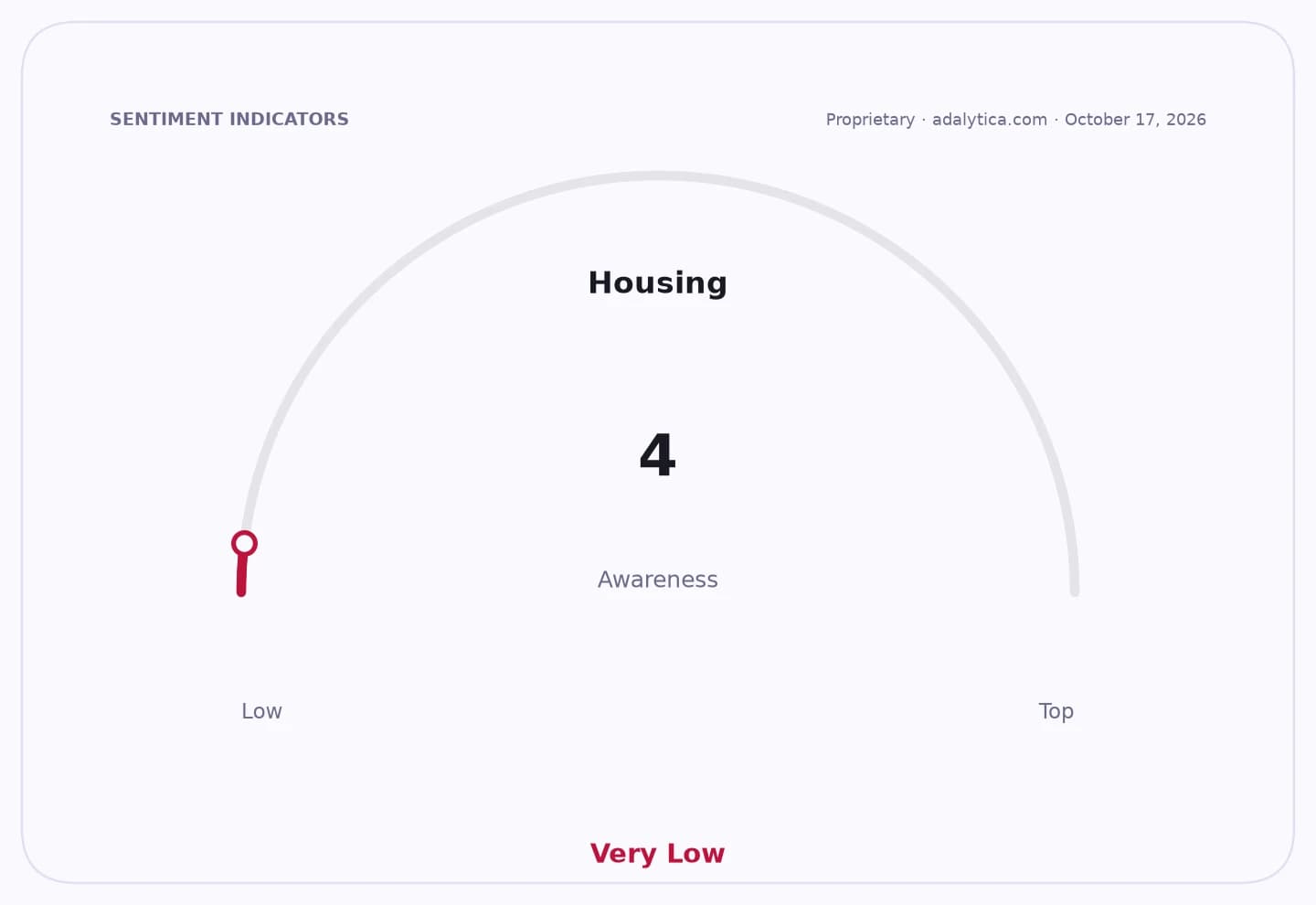
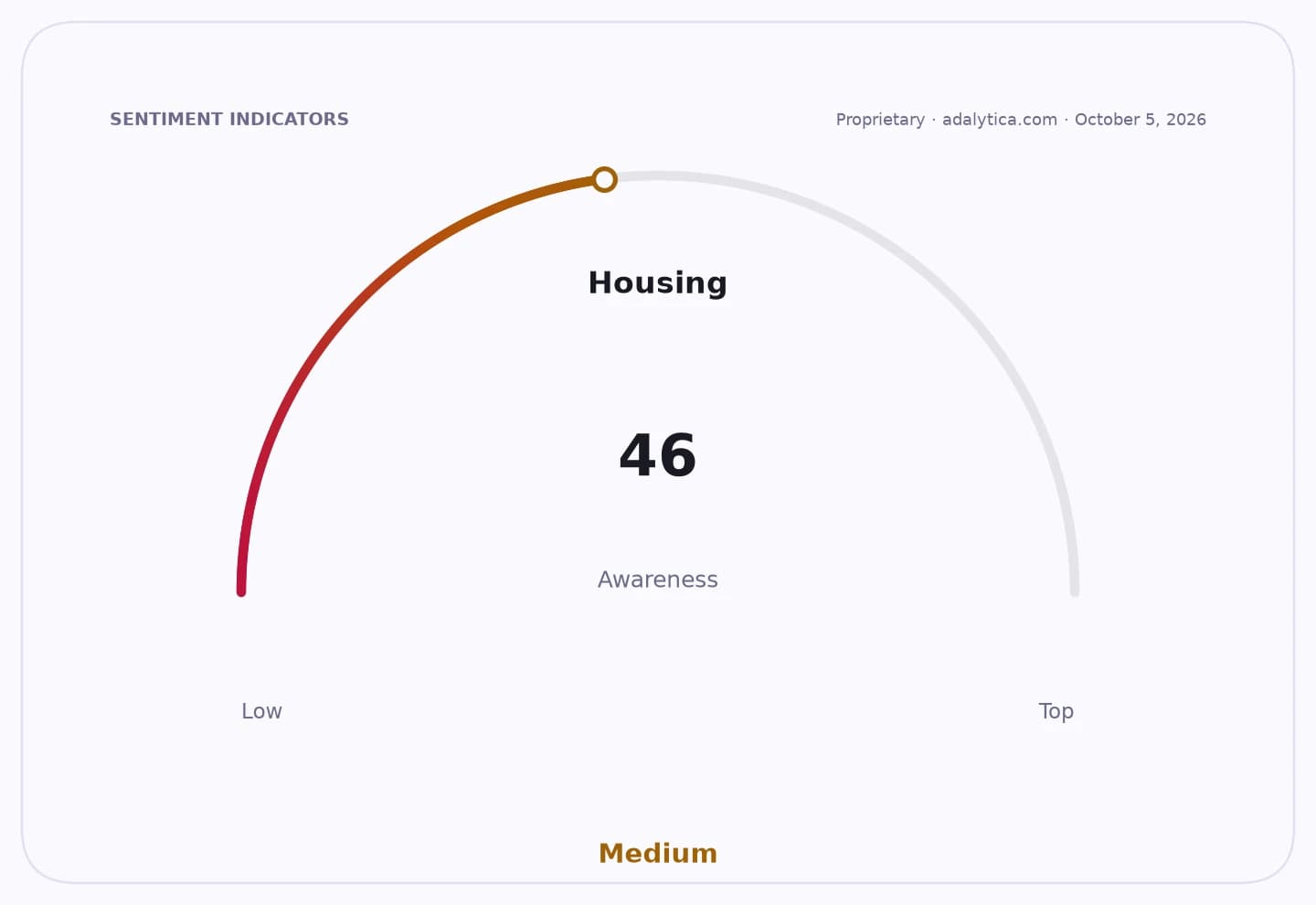
Sentiment IndicatorsⓘProprietary · adalytica.com · October 19, 2026
This is a snapshot — live sentiment, awareness and momentum for 130+ markets update continuously in the dashboard.Open AlphaPulse
Against that backdrop, Kelisto.es says Ibercaja’s fixed-rate “Vamos” mortgage is the cheapest fixed option this month at 2.55% TIN, with no opening commission, though borrowers may face early repayment charges of 2% in the first 10 years and 1.5% thereafter if the bank suffers a financial loss. To get that rate, customers must route salary income above 2,500 euros a month through the bank and take out a package of linked products, including home and life insurance, card use and a savings plan.
For borrowers willing to accept rate risk, Kutxabank’s variable mortgage leads the market at euribor plus 0.49%, after a 2.07% introductory rate for the first year. It also charges no opening fee, but early repayment costs can apply at 0.25% in the first three years or 0.15% in the first five, depending on the option chosen.
Banco Sabadell’s mixed mortgage is another eye-catching offer, with a fixed rate of 1.8% TIN for the first three years before switching to euribor plus 0.7%. The article says it also stands out for having no opening fee or early repayment charge, although customers must open an account and buy damage insurance. For long-term borrowers, that kind of hybrid structure can be attractive if they want short-term certainty without fully committing to a fixed rate for the entire loan term.
The economic significance is simple: mortgage pricing is still being driven by the same forces that are squeezing housing demand globally — elevated benchmark rates, sticky inflation concerns and cautious lenders. In Spain, as elsewhere, the advertised rate is only the starting point. The monthly payment can look competitive, but linked products and penalties can materially change the economics of the loan over time.
That is why investors should pay attention even if they are not shopping for a home loan. Mortgage affordability influences transaction volume, refinancing activity and housing-linked consumption. It also shapes earnings for mortgage lenders and brokers, while affecting banks’ ability to sell insurance, pensions and deposit products alongside loans. When rates remain high, borrowers tend to delay purchases, which can slow origination volumes but may preserve pricing power for the strongest lenders.
For listed mortgage players, the market message is mixed. Rocket Companies has recently traded well below its 50-day and 200-day moving averages, with its stock around $10.78 and an RSI reading near 38, reflecting a weak technical setup. United Wholesale Mortgage has also been under pressure, near $1.05 and well below its longer-term moving averages, while Annaly Capital Management has retreated to about $18.23 after a sharp drop from earlier highs. Those price moves underscore how sensitive the sector remains to rate expectations and mortgage demand.
The broader narrative here is not just that one bank has a cheaper loan than another. It is that in a stubbornly expensive rate environment, borrowers are being forced to shop harder, compare finer details and think more like long-term planners than deal chasers. The lowest rate is not always the lowest cost, and investors in the housing ecosystem should expect that tension to shape loan growth, margins and market sentiment for months to come.
For homebuyers, the takeaway is to compare the full package, not just the headline rate, and to treat mortgage shopping as a multi-year decision. For investors, the better question is which lenders can keep winning business without giving away too much margin. That is where the durable franchises deserve a place on the watchlist.
| Entity | Gains | Losses |
|---|---|---|
| Ibercaja | ▲Fixed-rate borrowers seeking certainty | ▼Banks competing on headline pricing |
| Kutxabank | ▲Rate-sensitive variable borrowers | ▼Borrowers wanting payment stability |
| Banco Sabadell | ▲Buyers open to mixed-rate structures | ▼Pure fixed-rate lenders |
| Mortgage borrowers | ▲Lower advertised starting rates | ▼Simpler, fee-free loan terms |