Spain’s toxic-asset manager Sareb is heading into its final year with €20.586 billion of debt it is unlikely to fully return, underscoring how the cost of the country’s post-crisis bank cleanup will ultimately fall on the state.
Spain Sareb Faces Unrecovered Debt in Final Year
That matters because Sareb was set up in 2012 to ring-fence bad loans and foreclosed property from failed savings banks and, at the time, policymakers insisted it would not burden taxpayers. Instead, years of overvaluing the assets transferred into the vehicle left it structurally unable to cover the liabilities it took on.
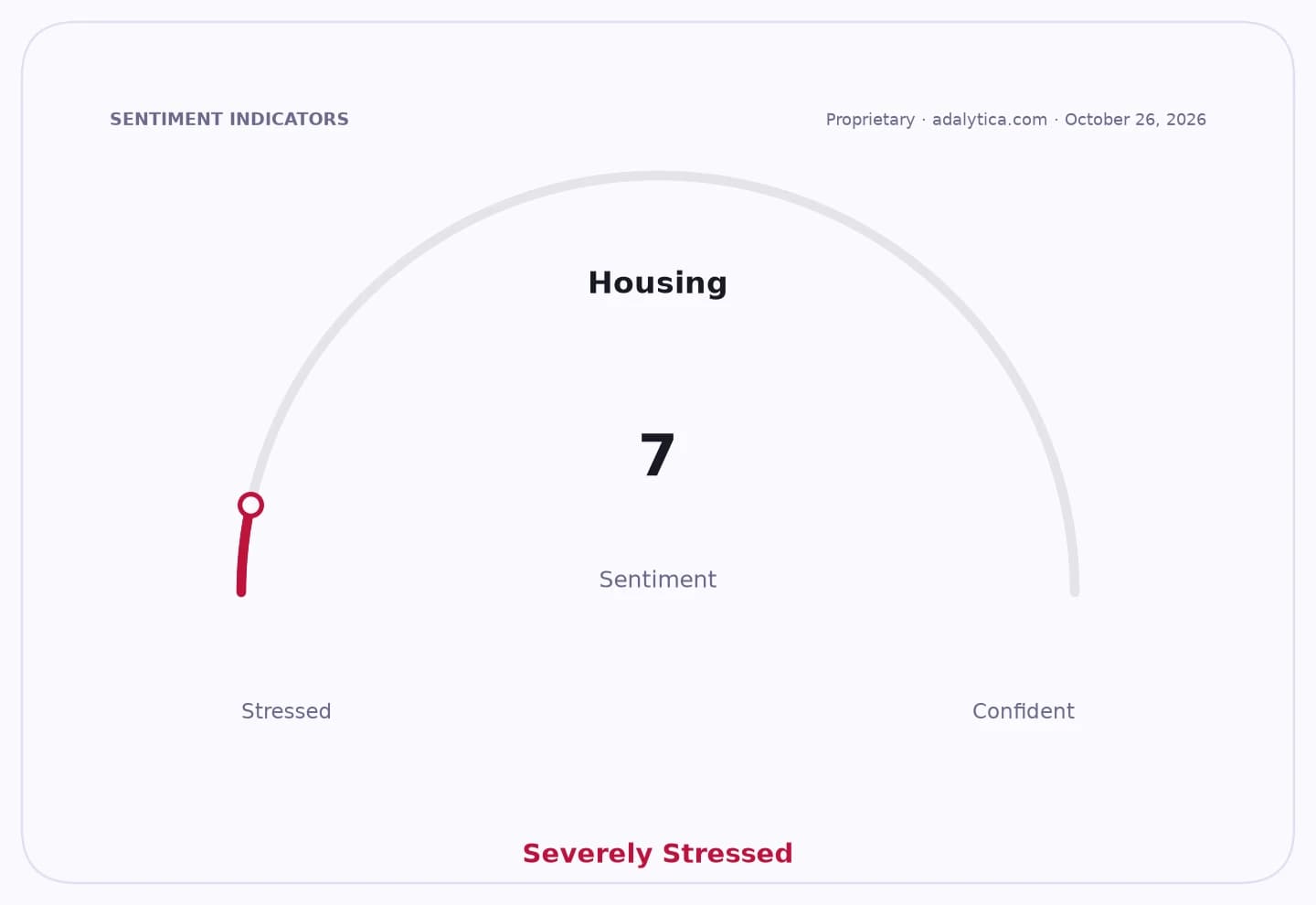
Sentiment Indicators
The “bad bank” has repaid about €23 billion over 14 years, roughly half of its initial portfolio, but those repayments have been offset by losses on asset sales and the cost of financing its debt. It still has a book of more than 100,000 assets to work through, although some of the remaining inventory can still be sold before liquidation.
A major complication is the handover of assets to Casa 47, the state housing vehicle. Sareb is transferring 40,000 homes and 2,400 plots, along with other properties, in a move valued at about €5.9 billion that will shrink the remaining portfolio but also pushes more housing into public hands.
The liquidation date is Nov. 28, 2027, leaving the next government to decide whether Sareb is wound down, folded into a subsidiary or merged with Casa 47. The future of roughly 240 employees and the fate of contracted servicers including Blackstone-backed Anticipa-Aliseda and Servihabitat also remain open questions.
For investors, the story is less about Sareb itself than about the final bill for Spain’s banking rescue and the state’s expanding role in housing. The unresolved losses reinforce the burden on public accounts and highlight how the cleanup of the financial crisis is still shaping policy, asset prices and the housing market more than a decade later.
| Entity | Gains | Losses |
|---|---|---|
| Spanish state/Casa 47 | ▲More housing assets | ▼Larger public-sector burden |
| Sareb creditors/taxpayer | ▲Debt recovery progress | ▼Likely unrecovered balance |
| Workers/servicers | ▲Continued short-term contracts | ▼Uncertainty after liquidation |
| Housing buyers/tenants | ▲More affordable stock | ▼Delayed clarity on ownership |