Investors are being pushed toward a more selective posture as sharp swings in U.S. equities, a rally in Treasury bonds and renewed weakness in the dollar point to a market still struggling to find a stable direction.
SPY Falls as TLT Rises and Dollar Weakens

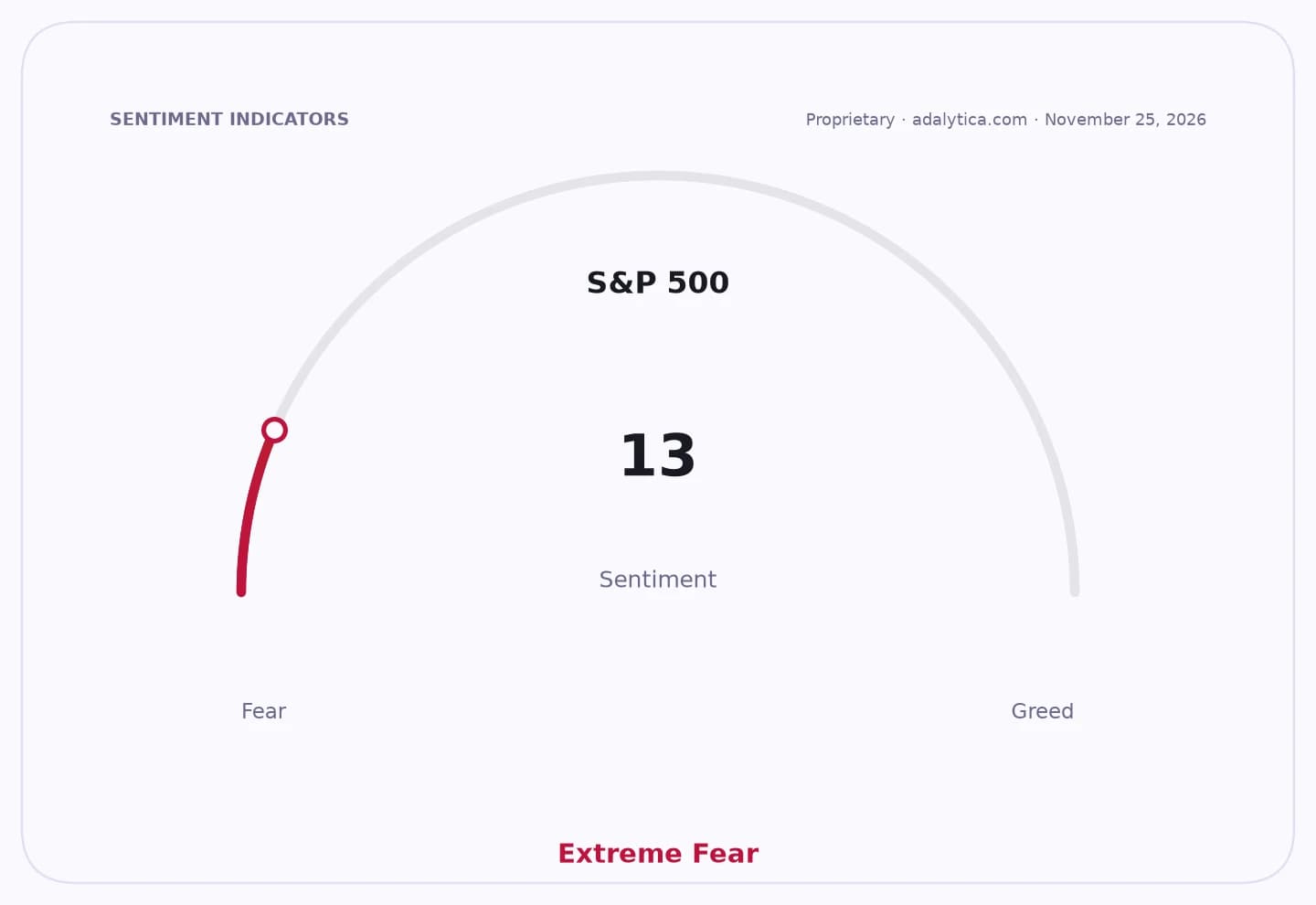
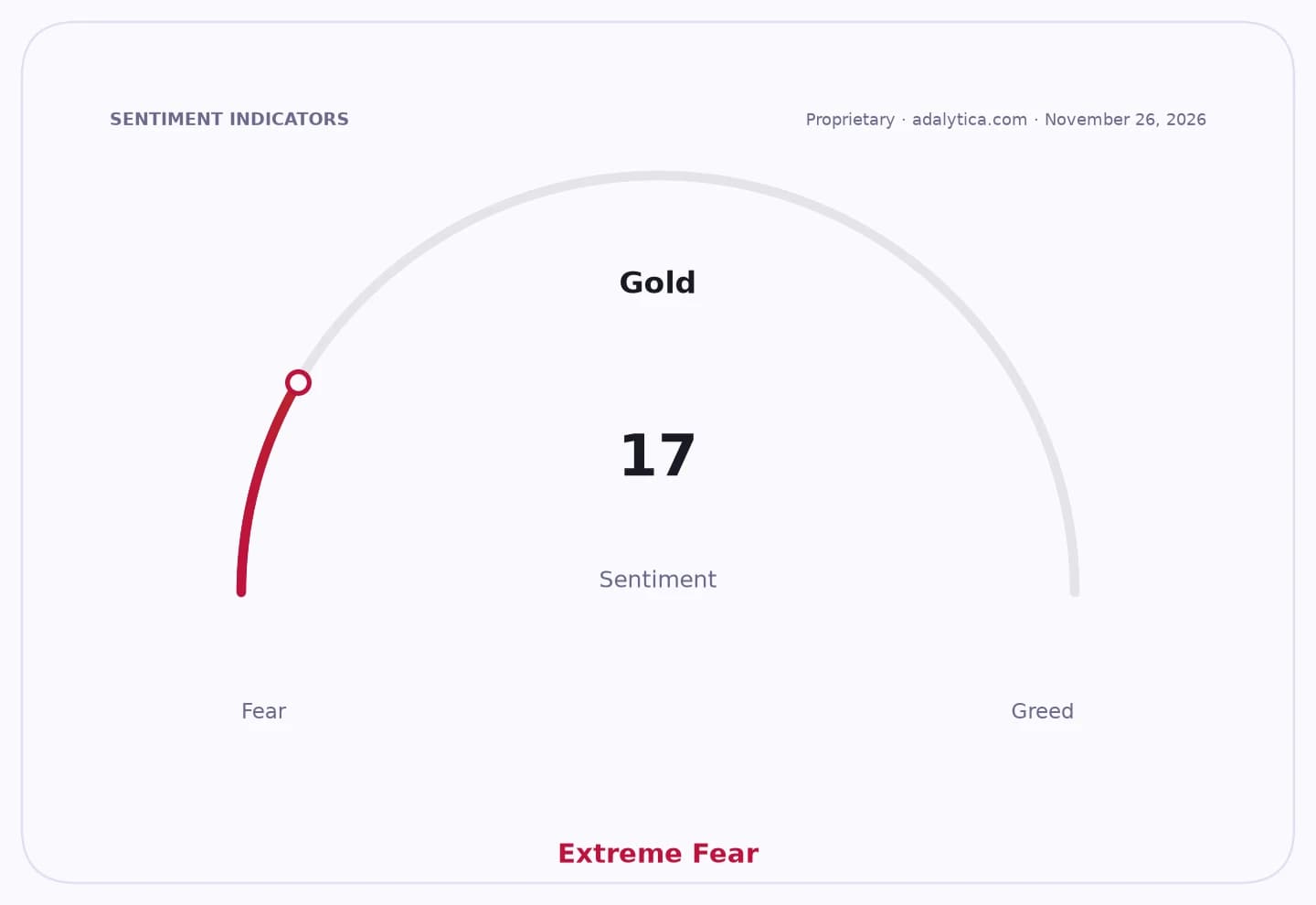
The main economic message is not just that volatility is elevated, but that the usual cross-asset signals are diverging in a way that complicates positioning. The S&P 500, tracked by SPY, has fallen 30% over the past month in Adalytica’s trade-signal snapshot and sits in “Extreme Fear,” even after a 4% rebound in the latest session. At the same time, the U.S. Treasury bond proxy TLT is flashing “Greed” after a 21% gain over 30 days, while the dollar signal shows “Extreme Fear” and has dropped 27% over the same period. That combination typically reflects a market leaning toward caution, lower growth expectations and demand for duration rather than risk.
Sentiment Indicators
US Treasury
For investors, that matters because it changes the relative appeal of equities, bonds and cash-like exposure. When stocks are under pressure and bond sentiment turns strongly positive, portfolio construction shifts away from broad beta and toward defensives, quality balance sheets and instruments that can benefit from falling yields or risk aversion. The dollar’s weakness also matters for multinational earnings, commodity pricing and emerging-market assets, but it can be a double-edged sword: it may support non-U.S. risk assets while also signaling fading confidence in the U.S. growth trade.
The technical picture reinforces that caution. SPY closed at 716.70 on Nov. 25, below its 50-day moving average of 757.85 and only modestly above the 200-day average of 730.77, with RSI at 44.2 and a negative MACD reading that remains well below its signal line. That points to a market that has recovered from short-term oversold conditions but has not yet repaired its broader trend damage. TLT, by contrast, finished at 82.24, above its 50-day average and just under its 200-day average, with RSI at 52.6 and a positive MACD crossover, indicating improving momentum in Treasuries. The dollar has been far more damaged: it ended at 39.37, far below both its 50-day and 200-day averages, with RSI near 41 and a deeply negative MACD, underscoring the scale of the recent repricing.

That broader backdrop explains why local strategists are urging selectivity rather than aggressive dip-buying. In Indonesia, PT Indo Premier Sekuritas said the Jakarta benchmark, the IHSG, will likely trade with a neutral-to-bearish bias in the week of Nov. 23-27, citing persistent foreign outflows, a stronger U.S. dollar and uncertainty over global monetary policy. The broker said a move above 5,492 is needed to confirm a recovery, while 5,027 is a critical support level; a break below that area could open the door to a deeper decline toward 4,824. Its call fits the global pattern: liquidity is still available, but risk appetite is fragile and confirmation matters more than chasing short-lived rebounds.
The investment implication is straightforward. In the current environment, broad market exposure is vulnerable to headline risk, policy uncertainty and momentum reversals. Bullish arguments center on the possibility that falling yields, softer dollar conditions and oversold equity positioning could drive a tradable rebound. The bearish case is that weak breadth, foreign selling and unresolved macro uncertainty keep rallies shallow and prone to failure. For now, investors are being told to wait for confirmation from price and volume before assuming a durable turn.
| Entity | Gains | Losses |
|---|---|---|
| Treasury bond holders | ▲Safe-haven demand | ▼Higher-yield seekers |
| Equity bulls | ▲Oversold rebound potential | ▼Momentum traders |
| Non-U.S. exporters | ▲Weaker dollar tailwind | ▼U.S. importers |
| Selective investors | ▲Better entry points | ▼Broad market buyers |