U.S. equity ETFs are back near record territory, but the real story for investors is how differently the market’s biggest index funds are behaving underneath the surface.
SPY, VOO and QQQ ETFs Diverge After Selloff
The S&P 500 proxy SPY, the Nasdaq-100 tracker QQQ and the Vanguard S&P 500 ETF VOO have all recovered from the spring selloff, yet the rebound has not erased the deeper lesson that broad-market ETFs are not interchangeable. Their fees, portfolio construction, sector concentration and tax treatment can produce meaningfully different outcomes over time, especially for younger investors building long holding periods around “set-and-forget” allocations.
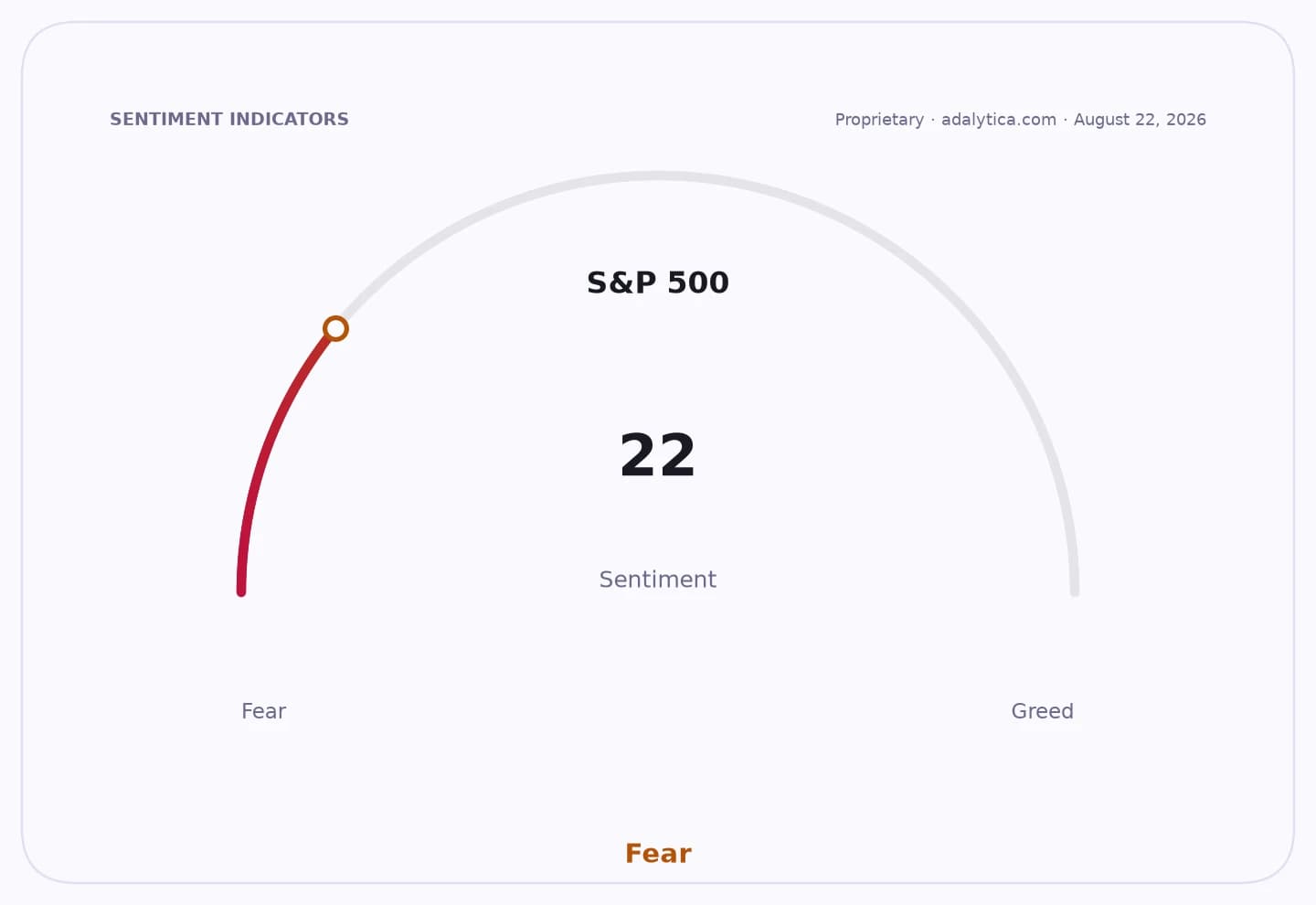
Sentiment IndicatorsⓘProprietary · adalytica.com · August 22, 2026
This is a snapshot — live sentiment, awareness and momentum for 130+ markets update continuously in the dashboard.Open AlphaPulse
SPY closed at 765.72 on Aug. 21, only modestly off a recent 769.06 peak, while VOO ended at 703.71 and QQQ at 713.44. Those levels show that large-cap U.S. equities remain resilient even after a volatile midyear stretch, but the path there was uneven. SPY slid as low as 646.90 in March before rebounding, and QQQ fell to 661.73 on July 29 before climbing back. The 50-day moving averages for all three funds remain well below recent prices, a sign the market has repaired its intermediate-term trend, while their relative strength index readings remain elevated enough to suggest some near-term cooling is possible after a sharp advance.
That matters economically because these ETFs sit at the center of household wealth accumulation, retirement saving and institutional benchmark exposure. For a 25-year-old investor, the appeal is obvious: low-cost market access, automatic diversification and easy rebalancing. But the comparison between SPY, VOO and QQQ shows that “buy the market” can mean very different exposures. SPY and VOO are both tied to the S&P 500, but VOO’s lower structural cost has long made it the preferred vehicle for buy-and-hold investors. QQQ, by contrast, is far more exposed to mega-cap technology and artificial intelligence leaders, which helped it recover quickly from its July trough but also makes it more vulnerable if growth stocks de-rate or AI enthusiasm fades.
The tax angle is just as important. ETF investors often focus on headline expense ratios and ignore the after-tax drag from capital gains distributions, dividend income and turnover. That can be a bigger issue in thematic or actively managed funds than in plain-vanilla index trackers. The wider ETF boom has encouraged launches tied to semiconductors, software, photonics and other niche themes, but the more specific the basket, the more investors need to ask whether they are buying a durable exposure or a short-lived trade wrapped in an ETF structure.
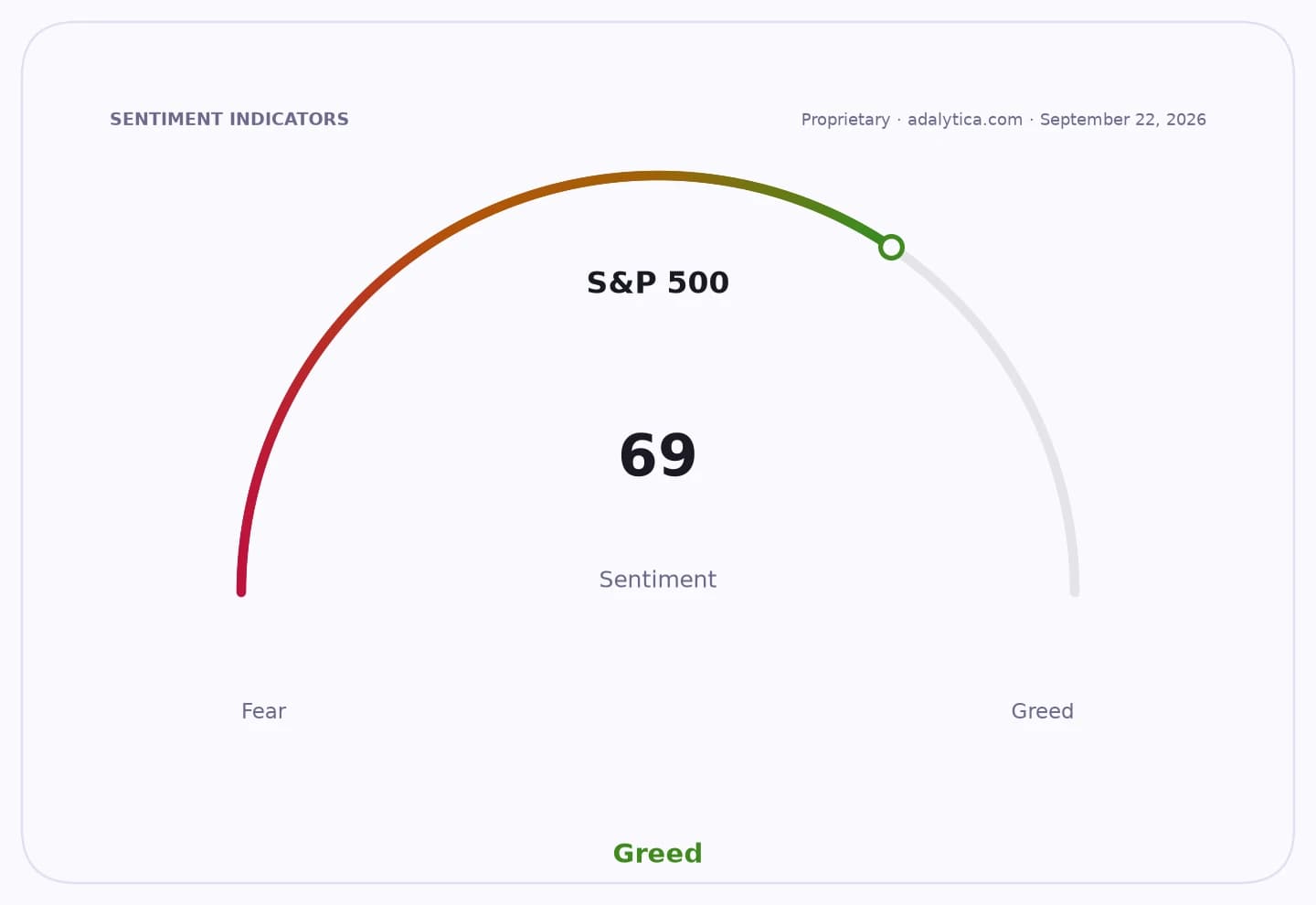
The market backdrop is also turning more complex. Adalytica’s S&P 500 Trade Signals snapshot shows SPY sentiment at 22, labeled Fear, even as awareness sits at 75, labeled Greed. In other words, investors remain highly focused on the market, but near-term caution has risen. The U.S. dollar signal is even starker, with sentiment at 5 and awareness at 99, reflecting extreme stress in the currency backdrop. That combination can support multinational earnings and U.S. equity flows, but it also highlights how quickly asset prices can rerate when macro conditions shift.
For investors, the bull case is straightforward: broad ETFs still offer the cleanest, cheapest way to capture long-term U.S. equity growth, and low-cost products such as VOO remain hard to beat for compounding. The bear case is that many investors confuse index exposure with simplicity. Sector concentration in QQQ, style tilts in curated funds such as SCHG or SCHD, and the tax profile of distributions can all become material once portfolios scale.
The next test will be whether the current rally broadens beyond the biggest growth names or narrows again into a handful of tech leaders. If that happens, ETF selection will matter more than ever — not because the wrapper is changing, but because the underlying exposures are. In a market where nearly every investor owns an ETF, the edge increasingly comes from knowing which one actually fits the job.
| Entity | Gains | Losses |
|---|---|---|
| Long-term VOO holders | ▲Low-cost compounding | ▼Higher-fee peers |
| QQQ investors | ▲Tech-led upside | ▼Broad-market diversification |
| ETF sponsors with niche funds | ▲New flows | ▼Investors wary of hidden risk |
| Young DIY investors | ▲Easy access to equities | ▼Mistakes on taxes and concentration |