A cup of coffee priced at 750,000 Vietnamese dong, or about $30, has become a flashpoint for the premiumization of coffee in Southeast Asia, where consumers are increasingly paying up for rare beans, specialty roasting and the theater around the drink as much as the caffeine itself.
Starbucks and premium coffee pricing in Southeast Asia
Consumer Spending
The price tag in Hanoi is striking not because it is representative of mass-market demand, but because it captures how far the upper end of the coffee market has moved beyond routine consumption. For roasters, cafés and global chains, that creates room to lift average ticket sizes, but it also raises the stakes in a region where households are still sensitive to inflation and discretionary spending can turn quickly.
Sentiment Indicators
CPI
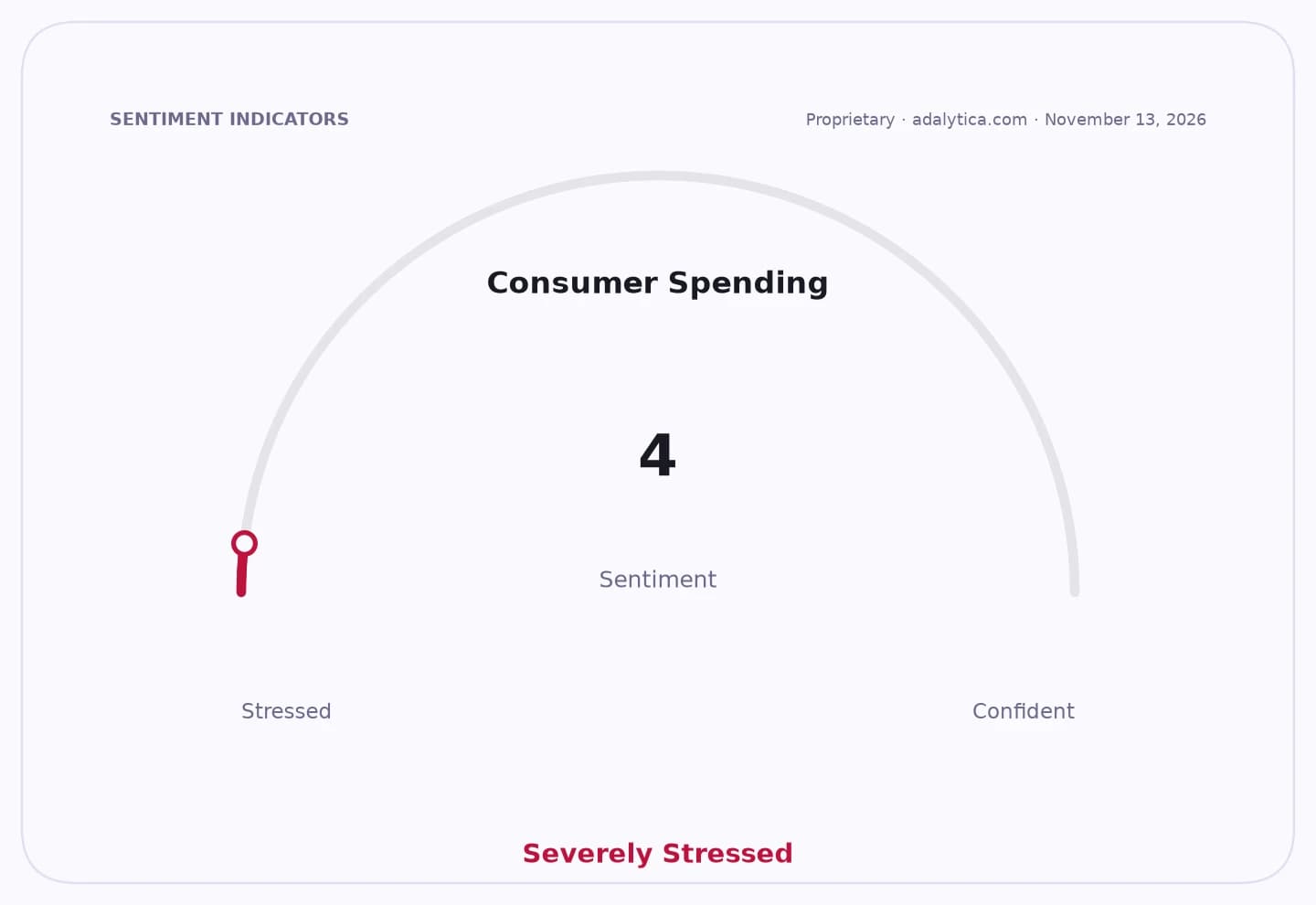
That tension is showing up in the broader consumer backdrop. Adalytica’s Consumer Spending Sentiment gauge is in “Extreme Fear” at 4, down 58% over the past 30 days, even as CPI sentiment sits at “Extreme Greed,” reflecting a market that expects price pressure to stay in focus. The U.S. 10-year Treasury yield, meanwhile, has climbed to around 5.12%, reinforcing tighter financial conditions and a more selective consumer environment.
For Starbucks, the trend matters because premium beverages are one of the cleaner ways to defend margins without relying entirely on traffic growth. The company said comparable coffeehouse sales rose 6.6% in its latest filing, helped by a 3.0% increase in average ticket, while its stock has climbed to $106.44 from near $87 in January, suggesting investors are rewarding signs that pricing power is holding.
The story is not limited to Starbucks. At the Krista Interfood Expo in Indonesia, roasting competitions and limited-edition barrel-aged espresso products highlighted how specialty coffee is moving deeper into experiential retail, where rarity and craftsmanship can justify far higher prices than standard café menus.
That is why a 750,000 dong cup in Hanoi matters: it is less a benchmark for everyday coffee than a signal that the market for luxury beverages is expanding, even as broader consumer sentiment weakens. The winners are premium roasters and brands with strong storytelling; the losers are operators stuck in a volume-only model if consumers decide the trade-up has gone too far.
| Entity | Gains | Losses |
|---|---|---|
| Premium coffee roasters | ▲Higher margins | ▼Volume-only rivals |
| Starbucks and upscale cafés | ▲Bigger average tickets | ▼Price-sensitive consumers |
| Specialty coffee consumers | ▲New rare offerings | ▼Budget coffee buyers |
| Mass-market chains | ▲Little direct benefit | ▼If premium tastes reshape demand |