Starknet’s community has opened the door to a potential break from Ethereum, a move that could reshape one of crypto’s best-known scaling ecosystems and give investors an early read on where blockchain infrastructure is headed next.
Starknet Votes on Research Into Ethereum Break
The non-binding governance vote is important because it shifts Starknet from a pure Ethereum layer-2 story toward a longer-term bet on independence, with quantum resistance at the center of the pitch. About 3,200 votes were cast, and 93.52% of voting power backed research into becoming an independent, post-quantum layer-1 blockchain. For investors, that matters because it turns Starknet into a live case study in how quickly the market may reward chains that can offer both technical autonomy and future-proof security.
Sentiment Indicators
StarkWare said it will keep STRK as the native token and leave existing Ethereum bridges open, which lowers the immediate risk of a disruptive migration. But the economics of the proposal are bigger than a simple governance exercise. Ethereum still anchors Starknet’s security and data availability, and that dependence has become a strategic vulnerability as developers increasingly think about long-term cryptographic risk. If quantum-resistant infrastructure becomes a selling point rather than a niche technical feature, the capital flow could shift toward projects that can prove they are not waiting on Ethereum’s timeline.
That is the real investment angle. StarkWare is effectively challenging the market’s assumption that layer-2s must remain permanently tethered to Ethereum. The company plans a draft whitepaper in November and has set up a working group to study the transition. The actual move would still require a separate binding vote, but the direction of travel is now clear: the network wants optionality, and optionality is where asymmetric upside often starts in crypto.
The timing also matters. StarkWare says it is targeting 2027 for quantum resistance, ahead of Ethereum’s projected 2029 timetable, and that gap is a narrative investors will not ignore if the broader market begins pricing in quantum security as a premium feature. Starknet already uses STARK proofs and has tested experimental post-quantum transaction technology on its live network, although that work has not yet been audited. In a market where adoption often follows credibility, a credible technical roadmap can become a valuation catalyst.
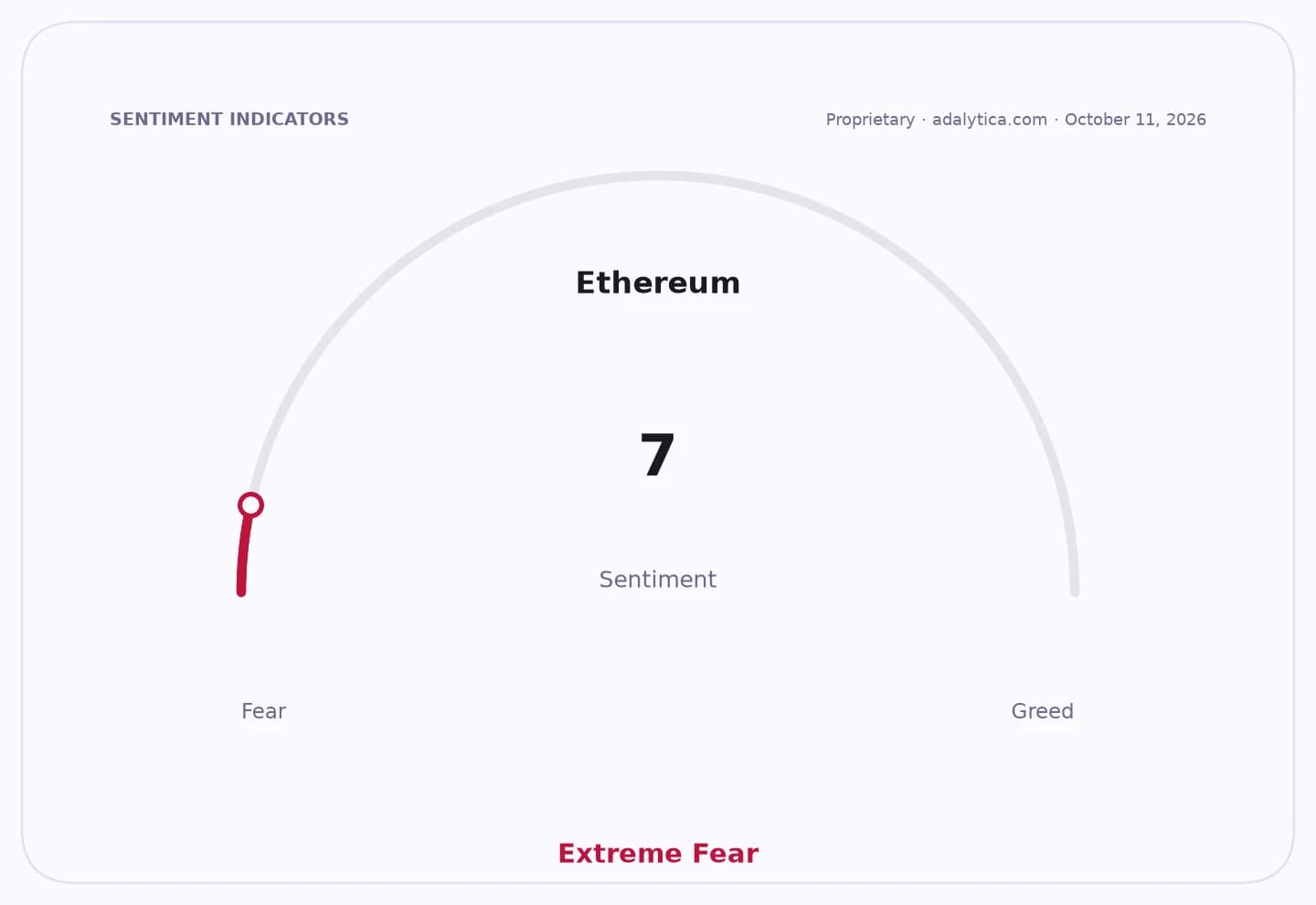
Ethereum itself is not being displaced today. But the vote highlights a deeper truth: the market is now rewarding chains and infrastructure projects that can survive the next upgrade cycle, not just the current one. With ETH still under pressure and sentiment showing extreme fear in the Adalytica gauge, investors should read Starknet’s move as part of a broader fragmentation trade in crypto infrastructure.
The takeaway is straightforward: if Starknet follows through, the winners may be the protocols that can sell security, independence and future-proofing in one package, while the losers are projects that rely on Ethereum’s roadmap staying on schedule.
| Entity | Gains | Losses |
|---|---|---|
| Starknet / STRK | ▲Strategic optionality | ▼Ethereum dependence |
| StarkWare | ▲Governance backing | ▼Delay risk |
| Ethereum | ▲Ecosystem pressure test | ▼Layer-2 retention risk |
| Investors in quantum-ready infrastructure | ▲Early thesis setup | ▼Waiting on legacy timelines |