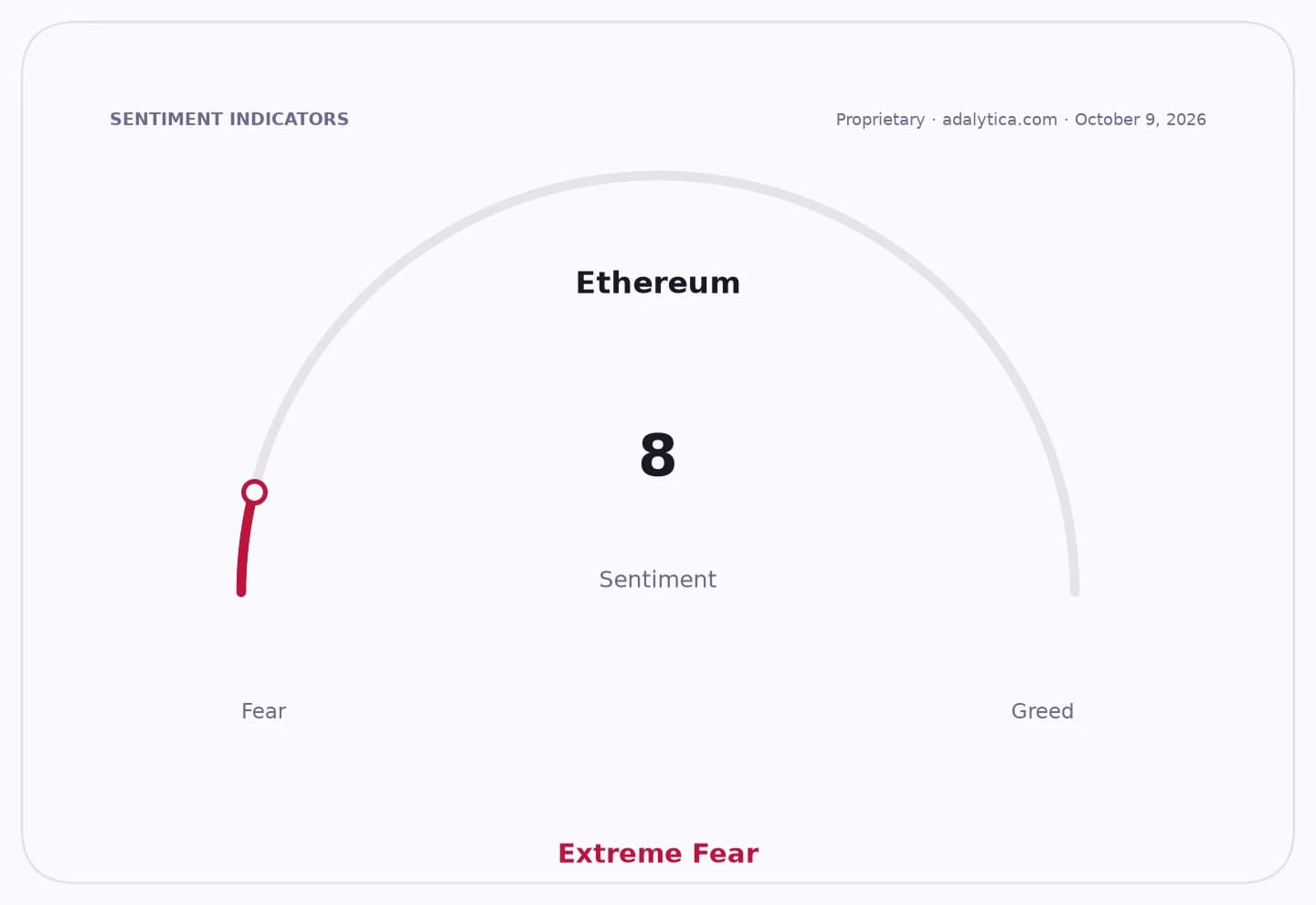
Starknet’s plan to break from Ethereum and become a standalone layer-1 blockchain in 2027 is the clearest sign yet that quantum risk is moving from a theoretical debate to an investable forcing function in crypto.
Starknet Plans 2027 Break From Ethereum Over Quantum Risk
That matters because the next wave of blockchain winners may not be defined by speed or fees, but by who can harden security fast enough for an AI-driven world. Starknet, one of Ethereum’s layer-2 networks, is effectively saying the base layer is moving too slowly: Ethereum’s own quantum-resistance timeline stretches to 2029, while Starknet wants “post-quantum agility” two years earlier. In a market where digital assets trade on trust, that gap is not cosmetic. It goes to the heart of whether a network can protect wallets, signatures and transaction history if advances in AI and quantum computing accelerate cryptographic breakthroughs.
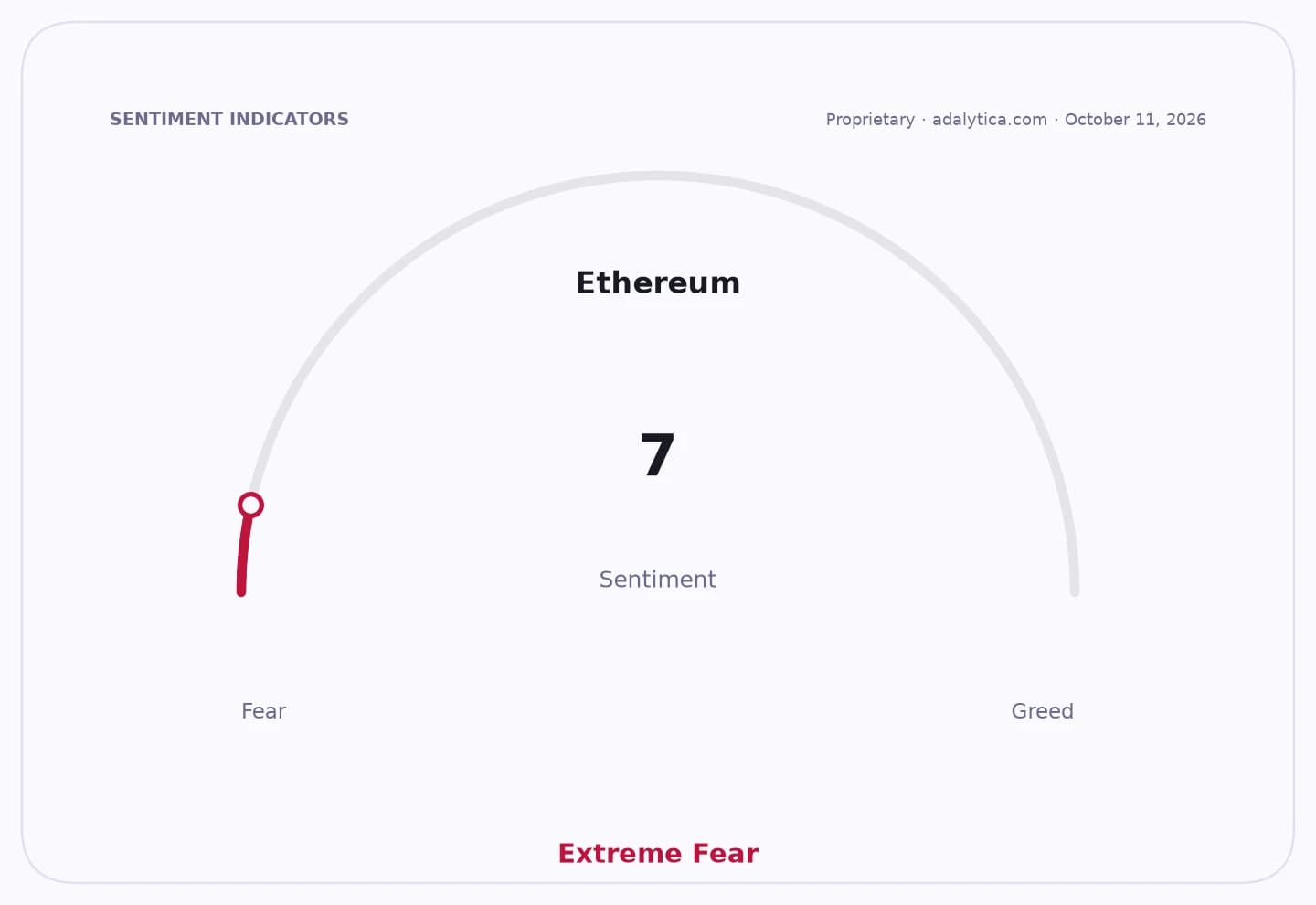
Sentiment IndicatorsⓘProprietary · adalytica.com · October 11, 2026
This is a snapshot — live sentiment, awareness and momentum for 130+ markets update continuously in the dashboard.Open AlphaPulse
The market has already taken notice. STRK jumped about 50% in 48 hours after the plan surfaced, even as broader crypto prices sold off. That kind of relative strength tells you investors are not pricing this as a governance squabble. They are treating it as a strategic repositioning — one that could turn Starknet from a dependent scaling product into a security-first blockchain built around quantum-resistant hashes. For a network that has seen total value locked nearly halved to about $160 million from $310 million, the move is also a bid to revive relevance in a crowded layer-2 universe where weaker projects are already disappearing.
The bigger story is Ethereum’s loss of narrative control. The ecosystem is split on how to respond to quantum threats, with one researcher proposing a “bunker mode” migration to hide public keys, while Vitalik Buterin has warned that some proposed lattice-based defenses could themselves be vulnerable to better AI models. That disagreement is exactly what creates opportunity for challengers. When the market cannot agree on the fix, capital tends to reward the teams willing to act first. Starknet’s decision to target 2027 puts pressure on every other chain, wallet provider and infrastructure vendor to show a credible security roadmap, not just a white paper.
For investors, this is where the asymmetric setup begins to emerge. The obvious beneficiary is Starknet if it can execute the migration without breaking user confidence. The second-order winners are likely to be security infrastructure, custody and cryptography firms that can sell quantum-resistant tooling into a market suddenly forced to upgrade. Ethereum itself is not an immediate loser, but it is now on the back foot rhetorically: the larger the perception that its security roadmap is lagging, the more room there is for alternative ecosystems to poach developers, liquidity and mindshare.
There is also a broader macro angle. Quantum-safe migration is not just a crypto problem; it is becoming part of the same infrastructure buildout that is driving spending across AI, cybersecurity and defense. Governments and large technology companies are already stepping up quantum programs, and blockchain networks are now being pulled into that spending cycle. That is important because it shifts quantum readiness from a niche technical preference to a capital-allocation theme. Once the market starts believing that current cryptography could be stressed sooner than expected, security upgrades stop being optional and become a competitive moat.
The trade from here is straightforward: watch Starknet as a speculative high-beta play on post-quantum blockchain adoption, but look farther out for the picks-and-shovels names tied to digital security, custody and blockchain infrastructure. The market is still treating quantum risk as a distant story. Starknet is trying to turn it into a near-term catalyst. If it works, Ethereum’s ecosystem may be forced into a much faster upgrade cycle — and investors who position early around that shift could capture the real upside.
| Entity | Gains | Losses |
|---|---|---|
| Starknet (STRK) | ▲Quantum-safe narrative | ▼Ethereum dependency |
| Ethereum | ▲Ecosystem pressure to upgrade | ▼Security leadership |
| Crypto security vendors | ▲New upgrade demand | ▼Complacent incumbents |
| STRK holders | ▲Re-rating catalyst | ▼Execution risk |