Ethereum Foundation researcher Justin Drake is urging crypto holders and major custodians to prepare for a hypothetical AI-assisted break of ECDSA, warning the industry to move funds to fresh addresses before any real-world compromise emerges.
Ethereum Foundation urges fresh addresses for holders
The proposal matters because ECDSA underpins the signature system used by Bitcoin and Ethereum, and a successful break could expose private keys once a public key has been revealed on-chain. Drake is not saying that has happened; he is arguing that the ecosystem should plan now for a worst-case scenario in which a large GPU cluster and advanced AI tools can recover a key in about a week.
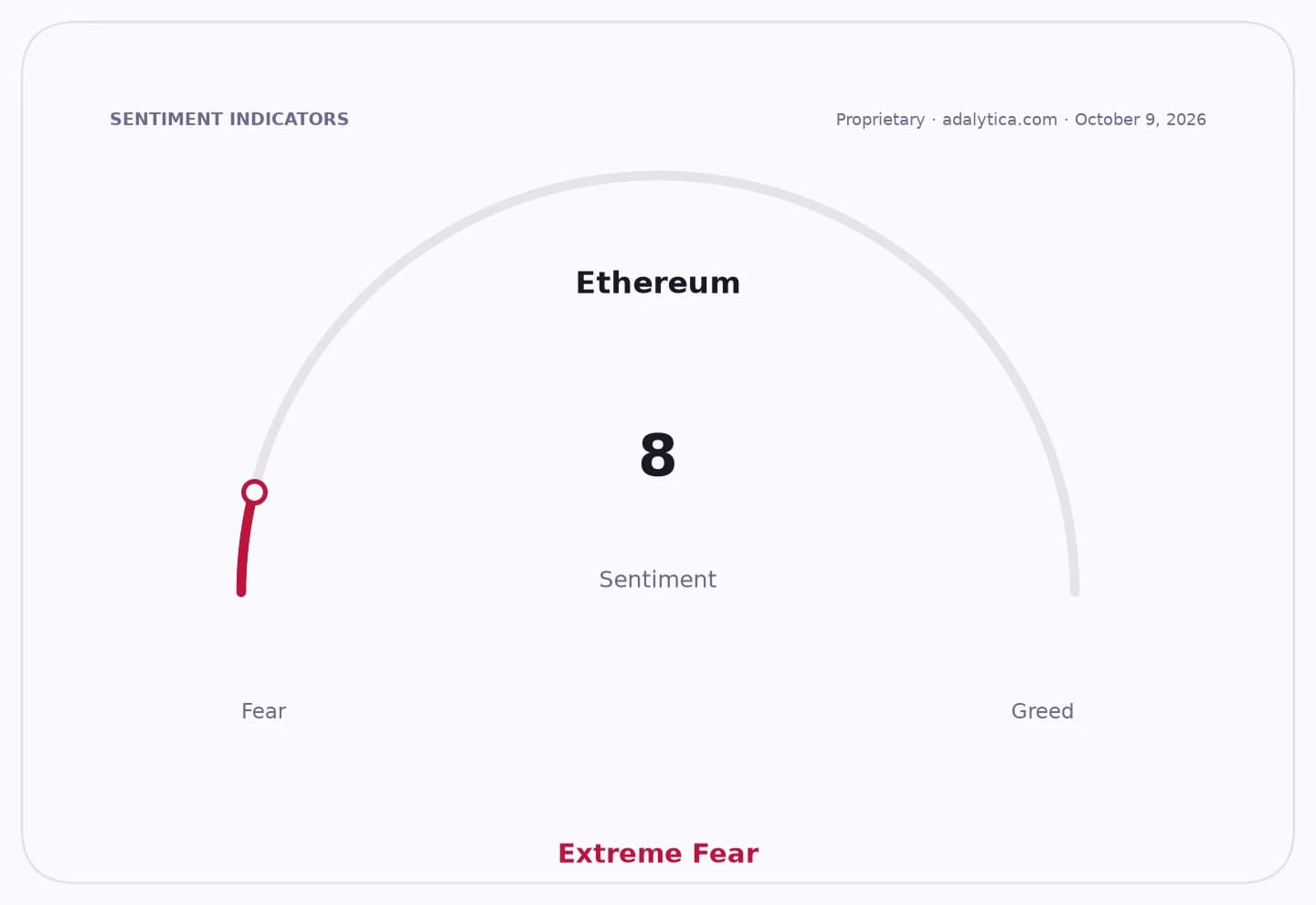
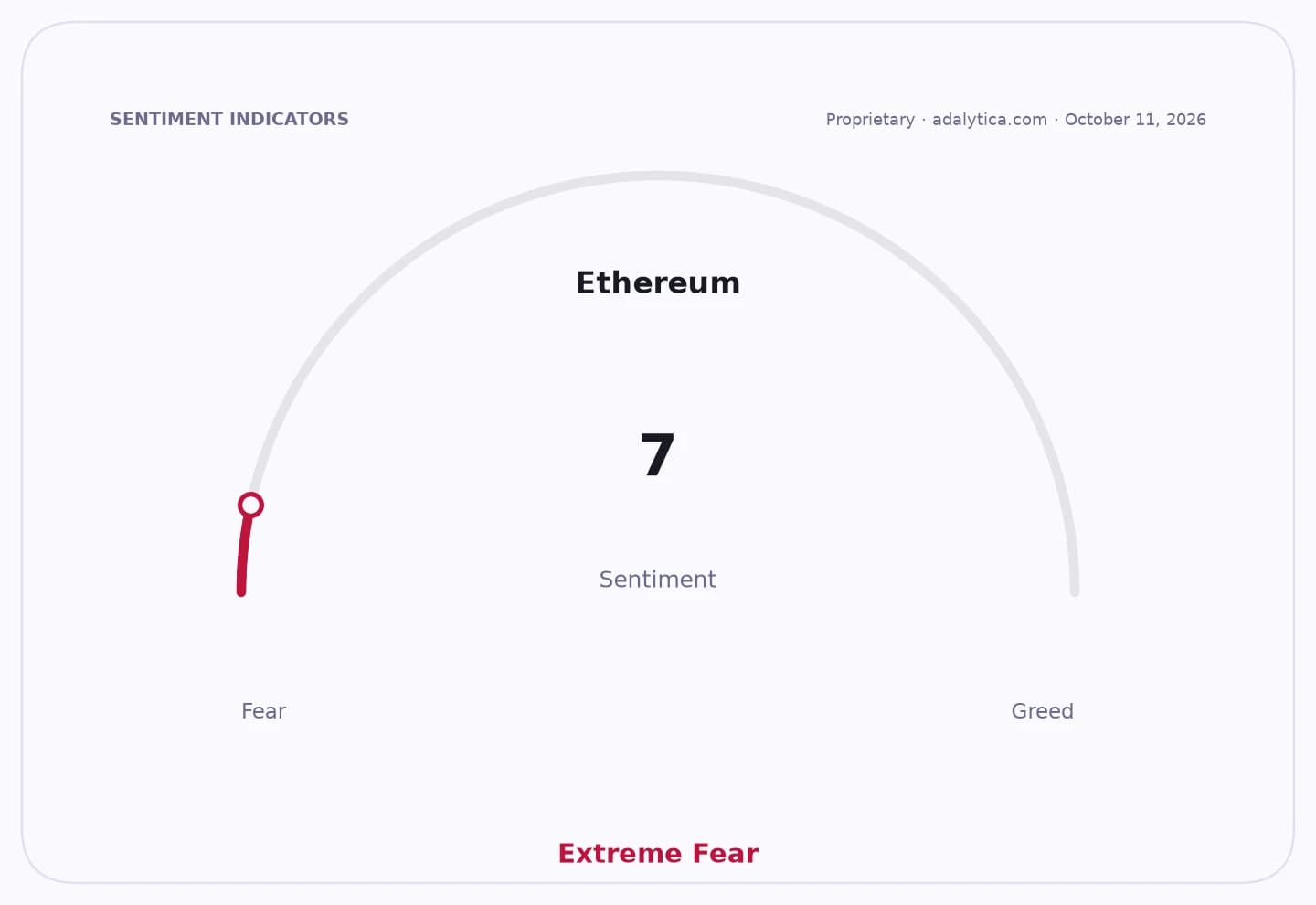
Sentiment IndicatorsⓘProprietary · adalytica.com · October 13, 2026
This is a snapshot — live sentiment, awareness and momentum for 130+ markets update continuously in the dashboard.Open AlphaPulse
That distinction is critical for markets. Bitcoin and Ether have both been trading under pressure, and the backdrop is already one of extreme caution, with Adalytica’s Bitcoin Fear & Greed Index reading 4, or “Extreme Fear.” Ethereum was last at $2,486.16, down about 5.8% from its Jan. 6 level of $2,642.95 in the data set, while Bitcoin traded at $82,761.54, near the lower end of its recent range. ETH’s relative strength index was 29.8, while BTC’s was 46.8, suggesting Ethereum is closer to technically oversold territory.
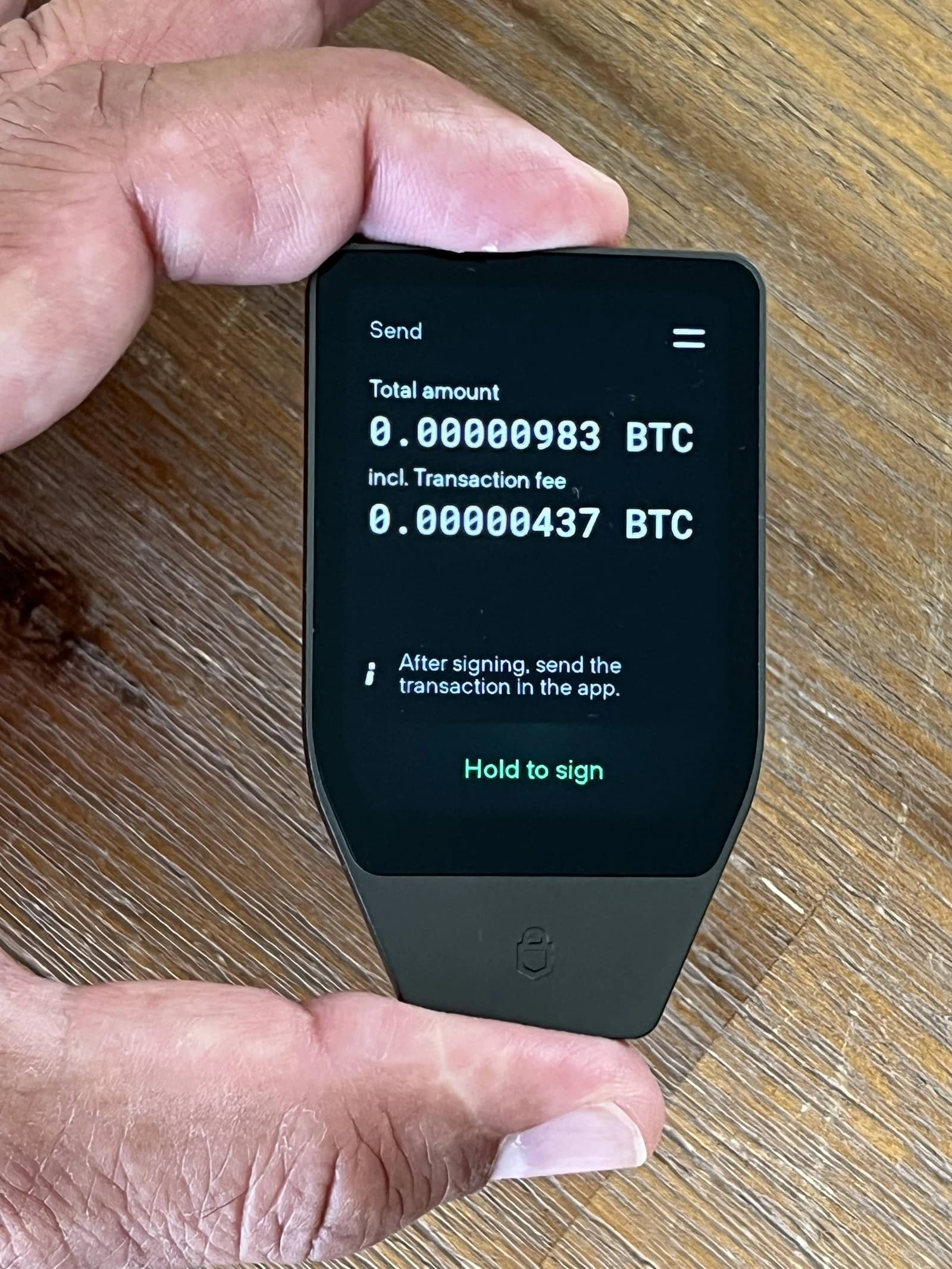
Drake’s “bunker mode” idea is a gradual migration, not a panic move. He said holders should shift assets over time to addresses that have never signed a transaction, since a fresh address exposes only a hash rather than a public key, reducing the attack surface if signature math is ever cracked.
The warning also puts custody providers in the spotlight. Drake singled out Binance, Bitbank, Robinhood, Bitfinex and Tether, calling for stronger cold storage practices, a message that could resonate with institutional clients if it prompts exchanges and stablecoin issuers to tighten key management and audit procedures.
The broader narrative is that crypto is being forced to confront a new class of security risk before the more familiar quantum-computing threat arrives. The Ethereum Foundation has already formed a post-quantum team, and Vitalik Buterin has outlined a path toward quantum-resistant cryptography, but Drake is pressing for what he called “maximum defensive acceleration” toward hash-based systems.
For investors, the near-term takeaway is less about a confirmed exploit than about the likelihood of heightened security spending, more scrutiny on custodians and periodic volatility whenever AI and cryptography collide. The next catalyst is whether exchanges and wallets publicly adopt bunker-mode-style key management guidance or push back that the risk remains purely theoretical.
| Entity | Gains | Losses |
|---|---|---|
| Long-term ETH and BTC holders | ▲Better custody preparation | ▼False sense of security |
| Exchanges and custodians | ▲Chance to harden controls | ▼Higher security costs |
| Ethereum post-quantum team | ▲More urgency for roadmap | ▼Pressure to accelerate work |
| Short-term risk sellers | ▲Volatility trade opportunities | ▼If fears fade quickly |