The British pound climbed across Egyptian banks on Tuesday, with average buy and sell quotes rising by more than half a pound over the past three days, underscoring a broader firming in sterling that investors are still weighing against a stronger U.S. dollar.
Sterling rises in Egyptian bank quotes

That matters because exchange-rate moves ripple quickly through import costs, travel spending and corporate hedging demand in a market where banks are the main pricing reference for households and businesses. When sterling rises against the Egyptian pound, the cost of British goods, tuition, medical services and overseas transfers goes up, while Egyptians holding sterling-linked assets or needing pounds for payments face a higher local-currency bill.
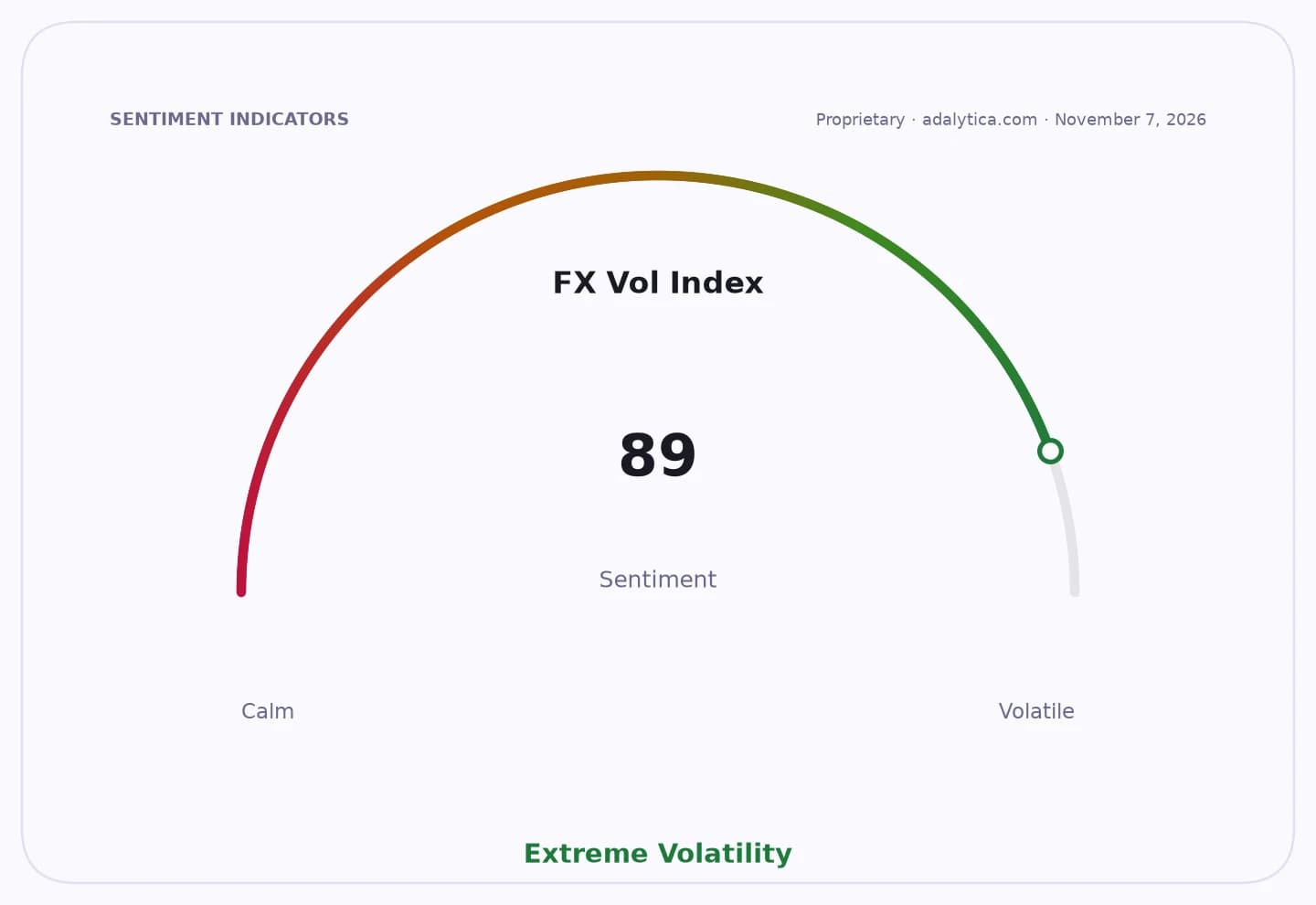
Sentiment Indicators
In the latest quotes, Abu Dhabi Islamic Bank offered the highest buy price for sterling at 71.177 Egyptian pounds, while the Central Bank of Egypt posted the lowest sell price at 71.3166 pounds. Across the banking system, buy prices clustered around 71.04 pounds and sell prices around 71.48 pounds, compared with 70.52 pounds and 70.95 pounds respectively on Nov. 19.
That roughly 52-piaster jump in the average buy rate and 53-piaster increase in the average sell rate shows the pound sterling is regaining ground in local pricing, even as the dollar remains the bigger macro force globally. The move also tracks the broader tone in FX markets, where sterling has been supported at times by expectations the Bank of England will stay relatively hawkish, while the dollar’s rebound has kept gains in check.
For investors, the more important story is not the day-to-day bank quote, but the setup underneath it. Sterling has been mixed this week, and Adalytica’s British pound trade signals show sentiment at a neutral 60 with extreme-fear awareness, suggesting the market is still not fully positioned for a sustained breakout. At the same time, the FXB fund has slipped back toward its 50-day moving average, while its RSI readings remain low, a sign momentum is weak even after recent price stability.
That leaves room for a tactical rebound if UK data or central-bank guidance turns more supportive, but the bigger implication is for cross-border flows into and out of Egypt. A firmer pound raises the local-currency cost of British imports and foreign services, while pressuring Egyptian buyers who need sterling for debt service, education or tourism. Banks with active FX franchises can benefit from wider client demand, but importers and sterling users are the ones who feel the squeeze first.
The next catalyst is likely to come from upcoming UK inflation readings and the dollar’s next move. If sterling holds above recent bank quotes, the market may begin to price a more durable repricing in local FX markets; if the greenback strengthens again, today’s rise may prove to be only a pause in a still-volatile year for the pound.
| Entity | Gains | Losses |
|---|---|---|
| Egyptian banks | ▲FX fee volume | ▼Customers seeking pounds |
| Sterling holders | ▲Higher local value | ▼Egyptian importers |
| UK exporters to Egypt | ▲Better pound pricing | ▼Egyptian consumers |
| FXB / sterling bulls | ▲Rebound potential | ▼Momentum traders |