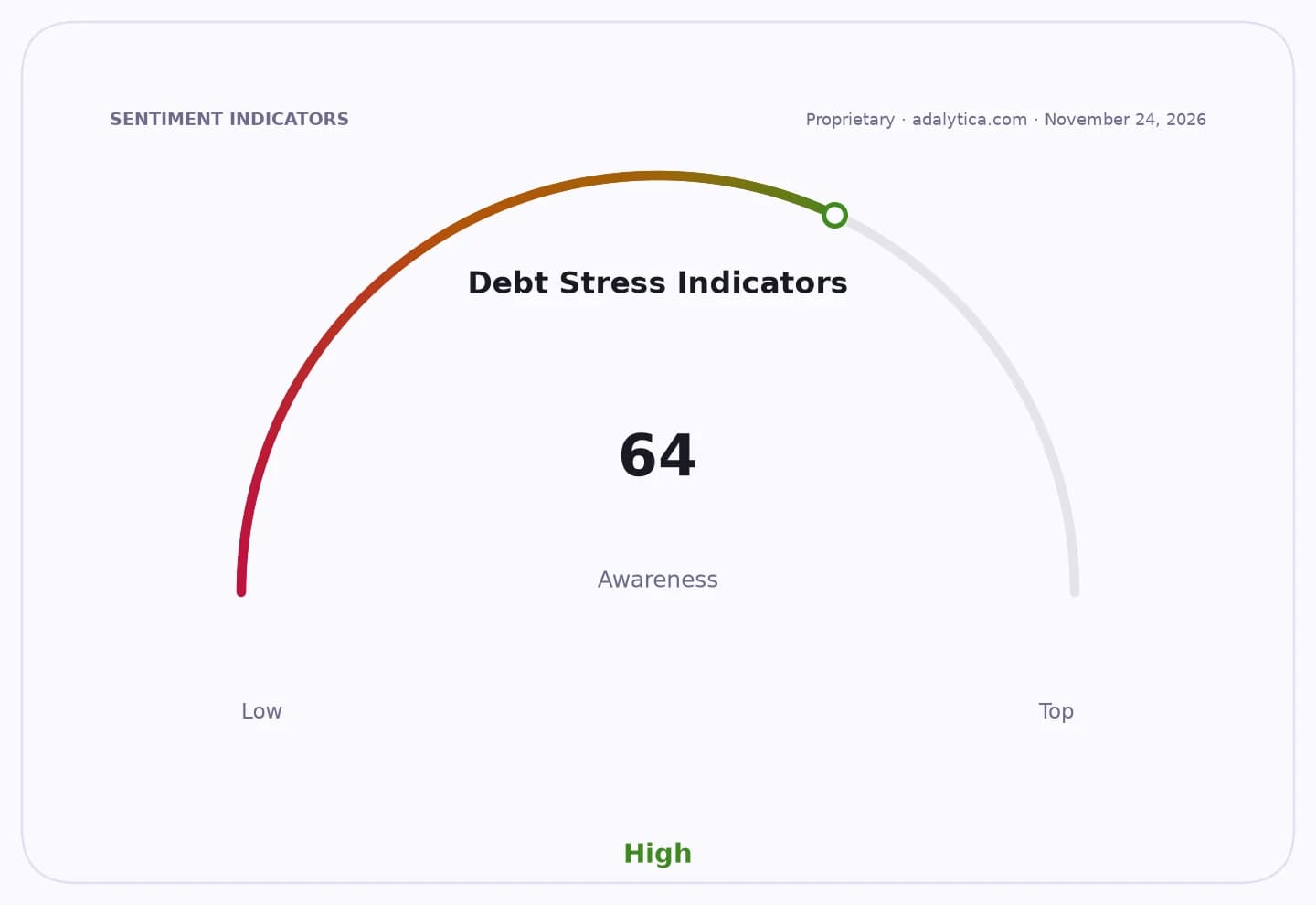
Holiday financing offers are looking more expensive than they appear, and the risk is not just to shoppers’ wallets but also to retailers and consumer lenders heading into the season. A Utah financial planner is warning consumers not to use zero-percent offers to spend beyond their means, as new research shows most store-card promotions still rely on deferred interest and regular store-card rates have climbed to record levels.
Store Credit Cards Face Higher Holiday Financing Costs
Consumer Spending
“Don’t borrow just to spend more,” said Shane Stewart, a certified financial planner and professor at Utah Valley University, arguing that promotional financing should be used to manage existing debt or cover essential purchases, not to expand holiday spending. That advice lands as consumers face a maze of holiday credit offers that can turn a seemingly interest-free purchase into a costly bill if it is not paid off on time.
Sentiment Indicators
Consumer Spending
The distinction between true 0% APR and deferred interest matters economically because it changes the cost of borrowing from predictable to punitive. Under deferred interest, interest accrues during the promotional period and is waived only if the balance is cleared in full before the deadline. Miss by even a small amount and the consumer can be charged interest retroactively on the entire original purchase. WalletHub said a shopper who financed a $1,000 purchase and ended the promo period just $5 short could still owe interest on the full amount.
That is especially relevant this year because WalletHub found 78% of store credit cards offering introductory zero-percent financing use deferred interest. The firm also said the average regular rate on store credit cards rose to 33.14% in October from 33.07% a year earlier, a level that underscores how quickly the economics worsen once the promotional window closes. For households already managing elevated borrowing costs, that leaves little margin for error if holiday spending runs over budget.
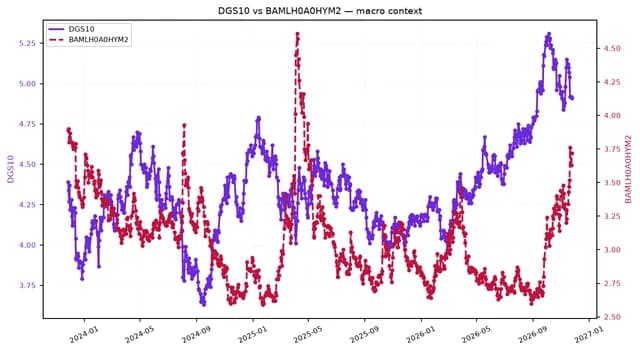
The issue also has broader macro implications. Consumer spending is holding up, but the mix of financing matters: a holiday season funded by promotional credit can support near-term retail sales while quietly increasing charge-off risk later. That is why lenders such as Capital One and Synchrony, which have exposure to revolving consumer credit, remain tied to the health of holiday borrowing behavior. Their shares were both lower around the latest session, with Capital One down to $182.52 and Synchrony at $68.73, while technical readings showed both stocks well below recent highs and trading with weak momentum.
The credit backdrop is not benign. The U.S. unemployment rate was 4.1% in October, and the Bloomberg gauge for high-yield credit spreads stood around 3.72 percentage points, suggesting financing conditions remain tight enough that consumers are still sensitive to any added debt burden. At the same time, Adalytica’s Retail Goods Spending Sentiment sat in “Fear” territory, even as consumer spending sentiment stayed elevated, a split that points to holiday demand coexisting with caution about discretionary purchases.
Retailers have incentives to keep pushing the offers, because they help move expensive goods and raise conversion rates during the year’s most important shopping period. But WalletHub said transparency on deferred-interest disclosures at 72 major retailers did not improve from 2025, suggesting shoppers are still being asked to navigate fine print at speed. That leaves a familiar divide: retailers and card issuers benefit from higher ticket sizes and interest income, while consumers bear the risk of retroactive charges if budgeting slips.
For investors, the story is less about one holiday promotion than about consumer credit discipline heading into 2027. If shoppers use 0% offers prudently, the programs can support sales without much damage. If they use them to stretch spending, the eventual fallout could show up in higher delinquencies, stronger loss provisions and more pressure on lenders whose earnings depend on revolving balances. The seasonal lure of “zero percent” may boost sales now, but the real test will come when the bills arrive.
| Entity | Gains | Losses |
|---|---|---|
| Retailers | ▲Higher holiday conversion | ▼More disclosure scrutiny |
| Store-card issuers | ▲Interest income if balances linger | ▼Higher charge-off risk |
| Disciplined shoppers | ▲Short-term cash flow relief | ▼Fewer impulse purchases |
| Overextended consumers | ▲Temporary access to goods | ▼Retroactive interest charges |