T-Mobile is using one of the wireless industry’s most aggressive playbook moves — a free flagship phone — to pull customers into pricier unlimited plans and lock in longer-term revenue, with the latest Motorola Razr promotion underscoring how U.S. carriers are leaning on device subsidies to defend market share.
T-Mobile Razr promotion and stock near $181.52
The offer matters because foldables remain a niche category, but they are also one of the few handset segments where carriers can still differentiate without competing solely on network quality and price. By bundling a $0 Razr deal without a trade-in, T-Mobile is effectively subsidizing adoption of an expensive device to steer customers toward premium service tiers, higher monthly bills and lower churn. For investors, that is less about the sticker price of the handset than the economics of customer acquisition in a saturated wireless market.
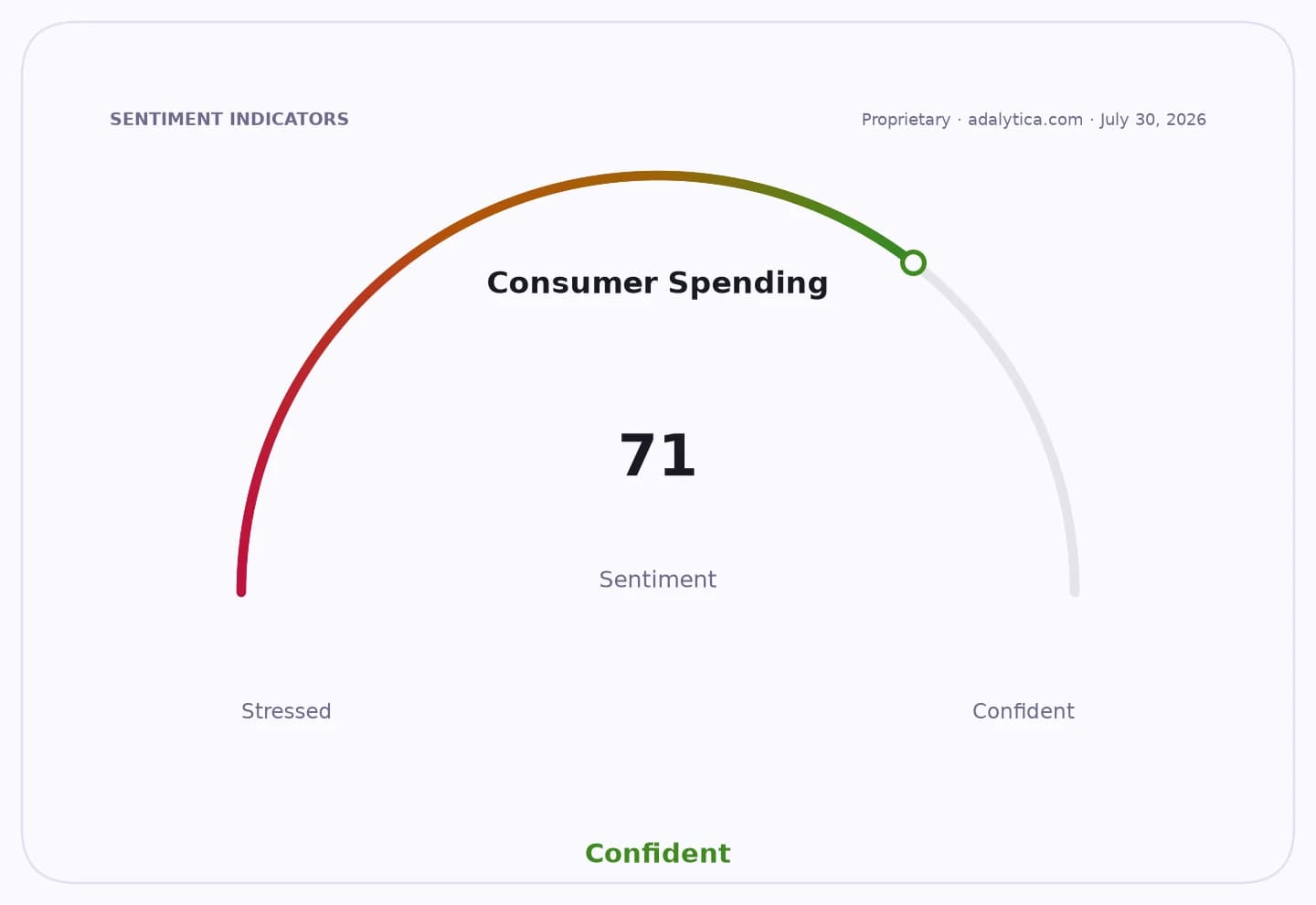
Sentiment IndicatorsⓘProprietary · adalytica.com · July 30, 2026
This is a snapshot — live sentiment, awareness and momentum for 130+ markets update continuously in the dashboard.Open AlphaPulse
The promotion comes as T-Mobile’s stock has been under pressure despite continued account growth. The shares recently traded around $181.52, well below the 50-day moving average of $184.17 and the 200-day average of $198.10, while the relative strength index sat near 50, suggesting the stock has stabilized after a sharp selloff but has not yet regained strong momentum. The broader market backdrop is mixed as well: the S&P 500 is not showing fear, but consumer-spending indicators have softened even as promotional activity in telecom stays intense.
Carrier competition remains the core issue. Verizon’s shares have rallied to about $47.22 from a recent low near $41.36, while AT&T was last around $23.94 after rebounding from the low-$22 area. Both rivals have been active with handset offers of their own, showing that the race for postpaid subscribers is increasingly being fought through financing, bill credits and free-device bundles rather than headline rate cuts.
For T-Mobile, the risk is margin compression if promotions become the cost of holding onto growth. Wireless operators can absorb handset subsidies when they are paired with multi-year service revenue and strong upsell to premium plans, but the strategy only works if churn stays low and customer acquisition costs do not outrun lifetime value. The upside case is that a free Razr deal helps T-Mobile reinforce its image as the most aggressive growth carrier and keeps it ahead in premium 5G positioning. The bear case is that it simply raises acquisition expense in a market where consumers are already highly promo-sensitive.
The timing also fits a broader handset cycle. Foldables are still a small slice of the market, but carriers and manufacturers are trying to normalize them through promotions because they command higher list prices and can support richer service bundles. That makes the current offer useful not just to Motorola, which gets volume and visibility, but also to T-Mobile, which can use the device to anchor a higher-value customer relationship.
Investors will watch whether the promotion translates into net additions without a step-down in service revenue or a rise in subsidization costs. If T-Mobile can use premium-device giveaways to sustain account growth while protecting margins, the strategy strengthens its competitive moat. If not, the Razr giveaway becomes another reminder that wireless growth is getting harder to buy.
| Entity | Gains | Losses |
|---|---|---|
| T-Mobile | ▲Subscriber acquisition | ▼Near-term margins |
| Motorola | ▲Foldable volume | ▼Device subsidy burden |
| Consumers | ▲Free handset | ▼Higher monthly bill |
| Verizon / AT&T | ▲Fewer promo advantages | ▼More intense pricing pressure |