Tanzania’s central bank left its benchmark interest rate at 6.25%, signaling that policymakers see inflation contained and growth resilient enough to avoid another immediate tightening.
Tanzania Central Bank Holds Rate at 6.25%

The decision matters because it points to a rare policy balance in an emerging market economy: price pressures are easing without a sharp loss of momentum. Annual inflation stood at 4.3% in August, inside the Bank of Tanzania’s 3% to 5% medium-term target, while the economy expanded 6% in the first quarter and is expected to grow above 6% in the second and third quarters, according to the central bank.
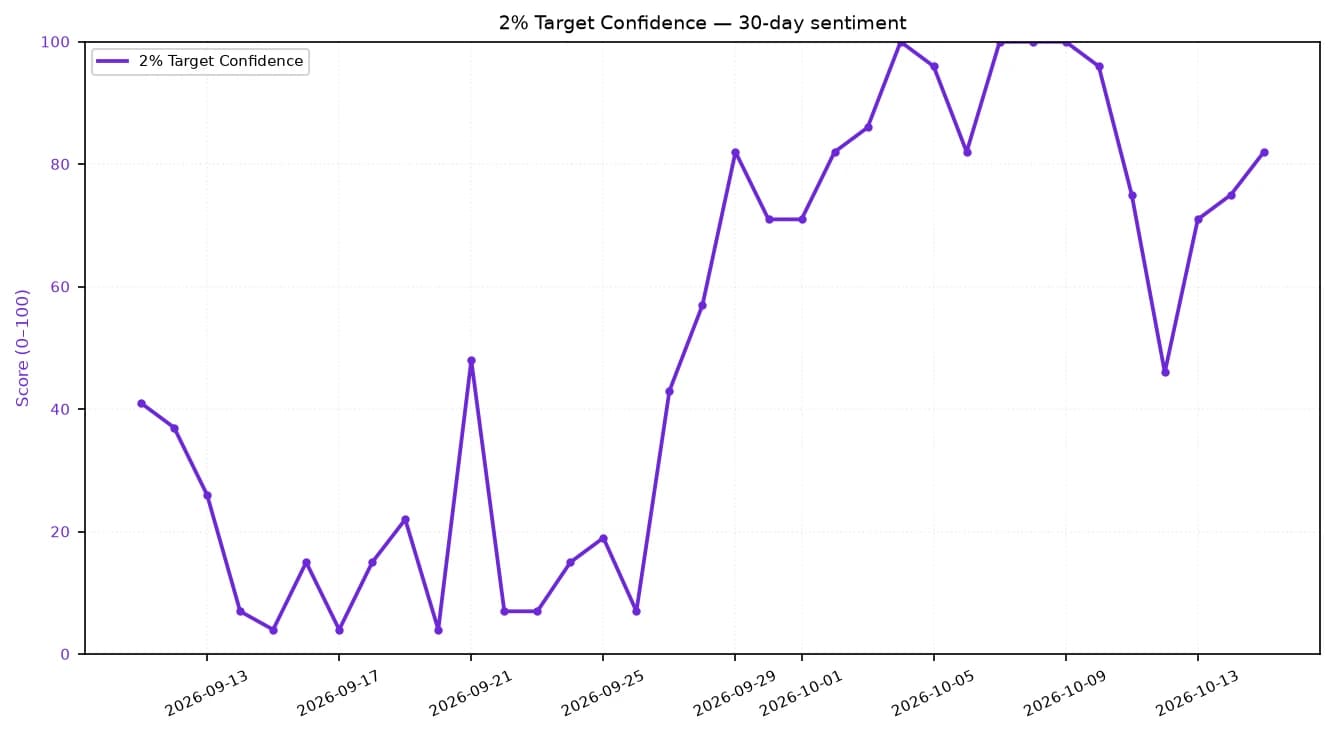
Sentiment IndicatorsⓘProprietary · adalytica.com · October 9, 2026
This is a snapshot — live sentiment, awareness and momentum for 130+ markets update continuously in the dashboard.Open AlphaPulse

For investors, the hold reduces near-term rate volatility and supports the case for steadier local-currency assets, even after the bank raised rates by 50 basis points in July. With inflation staying near target and growth holding up, policymakers have room to wait and assess whether the earlier tightening is still filtering through credit conditions and consumer prices.
The bank said the current stance is “appropriate” to curb inflationary pressure while supporting economic growth. That language suggests officials are more interested in preserving the disinflation trend than in engineering a faster slowdown, especially as supply-side conditions improve.
A key part of the policy backdrop is that Tanzania has also been opening its domestic debt market to foreign investors. Recent foreign-exchange rule changes now allow all overseas investors to buy government Treasury bills and bonds, widening access beyond East African and southern African regional investors and the Tanzanian diaspora. That should deepen liquidity and broaden the buyer base for sovereign paper, potentially lowering funding pressure for the government over time.
The macro case is strengthened by the recent commissioning of the Julius Nyerere hydropower plant, a 2,115-megawatt project that more than doubles national generating capacity and could ease power bottlenecks for industry. Lower electricity constraints would help support manufacturing, exports and investment, making it easier for growth to stay above 6% without stoking inflation.
The bull case for Tanzanian assets is straightforward: stable inflation, higher power capacity and broader access to government securities can attract capital and reduce macro risk. The bear case is that any renewed pressure from imported prices, currency weakness or faster credit growth could force the central bank back into tightening mode, particularly after July’s hike.
For now, the message is that Tanzania is trying to engineer a soft landing — one in which inflation stays inside target while growth remains intact. Investors will be watching the next inflation prints, foreign participation in the government bond market and whether the benefits from the new power plant begin to show up in output and productivity.
| Entity | Gains | Losses |
|---|---|---|
| Tanzania government | ▲Easier financing conditions | ▼Less room for policy surprises |
| Local borrowers | ▲Stable rate environment | ▼Slower easing of funding costs |
| Foreign investors | ▲Wider access to T-bills and bonds | ▼Currency and policy risk remain |
| Consumers and businesses | ▲Inflation stays contained | ▼Benefit from cheaper credit is delayed |