Uganda’s emergency rate increase is poised to squeeze credit, household spending and investment just as the economy needs easier financial conditions to keep expanding.
Uganda Rate Hike Weighs on Credit and Growth
Economists say the Bank of Uganda’s move to make money more expensive risks landing at the wrong point in the cycle: after inflation has already forced consumers and businesses to absorb higher living costs, but before financing conditions have had time to normalize. That matters because in an economy where bank lending is a key transmission channel, a sharper jump in borrowing costs can quickly restrain private-sector activity, delay hiring and weaken demand across retail, property and small business lending.
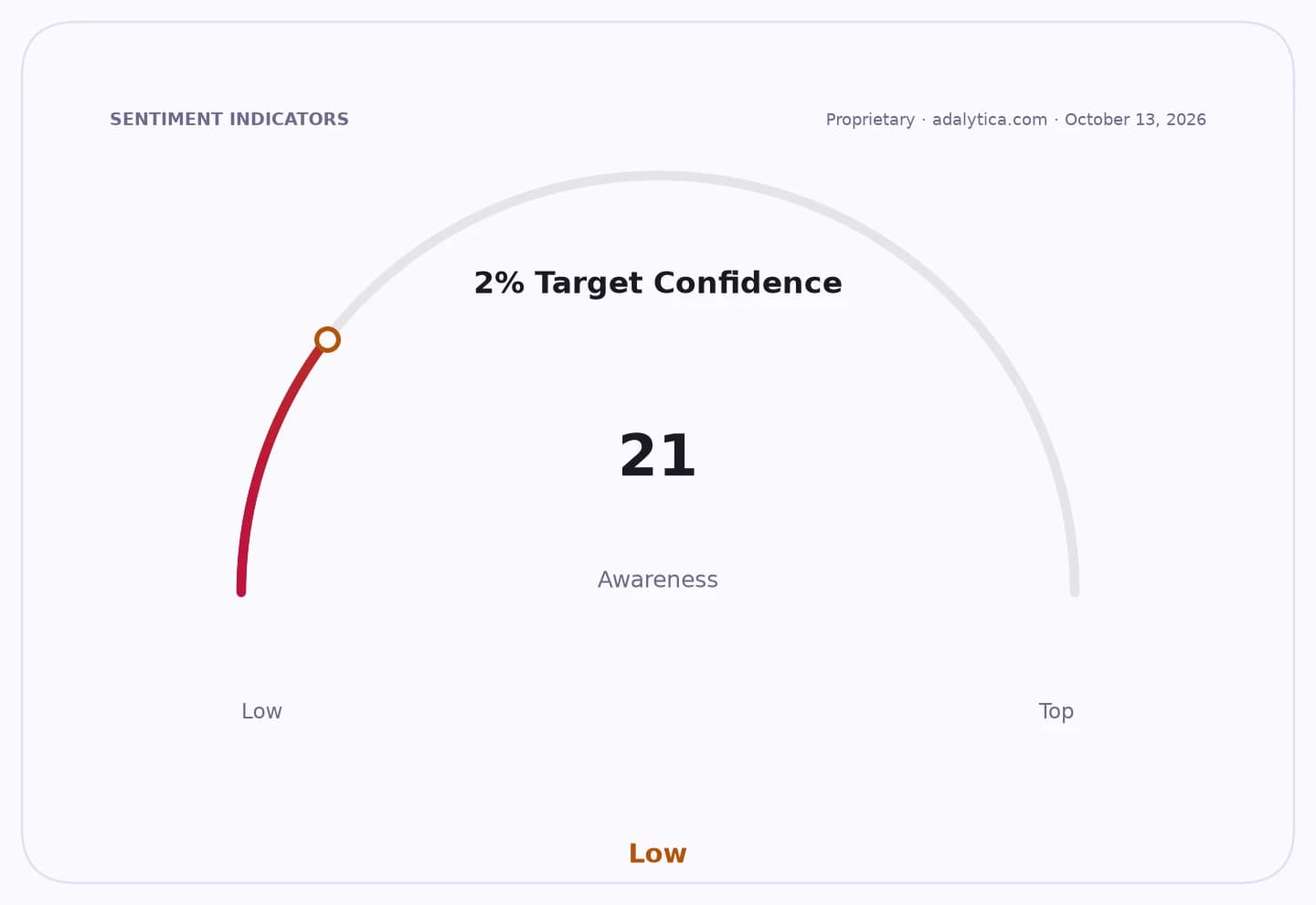
Sentiment IndicatorsⓘProprietary · adalytica.com · October 17, 2026
This is a snapshot — live sentiment, awareness and momentum for 130+ markets update continuously in the dashboard.Open AlphaPulse
The concern is not just theoretical. Central banks raise rates to defend price stability, but emergency tightening can also amplify the damage to growth if it comes when balance sheets are already strained. For households, higher rates tend to bite through mortgages, personal loans and working-capital credit, leaving less income for consumption. For companies, especially smaller firms, the hurdle rate for new projects rises, making expansion less attractive and raising the risk that planned capital expenditure gets shelved.
That is the core market issue investors should focus on: a policy shock that improves the central bank’s anti-inflation credibility may still leave banks, borrowers and domestically exposed sectors worse off in the near term. Financial stocks can benefit from wider lending margins only if loan demand holds up and credit quality stays intact. If tighter policy starts to choke off growth, the winners narrow and non-performing loans become the bigger story.
The broader macro backdrop argues for caution. In the U.S., rates remain relatively high by historical standards, with the federal funds rate at 3.75% and the 10-year Treasury yield around 5.1%, underscoring how quickly capital can reprice when central banks stay restrictive. That global tightening bias reinforces pressure on emerging markets that rely on domestic credit and confidence to sustain investment.
There is also a clear trading lesson in the recent rush into interest-rate-sensitive assets elsewhere: when bond markets start pricing easing, risk appetite can rebound fast. But Uganda’s central bank is moving in the opposite direction, and that makes the country’s growth-sensitive sectors more vulnerable than the headline policy move alone suggests.
Our view is that investors should treat this as an early warning for the domestic earnings cycle. The immediate beneficiaries are savers and the central bank’s inflation fight; the losers are borrowers, consumer-facing businesses and leveraged companies that depend on cheap credit to grow. If rates stay high for long enough to cool inflation without crushing demand, the policy will be judged a success. If not, the cost will show up in weaker investment, softer household incomes and slower GDP.
| Entity | Gains | Losses |
|---|---|---|
| Bank of Uganda | ▲Stronger anti-inflation credibility | ▼Growth-sensitive criticism |
| Savers and depositors | ▲Higher returns on cash balances | ▼— |
| Borrowers and households | ▲— | ▼Higher debt-servicing costs |
| Domestic businesses and banks | ▲Wider lending spreads if demand holds | ▼Slower credit growth, weaker loan demand |