Tesla shares are reeling because the market is being forced to separate noise from a much bigger issue: whether the company’s China strategy is stable enough to support its global growth story while Elon Musk leans harder into AI, autonomy and a potential SpaceX tie-up.
Tesla at 311.21 After China Unit Sale Denial
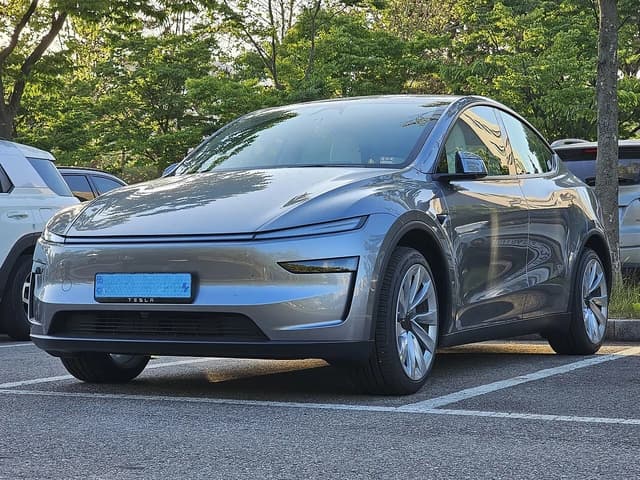
Musk’s dismissal of a report that Tesla was considering selling or separating its China unit matters because that business is not a side asset. China has been central to Tesla’s manufacturing scale, global delivery mix and margin structure, and any suggestion it could be carved out would have raised questions about control of the company’s most important production base outside the U.S. The denial removes one headline risk, but it does not eliminate the strategic tension behind it: investors still have to price a Tesla that is trying to fund huge capital needs in autonomy and robotics while defending a sprawling international footprint.
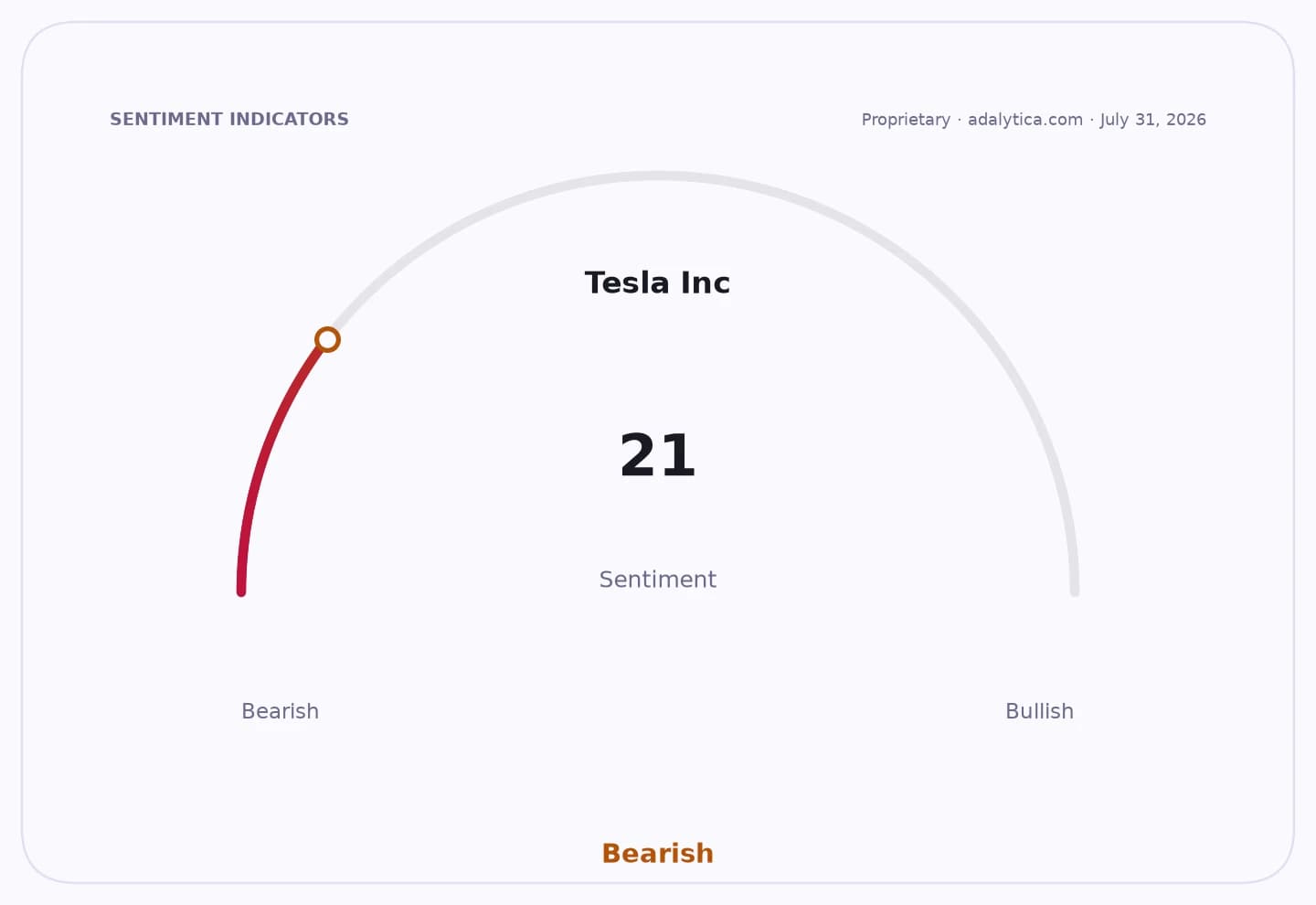
That is why the stock reaction is more than a one-day dispute over a rumor. Tesla shares closed at 311.21 on July 31, after a brutal slide from 489.88 on Dec. 16, and the technical setup has weakened sharply, with the stock far below its 50-day and 200-day moving averages. The 14-day RSI is deep in oversold territory at 18.1, while MACD remains negative, underscoring how much momentum has already been lost. Adalytica.com’s Tesla Earnings Sentiment gauge is also in “Fear,” with sentiment at 21 and down 70 points over 30 days, showing that investors are not treating this as an isolated rumor but as part of a broader confidence problem.
For investors, the real question is not whether Tesla sells China now. It is whether the market is underestimating how much optionality Musk wants to preserve. A China unit sale would have been a radical simplification move that could have unlocked capital and reduced geopolitical exposure, but it would also have risked surrendering control over the factory system that powers a large share of Tesla’s output. That makes the denial economically important: Tesla is signaling it does not want to jeopardize a high-volume, cash-generating engine at the exact moment it needs scale to support its next growth phase.
The bigger investable narrative is that Tesla is still transitioning from an auto maker to a technology and infrastructure platform, and those transitions are rarely clean. The market keeps oscillating between valuing Tesla as a car company and as a compute-and-autonomy franchise. Any restructuring that includes China, or a future combination with SpaceX, would change how investors model that transition, especially around regulatory complexity, capital allocation and the risk of trapped value.
My view is that the market is missing the second-order trade: Tesla’s volatility is creating a high-conviction setup for investors who want exposure to the broader AI and robotics buildout without paying full price for the headline names. If Tesla can preserve its China manufacturing base while continuing to push autonomy, energy storage and robotaxis, the upside remains asymmetric. But until management gives a clearer roadmap, the stock will likely trade as a battleground name — and that means patience, not chasing, is the edge.
| Entity | Gains | Losses |
|---|---|---|
| Tesla long-term holders | ▲China optionality preserved | ▼Near-term uncertainty |
| Short sellers | ▲Volatility and headlines | ▼Denial of breakup catalyst |
| Musk/management | ▲Strategic flexibility | ▼Lower credibility on rumors |
| China operations | ▲Continuity of scale | ▼Less spin-off value optionality |
