Democrats are preparing to turn their new congressional majority into an investigative offensive against Elon Musk and the Trump family, a move that could intensify regulatory pressure on some of the most politically exposed names in U.S. business.
Tesla, Musk Face Democratic Oversight Pressure
The core economic issue is not just partisan theater. It is the prospect that Washington’s policy direction on immigration, federal contracting, artificial intelligence and government spending could shift sharply, with direct consequences for Musk’s companies and for businesses tied to the Trump political orbit. For investors, that raises the risk of slower approvals, tougher oversight and more politicized scrutiny of contracts, subsidies and capital allocation decisions.
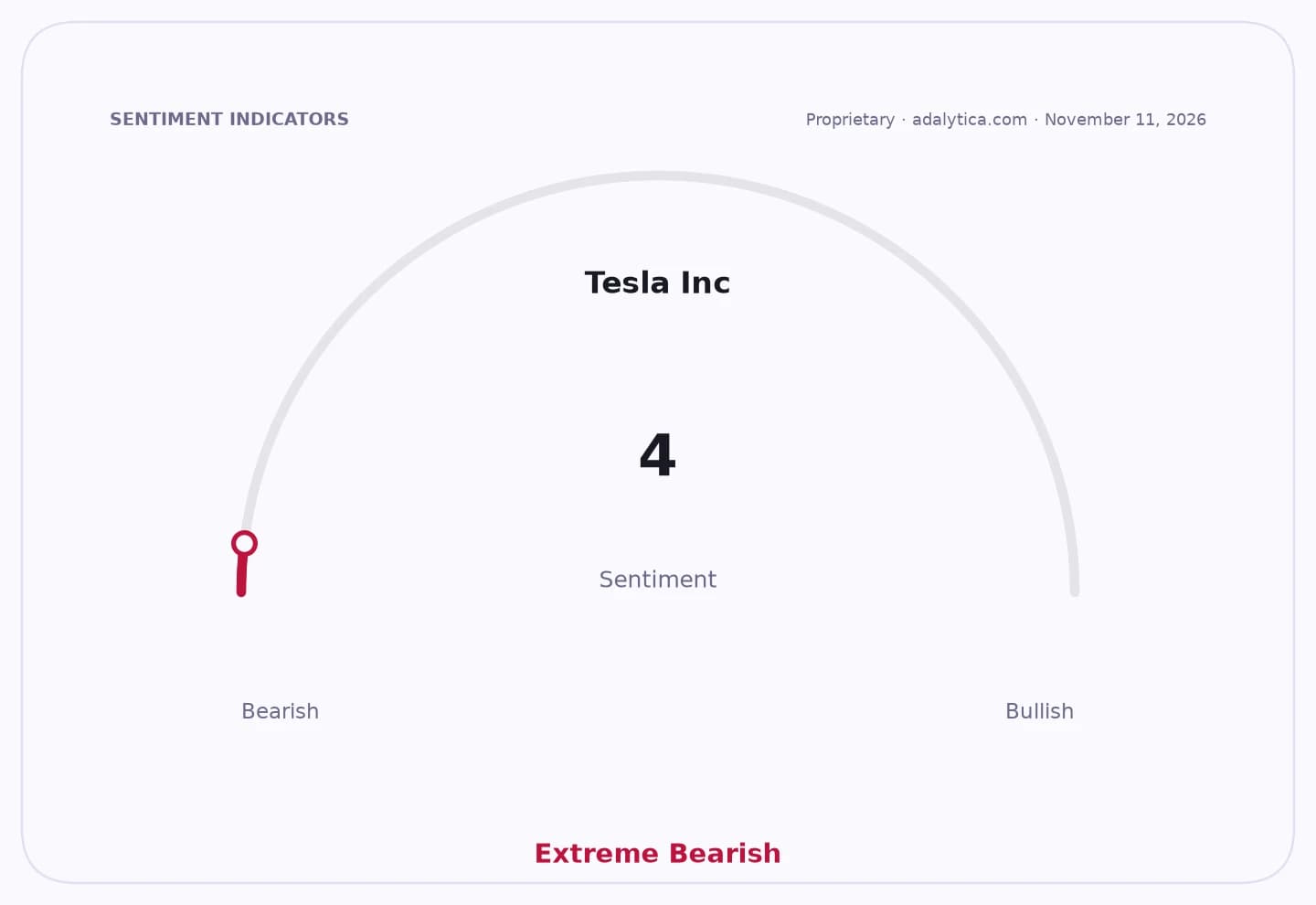
Sentiment Indicators
Incoming Oversight chairman Robert Garcia said Democrats would focus on the Trump family’s finances, possible abuses by the immigration agency ICE, the Epstein case and, crucially, Musk’s role in Washington. He said the party had “definitely many questions” about Musk’s involvement in the Department of Government Efficiency, or DOGE, where the billionaire oversaw sweeping federal workforce cuts. Democrats also want to examine the stream of government contracts flowing to Musk’s companies and his role in restricting Starlink service to the Ukrainian military.
That matters because Musk’s empire depends heavily on the policy environment. Tesla, SpaceX and related ventures all face exposure to federal decisions on defense procurement, space infrastructure, autonomous vehicles, data centers and AI regulation. A Congress controlled by Democrats may not be able to rewrite those terms overnight, but it can summon executives, demand records and slow the tempo of business through investigations that consume management time and elevate compliance risk.
The market has already started to price in that possibility. Tesla shares fell about 12% in the aftermath of the Democratic victories, while SpaceX also moved more than 6% lower in secondary trading, according to the context provided. Tesla’s slide left the stock well below its recent highs and pushed technical momentum indicators lower: its 14-day relative strength index eased from overbought territory in December to 49.5 in the latest reading, while the shares remain around the 50-day moving average and near the 200-day line. That suggests investors are no longer bidding the stock purely on narrative and are becoming more sensitive to policy risk.
The political backdrop is broader than Musk. Democrats are also targeting the Trump family’s rapidly expanding wealth, a reminder that the second Trump era has blurred the line between politics, business and government. That mix is already unsettling investors in sectors dependent on federal oversight, especially technology and AI, where deregulation under Trump has helped fuel valuations but also intensified public unease.
That unease has commercial consequences. Musk’s spending of nearly half a billion dollars on the Republican campaign did not deliver the political firewall he expected, and the backlash may now run in both directions: federal investigations in Washington and a less friendly state-level environment in Texas, where Democrats have won key races. One major flashpoint is data-center expansion. Texas Democrats are calling for a moratorium on new data centers, which could affect AI infrastructure growth, power demand and the economics of projects linked to Musk’s businesses.
For investors, the bull case is that congressional probes may amount to noisy but manageable political friction, with limited ability to alter Musk’s underlying asset base or Tesla’s long-term autonomy and AI story. The bear case is that sustained scrutiny slows federal awards, complicates Starlink’s defense role, increases legal expense and reinforces a broader regulatory clampdown just as AI capital spending is rising.
The next phase will be defined by subpoenas, hearings and how aggressively Democrats follow through once Congress reconvenes. If they do, Musk may face not only a political counteroffensive but a material recalibration in the regulatory premium attached to his companies.
| Entity | Gains | Losses |
|---|---|---|
| Democrats | ▲Oversight leverage | ▼Business-friendly image |
| Elon Musk / Tesla / SpaceX | ▲— | ▼Political scrutiny, valuation pressure |
| Trump family / Trump Media | ▲Investigative target status | ▼Reputational and legal risk |
| Investors in AI / defense tech | ▲Potential clarity if probes narrow risk | ▼Near-term policy uncertainty |