Tesla’s ambitions in electric vehicles and AI are colliding with regulatory and financial reality, with the new Roadster drawing questions over whether it can be legally roadworthy even as Elon Musk warns that more than 200 AI cloud companies could fail under debt pressure and Microsoft tells investors its own AI push carries material legal, operational and financial risks.
Tesla Roadster, Microsoft AI Risks, and Debt Pressure
That combination matters because it points to a broader repricing of the “growth at any cost” trade in both autos and artificial intelligence. Tesla’s latest flagship is being sold as a technological showcase, but the details now suggest the company may face the same European regulatory barriers that have kept the Cybertruck off the road there. Meanwhile, Musk’s comments on AI debt stress, paired with Microsoft’s caution in its latest 10-Q, reinforce the idea that the AI buildout is entering a more selective phase where capital intensity, compliance and commercialization risk matter as much as the story line.
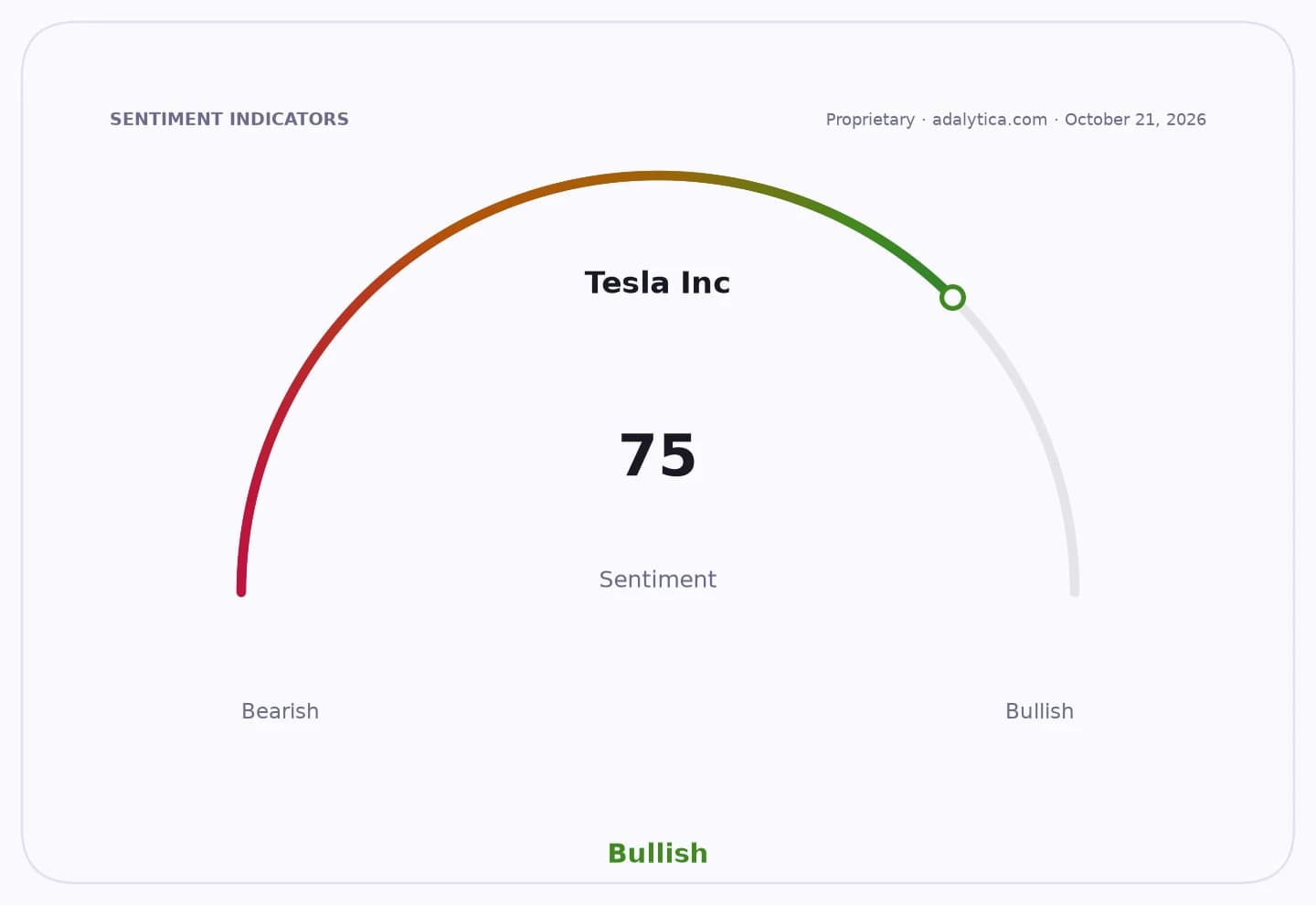
Sentiment Indicators

For investors, the issue is less whether Tesla can generate headlines than whether it can turn showpiece products into globally sellable vehicles without running into homologation and safety constraints. The Roadster’s various trims — including a top-end version that Tesla says will not be usable on public roads and a mid-tier configuration that would be limited to circuits because of its gas propulsion system — underline the tension between spectacle and scale. Analysts already worry that the fan-assisted base version could still throw debris into following traffic, a reminder that Europe’s safety standards can materially narrow Tesla’s addressable market if a new model cannot clear approval.
That risk lands at a sensitive moment for Tesla shares, which have been volatile but still traded around $400 in the latest sessions. Technicals suggest the stock remains above its 50-day and 200-day moving averages, but momentum has cooled as the relative strength index has drifted down from overbought levels earlier in the year. In other words, the market is still giving Tesla credit for optionality, but not blind faith.
Artificial Intelligence — 30-day sentimentadalytica.com
Explore this data interactively — full history, time series and cross-market comparisons.
Artificial Intelligence
The Musk-led AI warning is important for a different reason: it highlights the fragility of a sector that has attracted enormous capital on the assumption that scale will eventually justify the spending. If hundreds of smaller AI cloud firms are carrying too much debt into a period of slower funding and tougher competition, then consolidation is likely to accelerate. That would benefit the strongest platforms — above all Microsoft, which has both the cash flow and cloud footprint to absorb the cycle — but it could also tighten scrutiny on margins, returns on capital and the pace of monetization across the sector.
Microsoft’s own disclosures show why investors should not treat AI as a clean-margin supercycle. The company said acquisitions, joint ventures and strategic alliances can fail to advance strategy, and that AI systems can expose it to legal, regulatory, reputational and competitive harm. Those are boilerplate risks, but their prominence in the filing matters because they map directly onto the market’s biggest question: how much of the AI spending boom will convert into durable earnings growth rather than expensive capacity.
That is also why the European electric-vehicle angle matters beyond Tesla. If Chinese automakers continue to build factories in Europe, the pressure on regional incumbents will intensify just as Tesla’s own product pipeline faces compliance uncertainty. For European regulators, the priority is safety and industrial policy; for investors, it is whether the continent becomes both a production base and a battleground for EV market share. That would sharpen competition on price, margins and local manufacturing decisions across the sector.
| Entity | Gains | Losses |
|---|---|---|
| Tesla | ▲Product buzz, brand attention | ▼European approval risk |
| Microsoft | ▲Stronger relative position in AI | ▼Higher scrutiny on AI returns |
| Large AI platforms | ▲Market share from weaker rivals | ▼More capital burden if shakeout deepens |
| Smaller AI cloud firms | ▲— | ▼Debt stress and possible closures |