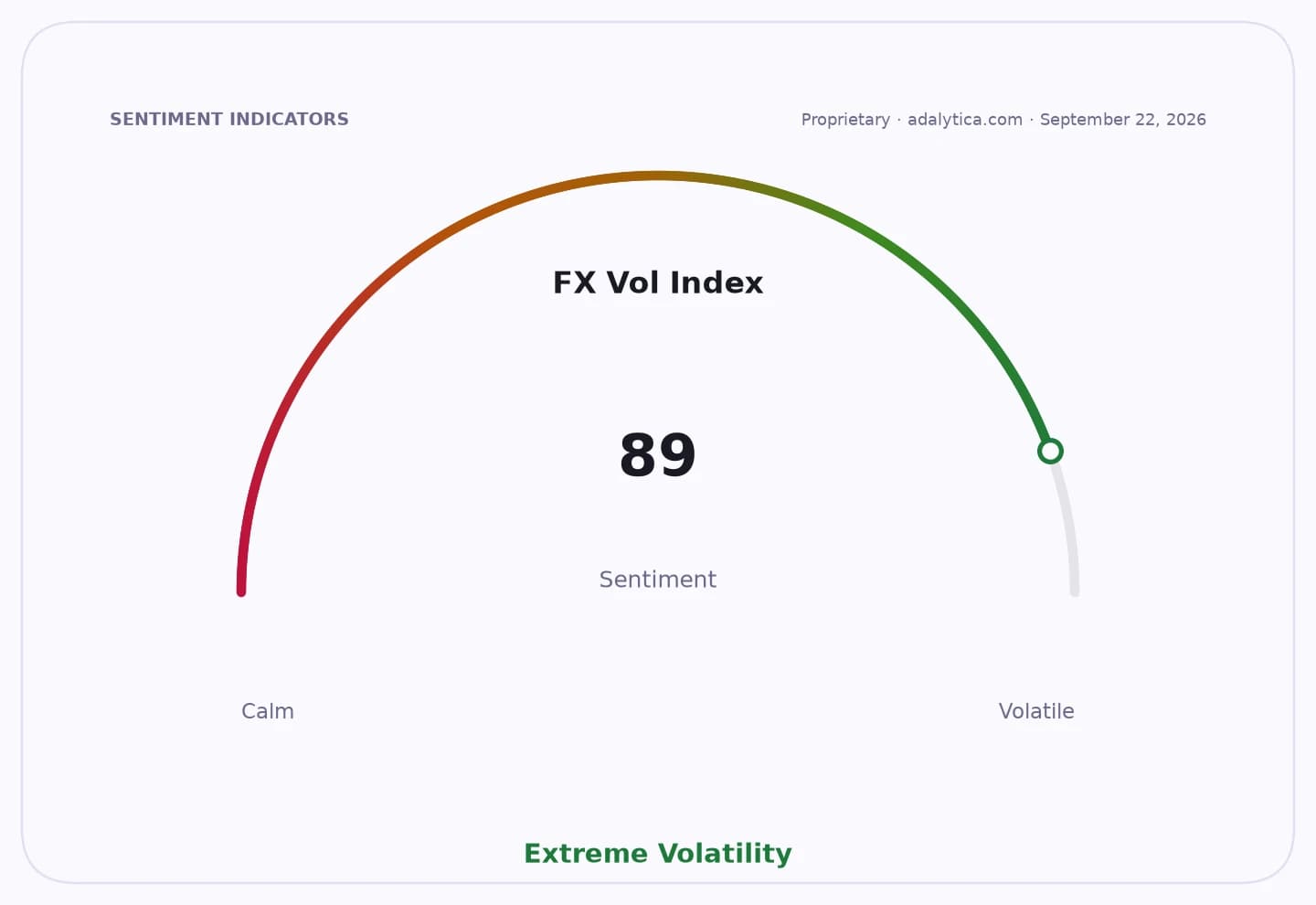
The Thai baht slipped against the dollar on Thursday as foreign investors remained net sellers of Thai equities and the greenback stayed broadly supported, underscoring how capital flows are driving Thailand’s currency more than any single domestic headline.
Thai baht slips as foreign investors sell stocks

That matters because Thailand is still highly exposed to portfolio flows. When overseas money exits local stocks, the pressure does not stop at the equity market: it often spills into the foreign-exchange market, weakening the baht and tightening financial conditions for importers, dollar borrowers and companies with overseas funding needs.
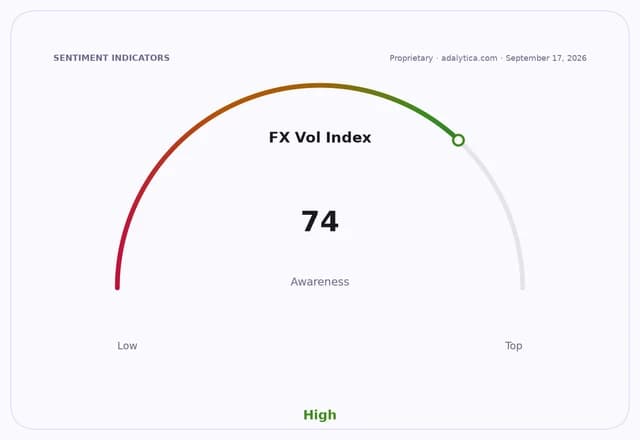
Sentiment IndicatorsⓘProprietary · adalytica.com · September 17, 2026
This is a snapshot — live sentiment, awareness and momentum for 130+ markets update continuously in the dashboard.Open AlphaPulse
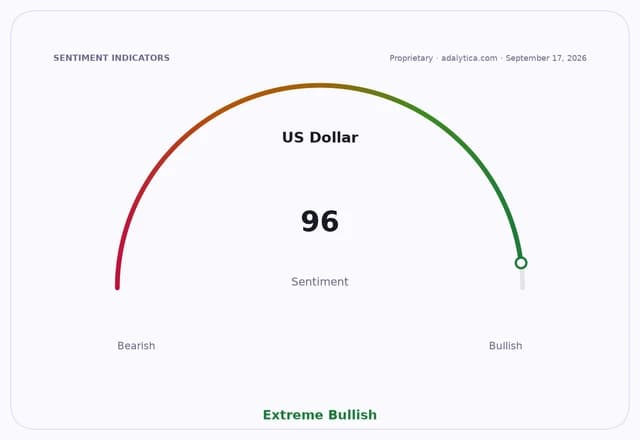
The baht was quoted around 33.26 per dollar, little changed from 33.29 a day earlier but still above its 50-day moving average of 33.20 and close to the upper end of its recent range. The dollar also held firm, with the U.S. Dollar ETF UUP ending at 28.40 and technical indicators showing it trading above its 50-day and 200-day moving averages. In Adalytica.com’s US Dollar Trade Signals gauge, dollar sentiment was in “Extreme Greed,” a reminder that the market is still leaning toward dollar strength rather than a broad Asia FX rebound.
For investors, the mix is straightforward: a softer baht can cushion exporters, but it also raises the cost of imported fuel, components and capital goods, which can squeeze margins across Thai industry. It also complicates the outlook for the Bank of Thailand if currency weakness starts to feed inflation or amplify financial-market volatility.
The bigger story is that Thailand’s currency remains hostage to the same forces that have weighed on many emerging-market units this year: persistent dollar demand, uneven risk appetite and a lack of durable foreign inflows into local assets. Reuters-style market chatter around a 33.30 to 33.55 trading band suggests traders see little immediate catalyst for a sharp reversal.
That leaves the trade set-up tilted toward selective rather than broad-based positioning. Exporters and firms earning hard currency should continue to outperform if the baht stays under pressure, while domestic retailers, utilities and companies reliant on imports or dollar funding face a less forgiving backdrop. If U.S. rates stay elevated and foreign money keeps leaving Thai stocks, the baht’s weakness can persist longer than many expect — and that is where the next relative-value opportunity will emerge.
| Entity | Gains | Losses |
|---|---|---|
| Thai exporters | ▲Higher baht revenue translation | ▼None |
| Importers | ▲None | ▼Higher input costs |
| Foreign sellers of Thai stocks | ▲Dollar liquidity | ▼Thai equity exposure |
| Thai consumers | ▲None | ▼More expensive imports |