Thailand’s household debt has climbed to 86.7% of GDP, a painful sign that more families are using credit to cover groceries, fuel and other daily essentials instead of financing homes or long-term investments.
Thailand Household Debt Reaches 86.7% of GDP

That matters because it points to a consumer economy under strain, one where borrowing is increasingly filling the gap between stagnant incomes and rising living costs. When debt is being used to survive, not to build wealth, the economic damage tends to show up later in weaker spending, softer growth and rising credit stress.
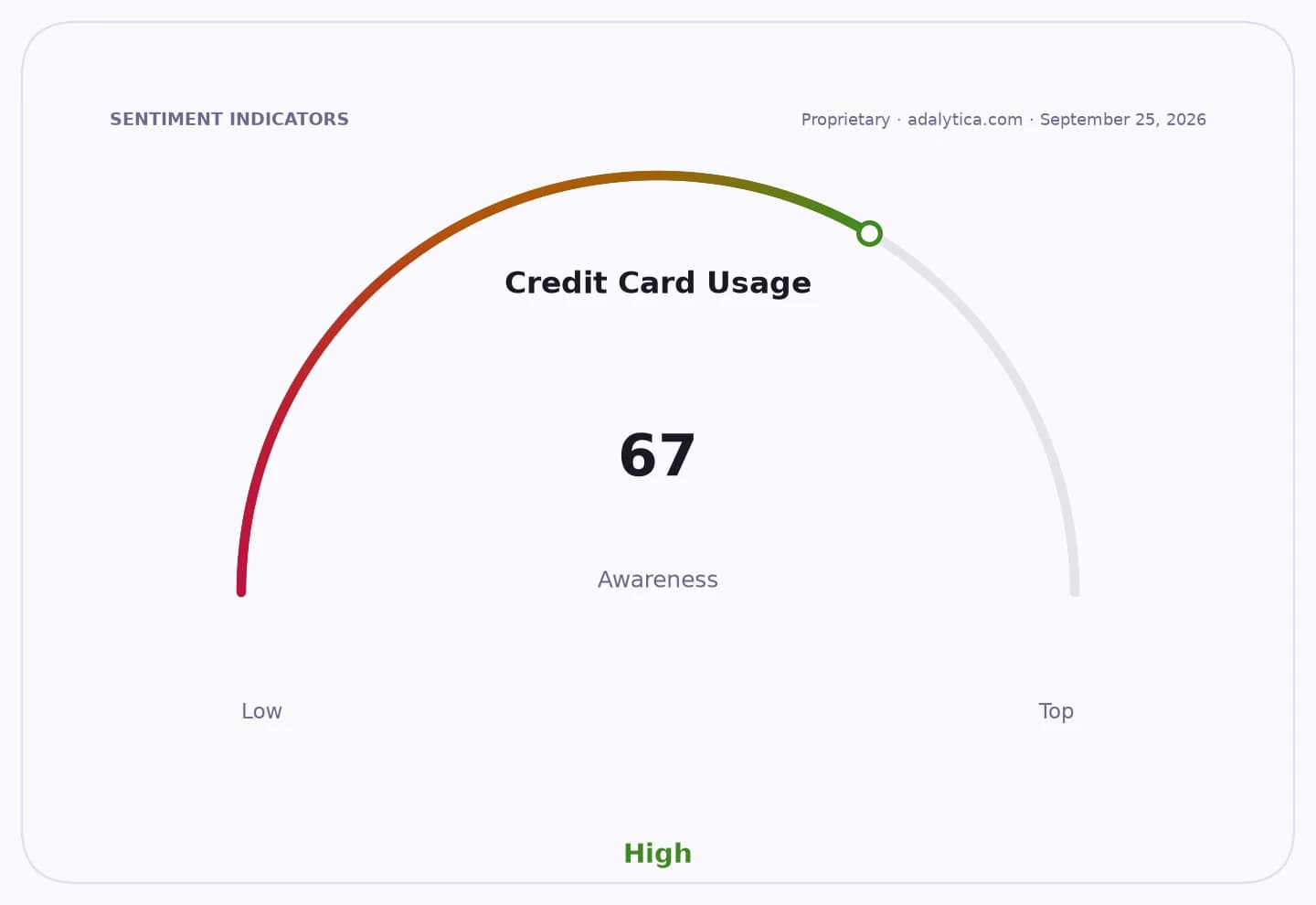
Sentiment IndicatorsⓘProprietary · adalytica.com · October 4, 2026
This is a snapshot — live sentiment, awareness and momentum for 130+ markets update continuously in the dashboard.Open AlphaPulse
The latest data from SCB Economic Intelligence Center showed household debt reached 12.72 trillion baht in the fourth quarter of 2025, up 119 billion baht from the prior quarter. More worrying than the headline number is where the credit is coming from. Commercial bank lending has fallen for seven straight quarters as banks grow more cautious, while borrowers are shifting toward state-owned lenders, savings cooperatives and pawnshops.
That shift tells investors a lot about the underlying economy. Thailand is still recovering unevenly from the pandemic, but the burden of that recovery is not being shared equally. Tourism and other services are improving, yet manufacturing and rice farming remain under pressure, and that is forcing workers to move between jobs more often. In that environment, the household balance sheet becomes a pressure valve — and one that can break if incomes fail to keep pace.
Inflation is another problem. The SCB EIC expects price growth to reach 3.2% in 2026, with Middle East tensions helping keep energy costs elevated. Higher fuel bills ripple through logistics, food and transport, which means the real value of wages keeps slipping even when paychecks are unchanged. Small and midsized businesses are caught in the middle, absorbing higher oil costs and struggling to pass them on without hurting demand.
For investors, the message is not just about Thailand’s households. It is about the quality of the country’s growth. A debt-heavy consumer recovery is fragile, and fragile recoveries do not usually deliver strong earnings growth for banks, retailers or domestic lenders. At the same time, lenders with tighter underwriting standards may be better positioned than aggressive consumer-credit players if defaults rise or demand for discretionary spending weakens.
There is also a policy angle. Thailand may need more than short-term relief measures if it wants to break the cycle of borrowing for consumption. The real solution is stronger productivity, better wage growth and a labor market that can support steady income gains. Without that, the country risks becoming stuck in a low-growth loop where households borrow just to get through the month.
For long-term investors, that makes Thailand a story to watch rather than chase. The debt burden is a warning sign about consumer resilience, bank lending quality and the sustainability of domestic demand. Until incomes begin to outgrow living costs, this is not the kind of backdrop that usually supports a clean economic rebound — and it is worth keeping on the watchlist.
| Entity | Gains | Losses |
|---|---|---|
| Borrowers using pawnshops/co-ops | ▲Fast cash access | ▼Higher financial strain |
| Commercial banks | ▲Better credit discipline | ▼Slower loan growth |
| State-owned lenders | ▲More policy-driven lending | ▼Higher exposure to weak households |
| Thai consumers | ▲Short-term bill payment relief | ▼Weaker future spending power |