Thailand’s regional economy is still healing unevenly, but August’s jump in inflation to 2.53% is the clearest reminder that the bigger problem for households and policymakers is now the cost of living, not just sluggish growth.
Thailand Inflation Rises to 2.53% in August
That matters because broad-based price pressure can quickly erode consumer spending power, especially when confidence is already weak. The Commerce Ministry’s Office of Trade Policy and Strategy said inflation rose in every region, with the South posting the highest rate at 2.85%, followed by the Central region at 2.81%. Food was the main culprit: prices for food and non-alcoholic beverages climbed 2.99%, led by fresh vegetables, eggs and dairy, while weather-related supply strains kept pressure on fruit, poultry and other staples.
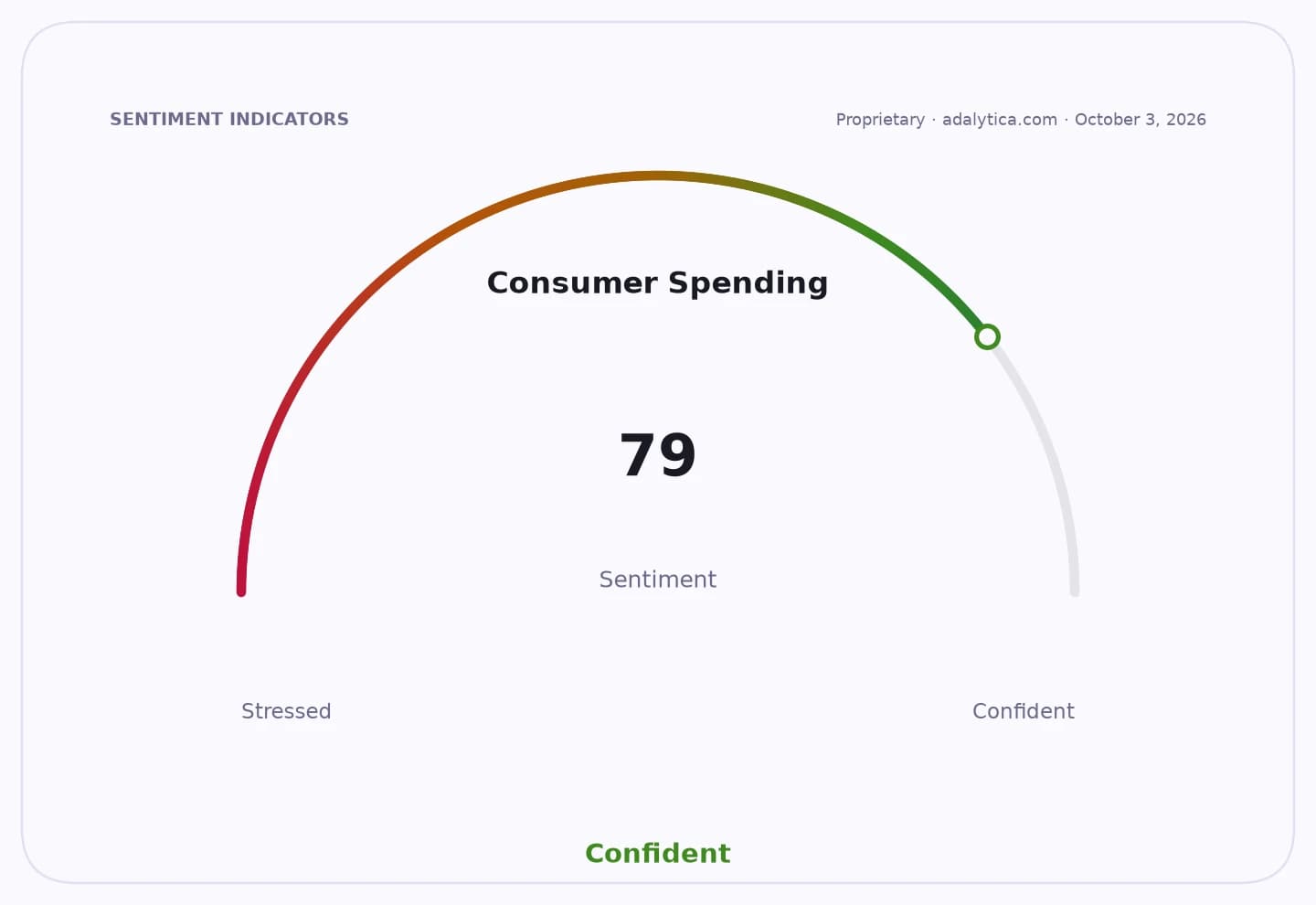
Sentiment IndicatorsⓘProprietary · adalytica.com · October 4, 2026
This is a snapshot — live sentiment, awareness and momentum for 130+ markets update continuously in the dashboard.Open AlphaPulse
For investors, that combination is a warning sign and a stock-picker’s clue. Companies tied to household essentials, food distribution and value retail can often pass through higher input costs better than discretionary sellers, while tourism-heavy and consumer-facing businesses may find demand less forgiving if real incomes keep getting squeezed. In other words, inflation is not just a macro headline — it can reshape who earns pricing power and who faces margin pressure.
The regional breakdown also shows where Thailand’s recovery is strongest. Northeast Thailand stood out as the most resilient area, with the only consumer confidence reading in optimistic territory and the fastest growth in new business registrations, up 36.3% from a year earlier. That suggests a pocket of entrepreneurial momentum that could support employment and local demand over time.
The South, by contrast, is carrying a heavier burden. It had the nation’s highest inflation rate, while tourism revenue in the region slipped 0.4% in July even though the South still generated the largest visitor income overall at 81.82 billion baht. Bangkok and the surrounding area also saw new business registrations fall, underscoring how uneven the recovery remains across the country.
There are some brighter spots. Northern tourism revenue rose 14.8%, the fastest of any region, and nationwide visitor income still increased 1.2% in July. But the broader picture is one of a recovery that is not moving in lockstep: business closures rose 35.2% nationwide, confidence slipped to 49.5, and many regions are still struggling with weak farm incomes and higher living costs.
For long-term investors, the lesson is straightforward. Thailand’s consumer landscape is being shaped by inflation, weather-driven food costs and regional disparities, not a single nationwide boom. That makes resilience, pricing power and exposure to structurally stronger regions more important than ever. This is worth watching closely, especially for investors with a multi-year horizon.
| Entity | Gains | Losses |
|---|---|---|
| Northeast Thailand | ▲New business formation, consumer confidence | ▼None obvious in the data |
| South Thailand | ▲Tourism scale, farm income support | ▼Households facing the highest inflation |
| Staples retailers and food sellers | ▲Pricing power on essentials | ▼Discretionary retailers and weak-income consumers |
| Travelers and tourism businesses | ▲Northern tourism growth | ▼South and Bangkok tourism softness |