Thailand is preparing a fresh 100 billion baht borrowing backstop for its oil fund as the government braces for what officials now see as a prolonged period of expensive fuel, a move that could help shield households and businesses from an immediate price shock but adds to the state’s contingent liabilities.
Thailand Oil Fund Borrowing Backstop for Fuel Prices

The need for the bailout-like financing underscores how quickly a spike in global crude can turn into a domestic economic problem. When oil stays high, the pain spreads far beyond the pump: transport costs rise, factory margins get squeezed, food and goods become more expensive, and small companies with little pricing power feel it first. For investors, that means the country’s energy policy is now a key variable for inflation, consumption and credit conditions, not just a matter for motorists.
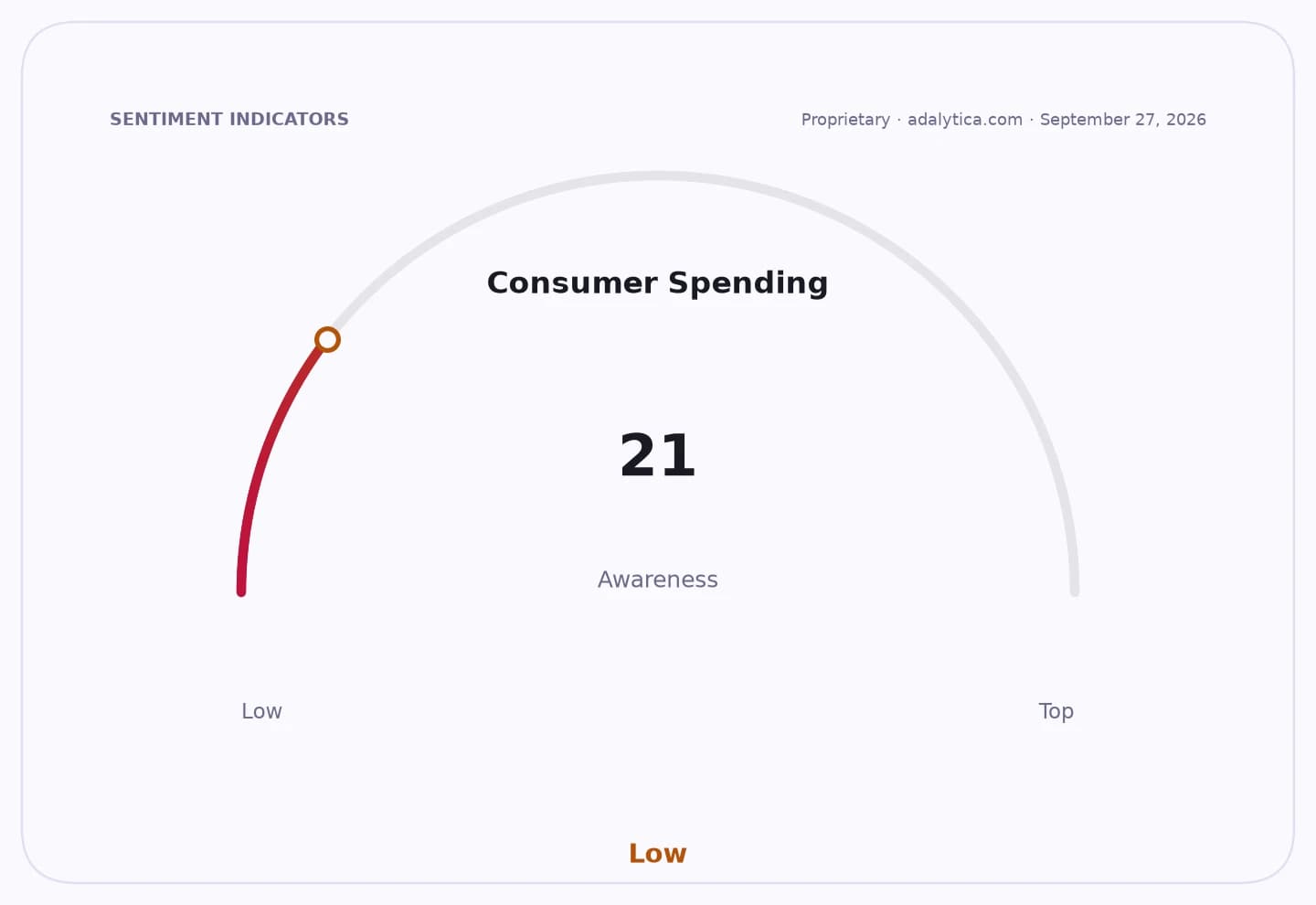
Sentiment IndicatorsⓘProprietary · adalytica.com · October 1, 2026
This is a snapshot — live sentiment, awareness and momentum for 130+ markets update continuously in the dashboard.Open AlphaPulse
Thailand’s Cabinet has already approved a three-year crisis plan through 2029 that expands when the oil fund can step in to support prices. The trigger for volatility has been widened to a move of more than $10 a barrel in a week, from $5 previously, which officials say better reflects a market that has become far more violent. The fund can also now be used when domestic diesel or gasoline prices climb above 30 baht a liter, or when LPG prices break higher thresholds.
The urgency comes from the fund’s finances. It is already roughly 95 billion baht in the red and bleeding about 700 million baht a day, officials said, with the deficit expected to reach 100 billion baht by late September or early October. That is why the finance ministry is considering a royal decree to guarantee new borrowing, likely from state banks such as Krungthai Bank and Government Savings Bank. Officials said the borrowing would be drawn gradually as needed, rather than taken all at once.
That matters because the oil fund has become a pressure valve for the broader economy. Thailand has relied on it to limit inflation after repeated bouts of energy volatility, and the government has also leaned on refinery margins to help restrain pump prices. Those measures have protected consumers in the short run, but they also delay the full pass-through of global prices, keeping the burden on public finances and state-linked balance sheets instead.
The backdrop is not getting friendlier. Oil prices have risen again amid Middle East tensions, and Thai energy officials warned the shock could linger for another two years as damaged infrastructure in the region is repaired. The World Bank and other global forecasters have long warned that persistent energy shocks can work like a tax on growth, and in Thailand’s case that could slow recovery just as businesses are trying to preserve margins and investment plans.
For investors, the key question is who absorbs the cost. Households get temporary relief if the government keeps prices capped. Retailers, logistics firms and manufacturers benefit from slower inflation and steadier demand. But taxpayers and bondholders ultimately shoulder more of the risk if the fund keeps borrowing to defend prices. Higher fuel subsidies can also constrain fiscal room later, limiting how aggressively Bangkok can respond to a broader slowdown.
There is a longer-term lesson here too. Thai officials say the new plan puts more emphasis on biodiesel and ethanol made from local agricultural output, a reminder that energy security is not just about imports and subsidies. If the government can expand domestic alternatives and improve efficiency, it can reduce exposure to crude shocks over time. That makes energy policy one of the more important structural investment themes in Thailand right now.
The immediate takeaway for long-term investors is straightforward: Thailand is trying to buy time, not solve the oil problem. The 100 billion baht backstop may keep the heat off consumers for now, but if crude stays elevated, the trade-off between inflation relief and fiscal strain will only get sharper. Worth watching.
| Entity | Gains | Losses |
|---|---|---|
| Thai consumers | ▲Short-term fuel relief | ▼Future tax/fiscal burden |
| Small businesses and logistics firms | ▲Slower cost pass-through | ▼Longer-term margin pressure |
| Thai government and oil fund | ▲Time to manage prices | ▼Higher debt and contingent liabilities |
| Oil exporters and refiners | ▲Stronger price environment | ▼Pressure from subsidy policies |