Thailand is moving from planning to procurement on a 341.35-billion-baht rail corridor that could redraw trade flows across mainland Southeast Asia, with the government now targeting competitive bidding in 2027 for the second phase of its high-speed link to China.
Thailand rail corridor moves to 2027 bidding
That matters because the project is no longer a distant political promise; it is turning into a concrete infrastructure program with financing, engineering work and a commercial timetable. If Thailand can deliver the 357-kilometer northern stretch from Nakhon Ratchasima to Nong Khai, it will create a faster overland route from Bangkok to Laos and ultimately southwestern China, strengthening the kingdom’s role as a logistics bridge at a time when supply chains are being reworked across Asia.
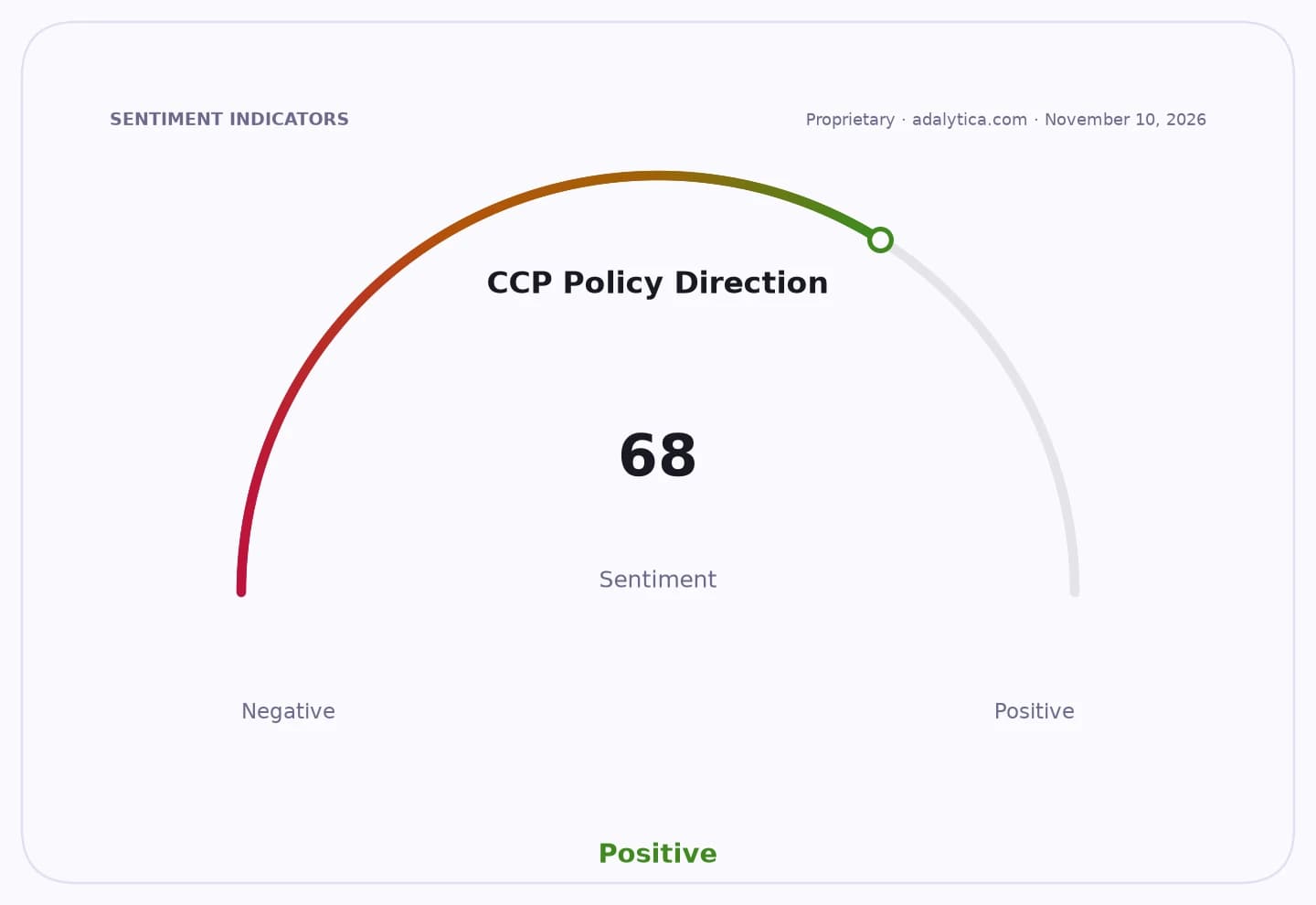
Sentiment Indicators
The Cabinet has already approved the budget for the second stage, while transport planners say engineering specifications and safety certification are advancing to support the 2027 tender. Officials are also trying to avoid the kind of stop-start delays that often undermine regional infrastructure projects, pushing the second phase forward even before the first phase is fully complete.
For investors, the significance is less about the headline rail line itself than the second-order effects. A reliable standard-gauge connection at 160 kilometers per hour would reduce the Bangkok-to-Nong Khai trip to about five hours, improving passenger mobility and giving exporters a cheaper, more predictable route for high-value goods such as fruit, processed food and rubber. That favors logistics operators, warehouse developers, industrial landowners and construction groups, while pressuring truckers and other highway-based transport businesses that depend on congested road corridors.
The project also reinforces Thailand’s broader industrial strategy. Nong Khai is being positioned as a cross-border logistics hub linked to the existing Laos-China rail network, which creates a continuous land bridge into a market far larger than Thailand’s own domestic economy. The government’s plan to pair the high-speed corridor with double-track freight upgrades suggests a longer-term push to separate passenger and cargo flows, an important detail because rail projects only become economically transformative when they can carry both people and freight at scale.
The buildout remains uneven. On the first phase from Bangkok to Nakhon Ratchasima, officials say more than half the civil works are done, but two contract issues still need resolution before track laying and systems installation can proceed smoothly. Full commercial operation is targeted by 2033, which means the investment case is not about near-term revenue but about positioning ahead of a multi-year capex cycle that should benefit Thai contractors, cement, steel and infrastructure supply chains.
The market backdrop also helps explain why this story matters now. Adalytica’s US-China relations sentiment gauge shows extreme fear, a reminder that geopolitics remain a major driver of trade-route diversification and regional infrastructure spending. In that environment, overland connections that reduce dependence on sea lanes and improve access to China become strategically more valuable, especially for countries like Thailand seeking to profit from supply-chain realignment without taking an overt geopolitical side.
My view is that investors are still underestimating the spillover opportunity. The rail line itself is only one asset; the real trade is in the ecosystem around it — contractors, station-area developers, freight handlers and industrial parks that will benefit long before the first express service is fully operational. If Thailand keeps the procurement calendar intact, 2027 could become the inflection point for a much broader re-rating of northeastern Thailand’s transport and real-estate corridor.
| Entity | Gains | Losses |
|---|---|---|
| Thai contractors | ▲More civil works awards | ▼Smaller public-project backlog |
| Logistics firms | ▲Lower transit costs | ▼Trucking margins |
| Border provinces | ▲Higher land values | ▼Road-only transport hubs |
| Exporters to China | ▲Faster freight access | ▼Congested highway routes |