China’s import expo is becoming less a showcase for fruit and more a test case for how Middle Eastern exporters can plug into the world’s second-largest consumer market through food, logistics and industrial supply chains.
China Import Expo Expands Middle East Trade Ties
That shift matters because it points to a broader reallocation of trade flows: from simple commodity exports toward higher-value, longer-duration commercial relationships that can lift margins for suppliers and deepen China’s economic leverage across the Middle East and North Africa. For investors, the opportunity is in the picks-and-shovels behind that integration — ports, cold-chain logistics, industrial equipment, e-commerce traceability and cross-border distribution networks.
Sentiment Indicators
The ninth China International Import Expo, running in Shanghai from Nov. 5 to 10, is drawing a more diverse slate of Middle Eastern participants than in its early years. Where the first edition in 2018 was dominated by agricultural products, this year’s lineup includes first-time exhibitors from Oman, the United Arab Emirates and Jordan, alongside companies in cosmetics, trade and industrial equipment. The mix itself is the signal: the region is no longer treating China purely as a buyer of dates, citrus and seafood, but as a partner in supply-chain development and technology transfer.
That evolution is being reinforced by policy. China has expanded access for products from the region, including UAE camel milk, Saudi aquaculture and Turkish marine goods, while also waiving tariffs on imports from all 53 African countries with diplomatic ties and widening so-called green channels for products such as dried chili, coffee, cashews and wild aquatic goods. Beijing says Egyptian exports to China rose 67.5% in the first half of this year under the tariff-free regime, underscoring how trade facilitation can quickly redirect commercial flows.
For exporters, the payoff is obvious. Premium seafood sellers, camel milk brands and specialty food producers are targeting Chinese distributors, hotels and online shoppers with live-streamed farm visits and origin-tracking tools designed to build trust in a market that prizes quality and authenticity. For China, the expo is another way to secure diversified food and industrial inputs while tightening its commercial footprint in the region.
The most important second-order effect is industrial. The story is no longer limited to consumer goods. Egypt’s Red Sea Container Terminal at Ain Sokhna, billed as the country’s first semi-automated container terminal, and El Sewedy Electric’s display of fiber-optic cables, power cables and transformers show the relationship moving into infrastructure and manufacturing. El Sewedy’s new representative office in China, opened in September, is aimed at sourcing Chinese suppliers and extending power and new-energy equipment into the Middle East and Africa — exactly the kind of cross-border industrial flow that can support multi-year capex cycles.
Somalia’s first national pavilion adds another layer. Its focus on minerals, oil, livestock, frankincense, myrrh, fisheries, culture and tourism shows how China is broadening its reach into frontier markets with strategic geography and untapped resource potential. That matters for investors watching where Chinese capital, logistics and policy support go next.
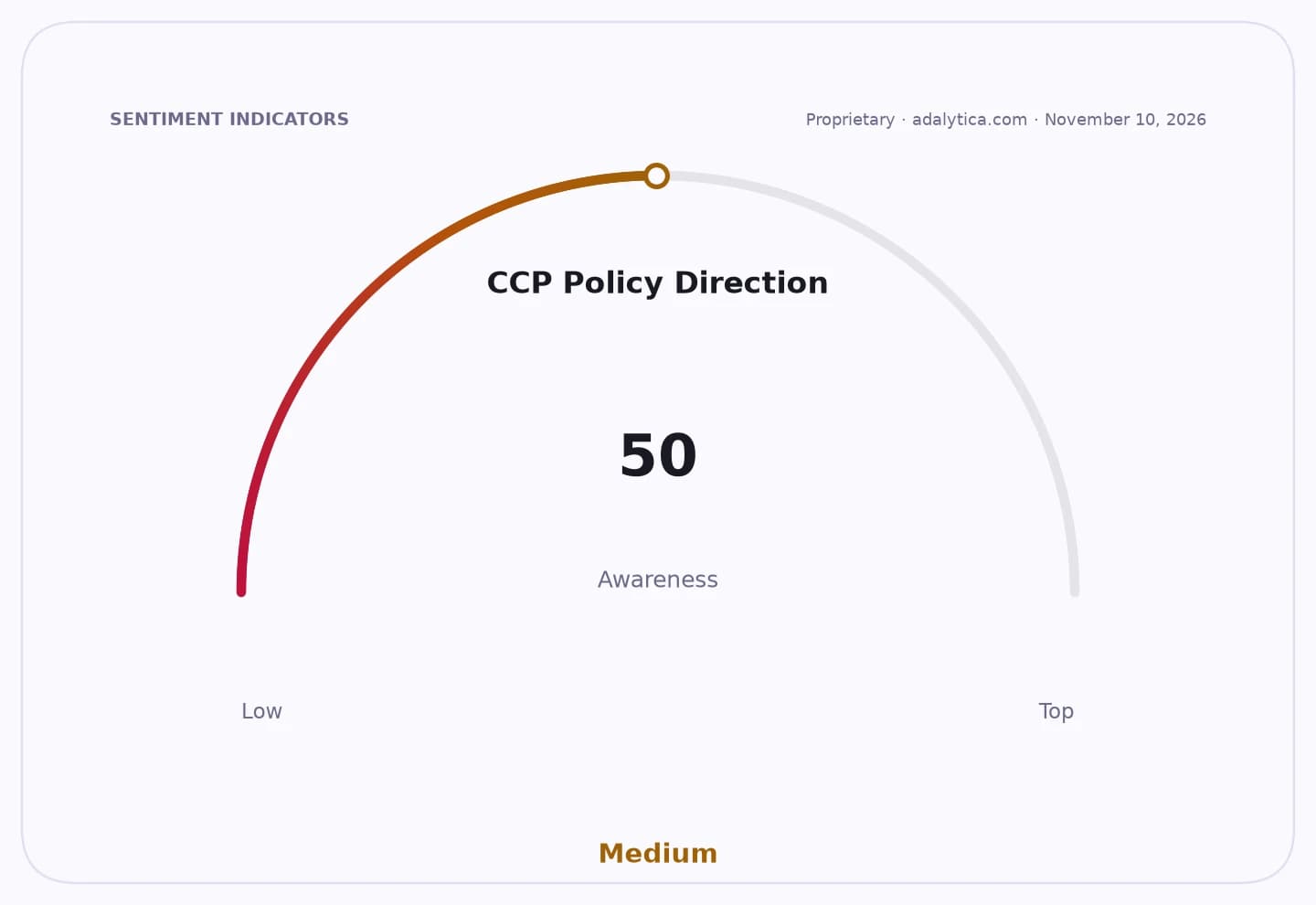
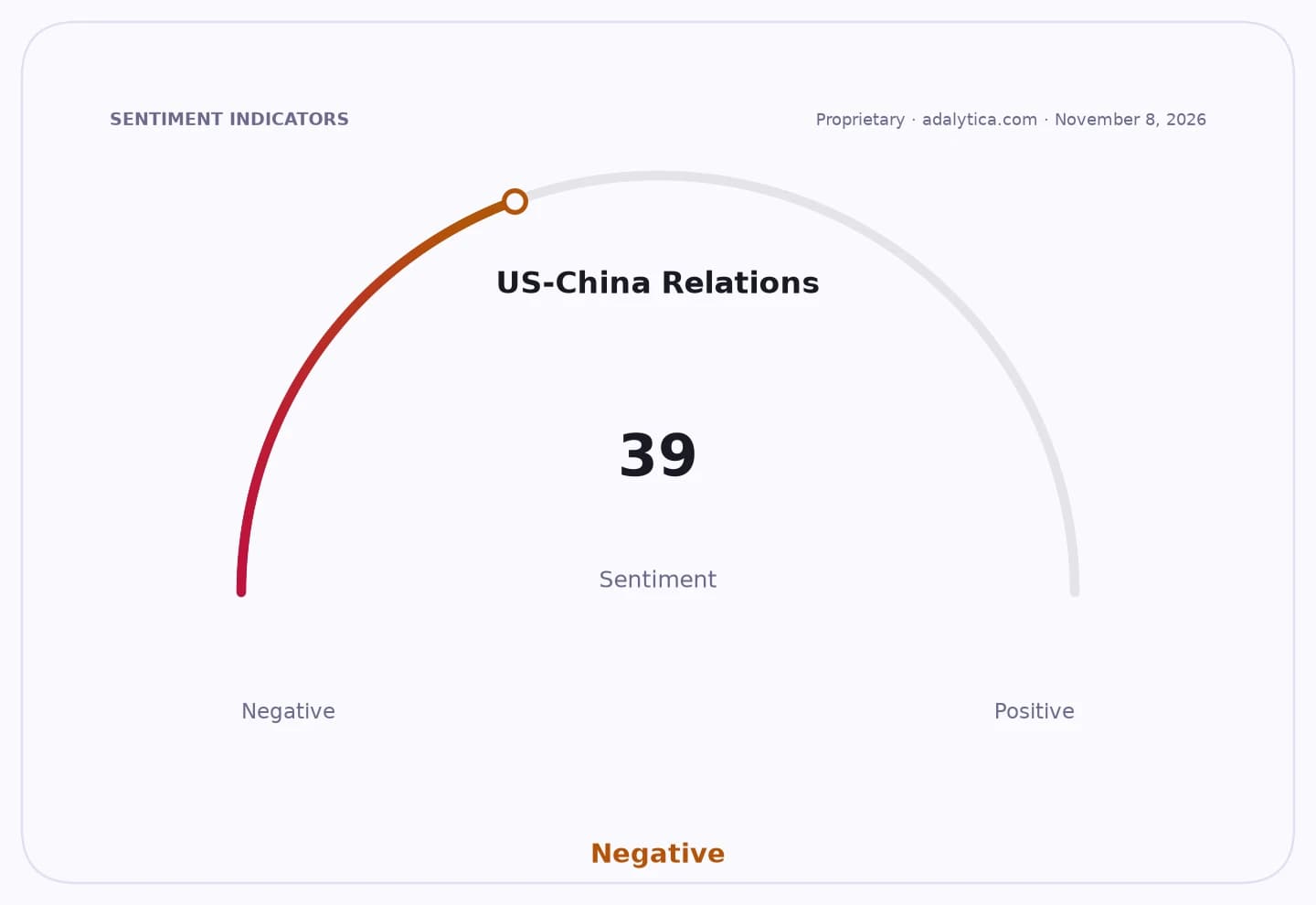
The geopolitical backdrop strengthens the thesis. Adalytica’s US–China Relations Sentiment gauge sits at “Extreme Fear,” even as awareness remains elevated, highlighting a market that is still wary of the broader rivalry. Yet the trade and investment lane between China and the Middle East continues to widen, helped by Beijing’s push to position itself as an economic partner and mediator in a turbulent region. That disconnect is where opportunity often lies: when sentiment is poor but commercial integration keeps advancing.
Our view is that the market underestimates how fast this corridor can compound. The immediate beneficiaries are exporters that can move up the value chain, but the bigger winners are the infrastructure and logistics enablers that make those exports possible. In a world of fragmented trade and regional realignment, the China–Middle East connection is not a side story — it is becoming a durable channel for capital, capacity and long-term growth. Investors should watch the toll roads of trade, not just the cargo.
| Entity | Gains | Losses |
|---|---|---|
| Middle Eastern exporters | ▲Access to China’s consumer market | ▼Reliance on low-margin commodity sales |
| China | ▲More diversified food and industrial imports | ▼Dependence on traditional suppliers |
| Ports, logistics and cold-chain operators | ▲Higher trade volumes and investment | ▼Firms tied only to legacy routes |
| US-led trade dominance | ▲— | ▼Influence as China deepens regional commercial ties |