China’s top economic envoy dismissed accusations that Beijing is “stifling” other economies, using a major import fair in Shanghai to argue that the world’s second-largest economy is still open for business even as trade frictions with the U.S. and Europe deepen.
China Import Expo as Trade Tensions Rise
Vice Premier Ding Xuexiang called the criticism “totally unfounded” as he opened the China International Import Expo, where more than 4,000 foreign companies are taking part this year. The message matters because Beijing is trying to shore up confidence in its market just as Washington and Brussels sharpen complaints that Chinese industrial subsidies are flooding global markets with cheap cars, batteries and green-tech products.
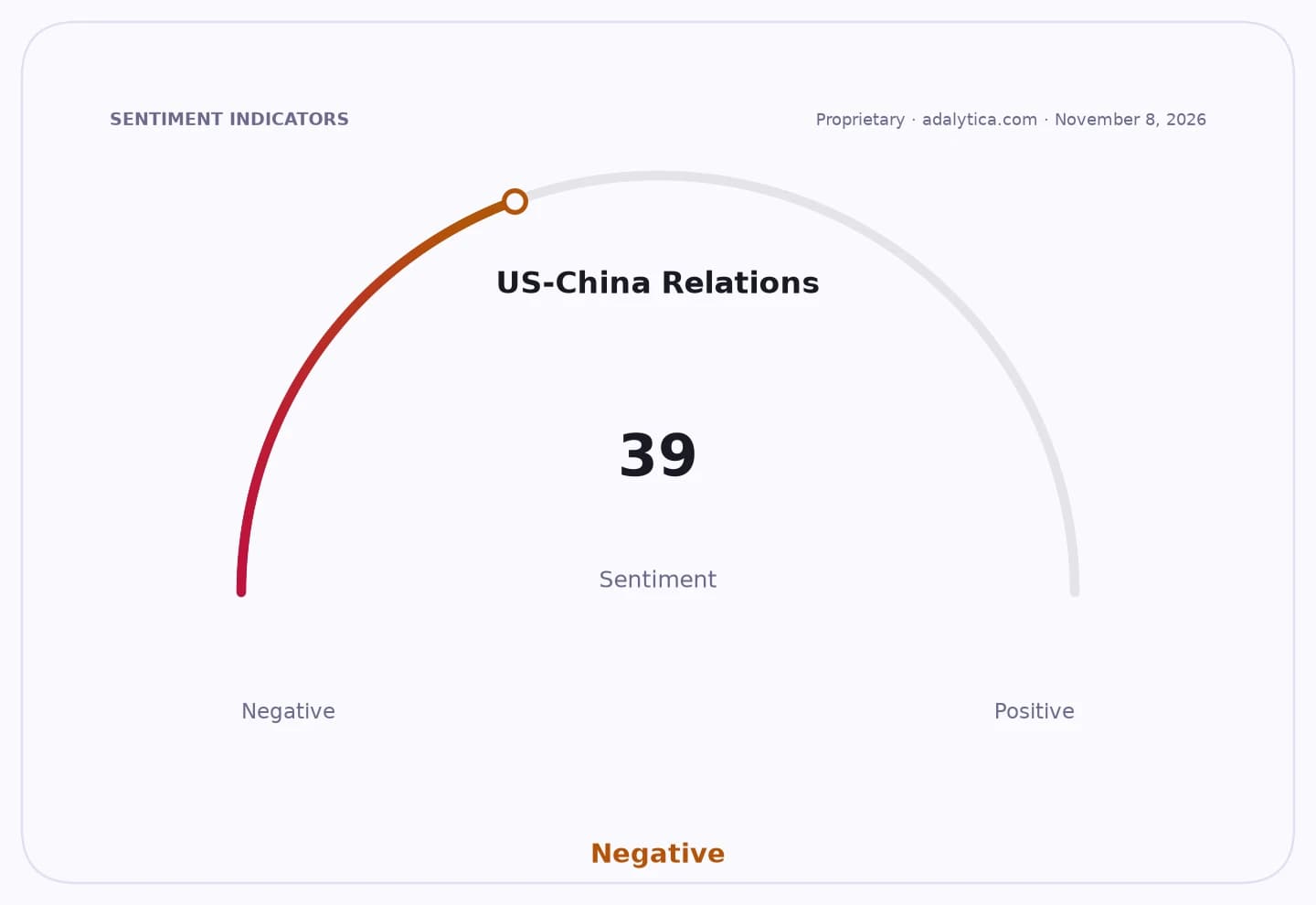
Sentiment Indicators
For investors, the dispute is a reminder that China’s growth model remains tied to exports and industrial policy even as officials pitch the country as a demand-driven market for foreign brands. That tension has direct implications for multinationals exposed to Chinese consumers, for European and U.S. manufacturers facing margin pressure, and for sectors already under trade scrutiny, including autos and clean energy.
Ding said concerns about trade imbalances were understandable, but argued the key issue was how to restore balance, insisting Beijing has never deliberately sought a surplus. He also pushed back on claims that China’s competitiveness rests on state support, saying it is driven by technology and research and development.
CCP Policy Direction
The rhetoric comes as the U.S. keeps tightening export controls on advanced technologies to China on national-security grounds, limiting Beijing’s access to high-end chips and other strategic inputs. Chinese officials argue those restrictions are part of the reason some foreign goods cannot be sold into the country, even as foreign firms continue to complain about market access, local competition and regulation.
The broader narrative is that China wants to present itself as both a factory and a consumer market at a time when its industrial strength is increasingly viewed abroad as a threat. With U.S.-China relations still fragile and European leaders weighing tougher trade defenses, the import expo is as much a political counteroffensive as a commercial showcase.
For markets, the next pressure point is whether Beijing can translate the diplomatic messaging into easier access for foreign companies and less trade friction, or whether tariff threats, subsidy probes and export controls keep ratcheting up the cost of doing business across Asia and beyond.
| Entity | Gains | Losses |
|---|---|---|
| China | ▲Promotes open-market image | ▼Faces tougher trade scrutiny |
| U.S. and EU manufacturers | ▲Potential protection from imports | ▼Lose pricing power in China |
| Foreign firms in China | ▲Market-access rhetoric | ▼Regulatory and local-competition pressure |
| Export-heavy Chinese industries | ▲Continued global reach | ▼Risk of tariffs and probes |