Thailand’s latest Bond Savings Plus sale was oversubscribed and widely distributed, underscoring how government debt can still pull in households looking for safer returns while the Treasury builds a broader retail investor base.
Thailand Treasury Bond Savings Plus oversubscribed
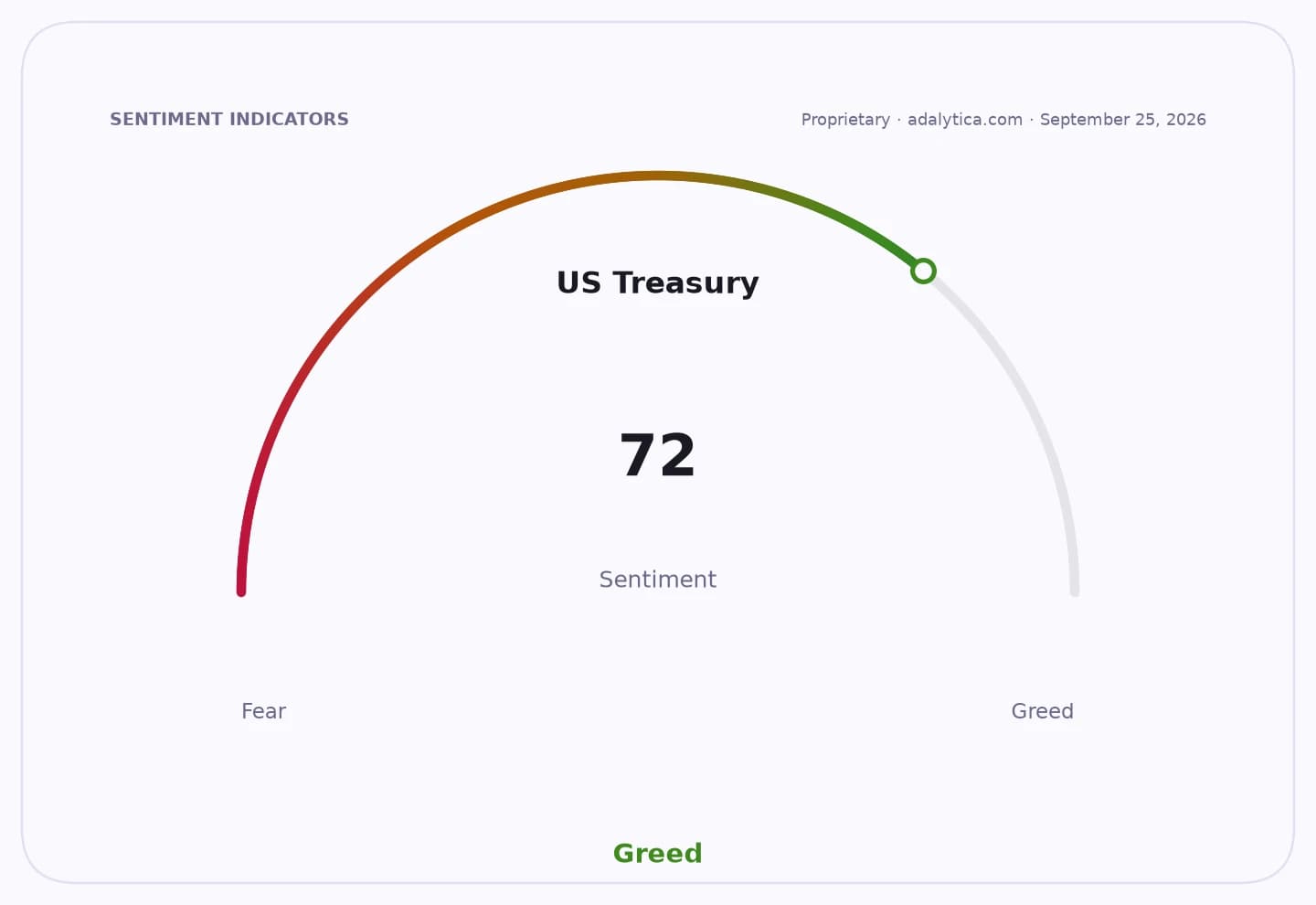
The finance ministry said Bond Savings Plus No. 2 was allocated to 16,862 people nationwide after demand for the 4 billion baht issue came in well above supply. Investors applying through Bond Connect asked for 6.57 billion baht of bonds, about 3.28 times the amount on offer, a clear sign that retail appetite for government paper remains strong.
Sentiment IndicatorsⓘProprietary · adalytica.com · September 13, 2026
This is a snapshot — live sentiment, awareness and momentum for 130+ markets update continuously in the dashboard.Open AlphaPulse
That matters for the economy because retail bond sales give the government a cheaper, more diversified funding channel and help channel household savings into formal markets instead of leaving cash idle. For Thailand’s policymakers, the success of the sale also suggests that yields, accessibility and liquidity are doing the heavy lifting: the issue was available through multiple channels and can be traded in the secondary market, making it more attractive than a traditional lockup savings product.
For investors, the takeaway is straightforward. When a sovereign product is oversubscribed by more than three times, it usually tells you there is still strong demand for yield and safety in the system. That can be a useful signal for the broader fixed-income market, especially if households are becoming more comfortable with bond ownership and online allocation platforms.
The distribution was also designed to be broad rather than concentrated. Of the 16,862 successful buyers, 3,157 came through the S.B.M. wallet channel and 13,705 through Bond Connect, with the “small lot first” method limiting the maximum allocation before randomization to 193,000 baht per person. That kind of structure matters because it expands access beyond large institutions and reinforces the government’s push to make bond investing feel more like a mass-market savings habit.
The Treasury also said it plans to keep offering the bonds regularly every month in fiscal 2027, pending official announcements on timing, size and coupon rates. That gives investors a repeatable opportunity to add a government-backed income stream to long-term portfolios, and it suggests Thailand wants retail demand to become a permanent pillar of its financing strategy rather than a one-off success. For savers and income investors, this is worth watching closely.
| Entity | Gains | Losses |
|---|---|---|
| Thai Treasury | ▲Cheaper funding, broader investor base | ▼Less room to borrow solely from big institutions |
| Retail savers | ▲Access to government-backed yield | ▼Smaller allocations in oversubscribed sales |
| Bond Connect users | ▲Easy access, tradable bonds | ▼Allocation caps on strong-demand issues |
| Cash in bank deposits | ▲Less attractive relative to bonds | ▼Safer-yield seekers moving money out |