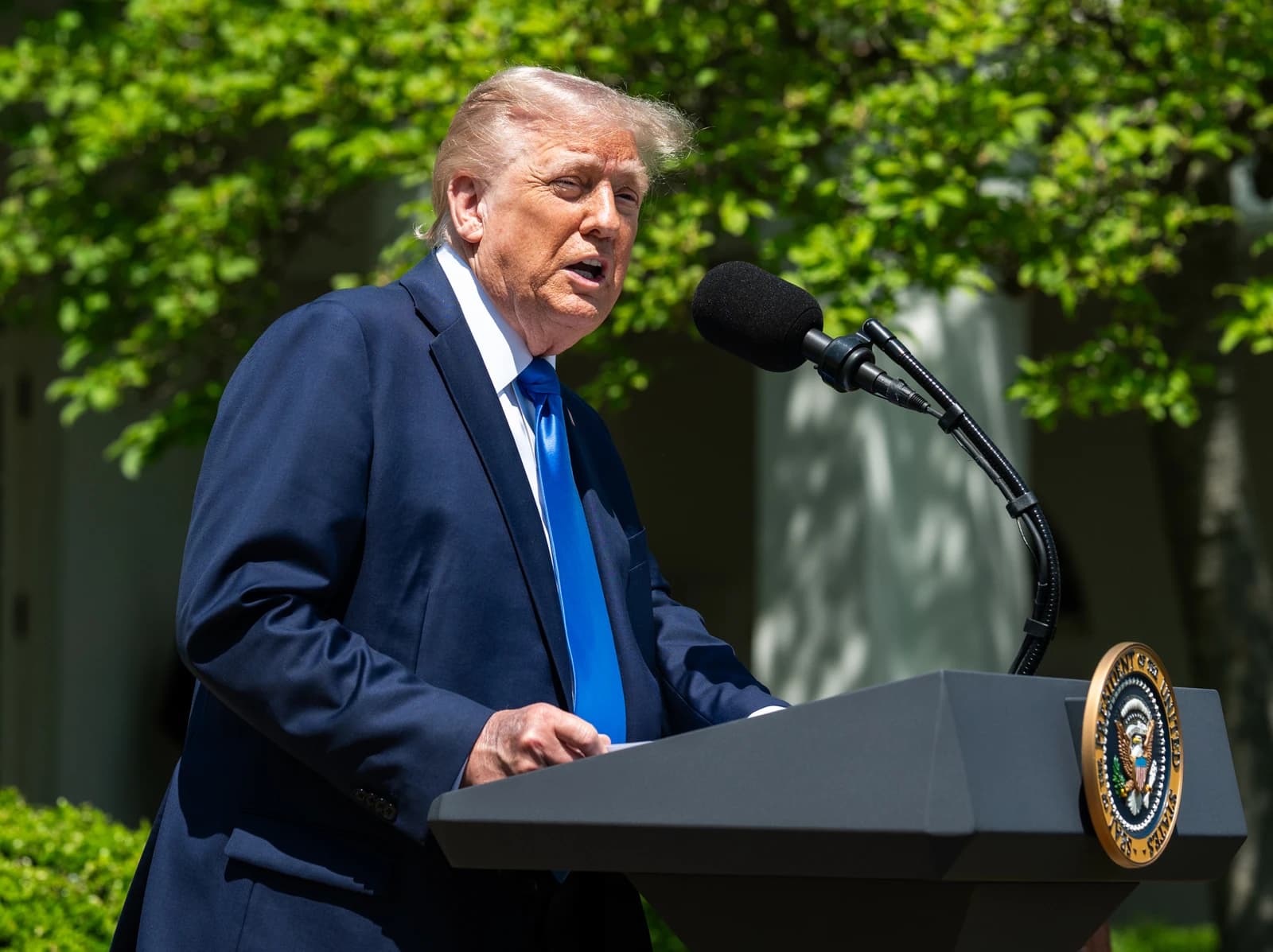
Donald Trump is facing fresh criticism after telling supporters he would hand every adult American $5,000 only if Republicans win the midterms, a pledge that underscores how aggressively he is tying policy and money to election outcomes.
Trump $5,000 cash pledge puts DJT in focus
The promise matters because it would amount to a roughly $1 trillion transfer if carried out, a scale that would require congressional approval and a clear funding source. Trump said the cash would come from tariff revenue, but the idea collides with the practical limits of U.S. budgeting and with a Congress that would have to authorize any payout.
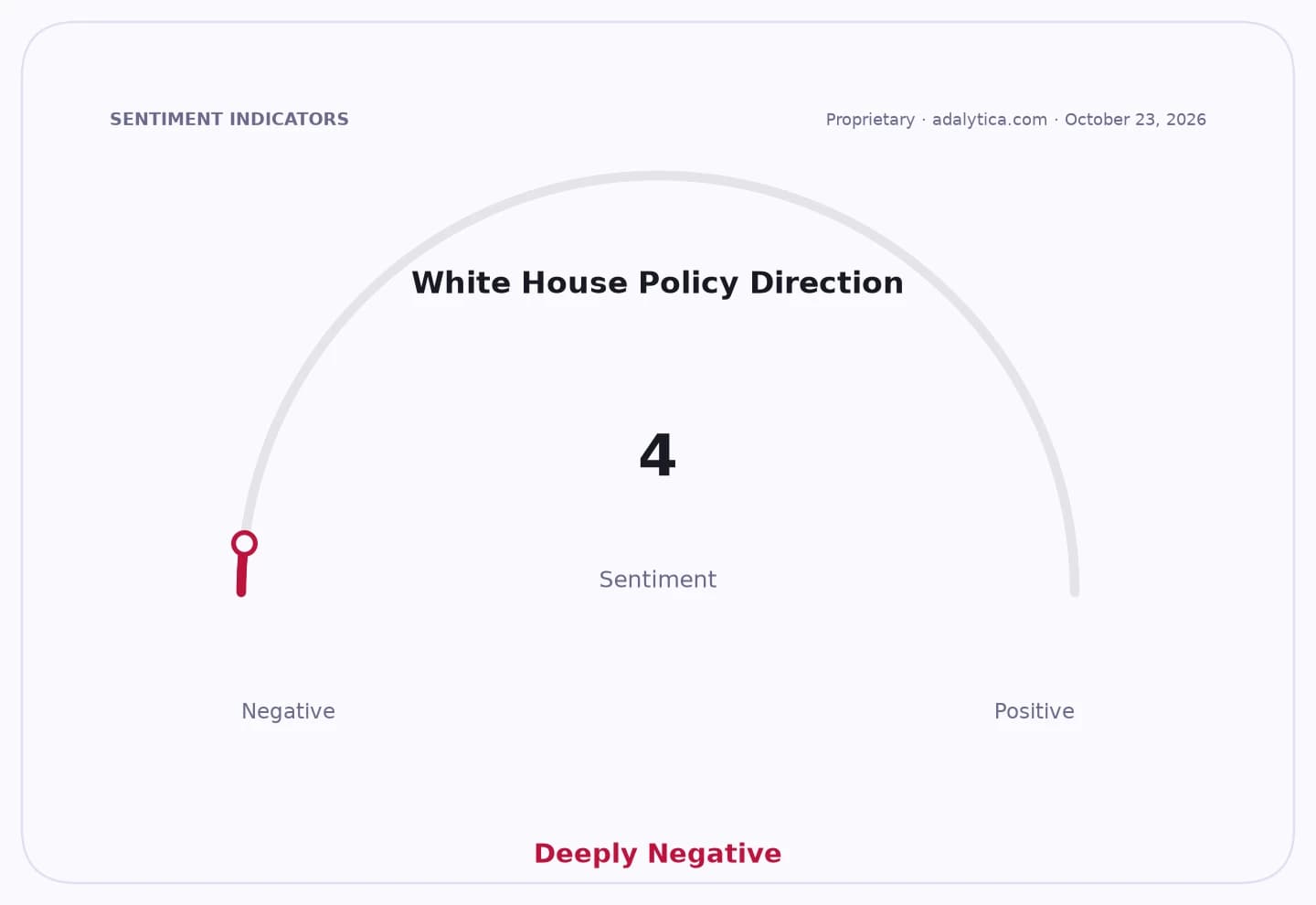
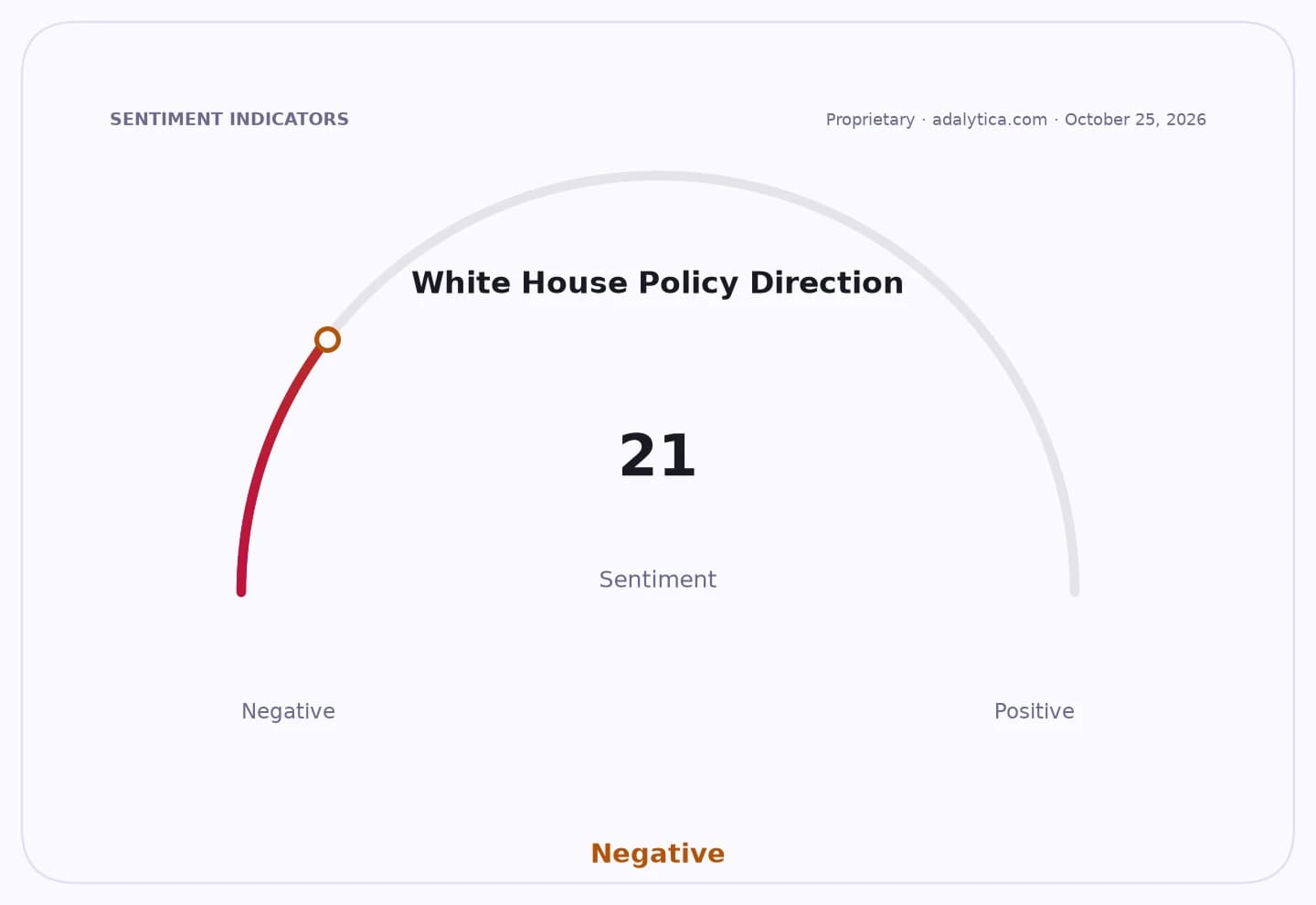
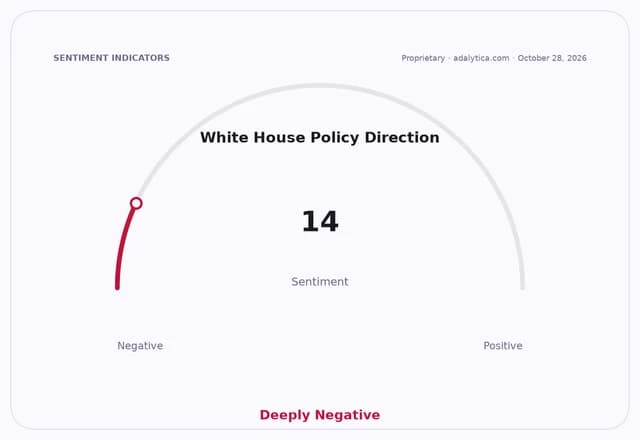
Sentiment IndicatorsⓘProprietary · adalytica.com · October 28, 2026
This is a snapshot — live sentiment, awareness and momentum for 130+ markets update continuously in the dashboard.Open AlphaPulse
For investors, the immediate relevance is less about the probability of the check and more about what the proposal says about the policy mix likely to dominate Washington if Trump and his allies strengthen their grip on power. A tariff-funded cash dividend would raise questions about inflation, the fiscal deficit and the durability of trade policy, all of which feed directly into market expectations for rates, consumer spending and corporate margins.
The political backdrop is already tense. Trump’s approval ratings remain weak by historical standards, with a Washington Post-ABC-Ipsos poll showing 33% of U.S. adults approving of his performance and 66% disapproving. Even so, his campaign apparatus and allies are spending heavily, with his political action committees having poured nearly $277 million into Republican support since early September, while Elon Musk has also thrown hundreds of millions of dollars into the broader election cycle.
Presidential Approval vs DJTadalytica.com
Explore this data interactively — full history, time series and cross-market comparisons.Open AlphaPulse

The episode also keeps Trump Media & Technology Group, ticker DJT, in focus as a proxy for Trump-linked market sentiment. The stock has been extremely volatile and remains well below its recent highs; on the latest trading data, it closed at $6.36, far under a 50-day moving average around $8.44 and a 200-day average near $9.43, with RSI readings in deeply oversold territory on recent sessions.
That kind of price action shows how quickly Trump-related assets can swing on political headlines. It also suggests investors are still treating the Trump trade as a high-beta wager on election odds, policy promises and the prospect of more aggressive tariff, tax and spending moves.
The next catalyst is the vote itself, along with any follow-up attempt by Trump or congressional Republicans to turn the $5,000 pledge into a more formal proposal.
| Entity | Gains | Losses |
|---|---|---|
| Trump campaign | ▲populist message | ▼credibility on fiscal math |
| Republican candidates | ▲voter enthusiasm | ▼budget scrutiny |
| U.S. taxpayers | ▲possible cash payout | ▼higher fiscal risk |
| DJT shareholders | ▲headline-driven trading | ▼policy uncertainty |