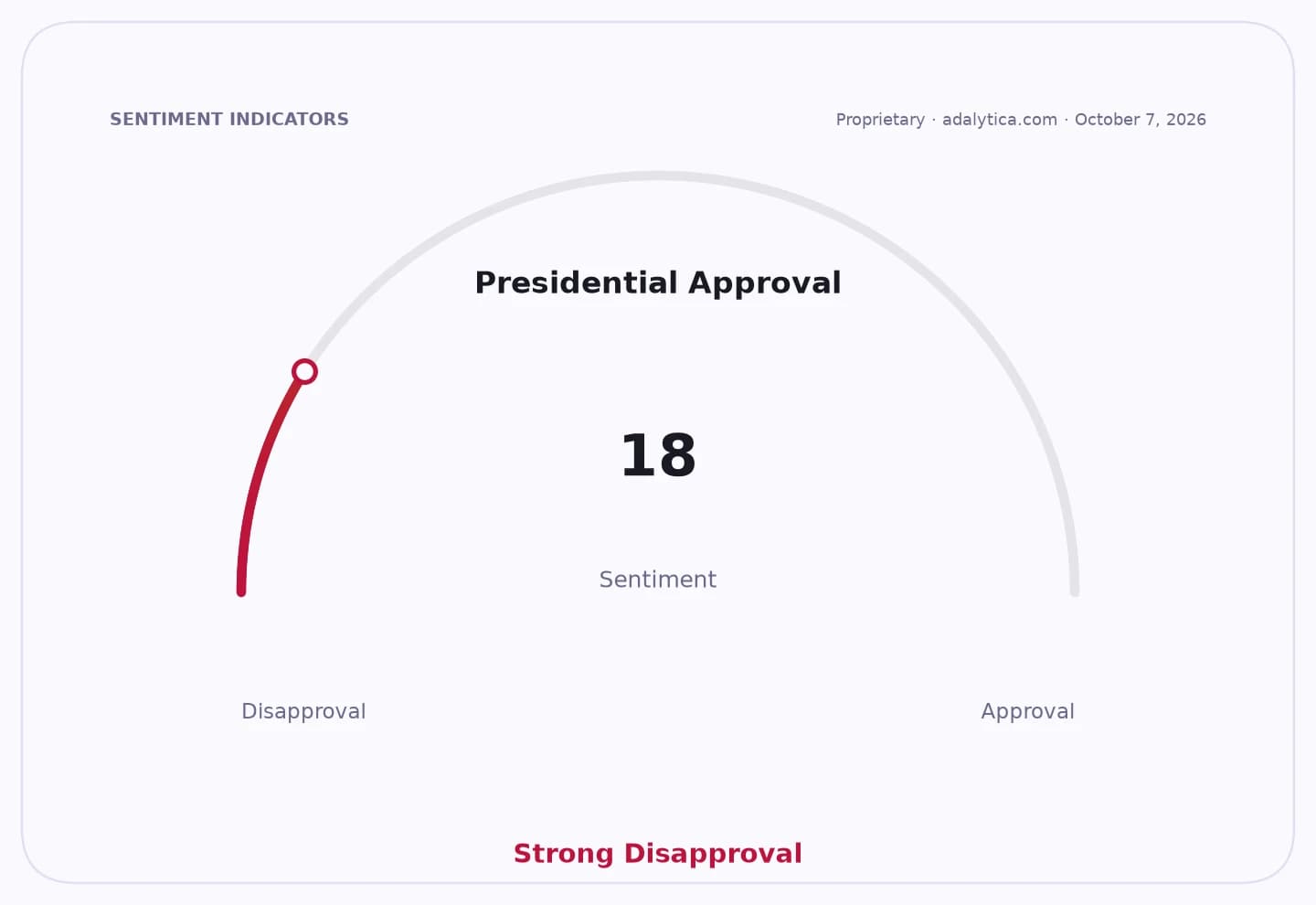
Donald Trump’s approval rating has slipped to 31%, the lowest of his presidency, and that matters because it is feeding directly into a wider shift in the U.S. political landscape that could reshape control of Congress next year.
Trump approval falls to 31% in Reuters/Ipsos poll
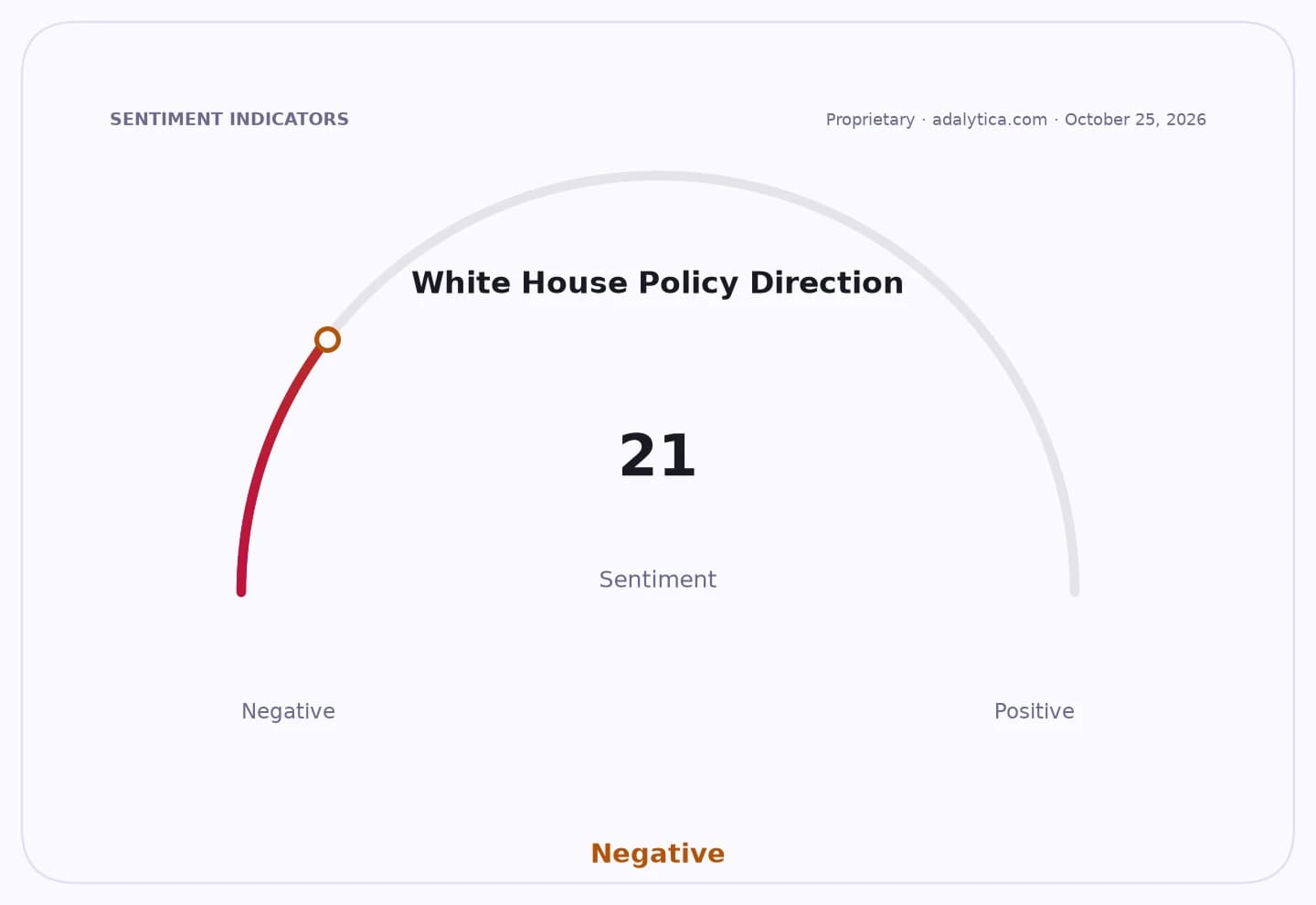
The Reuters/Ipsos poll is more than a bad headline for the White House. It shows Democrats leading Republicans by 12 percentage points among registered voters, 47% to 35%, the largest margin so far this election cycle. Two weeks earlier, that gap was seven points. For investors, that kind of change is important because Washington’s political balance can move everything from taxes and spending to regulation, tariffs and fiscal policy.
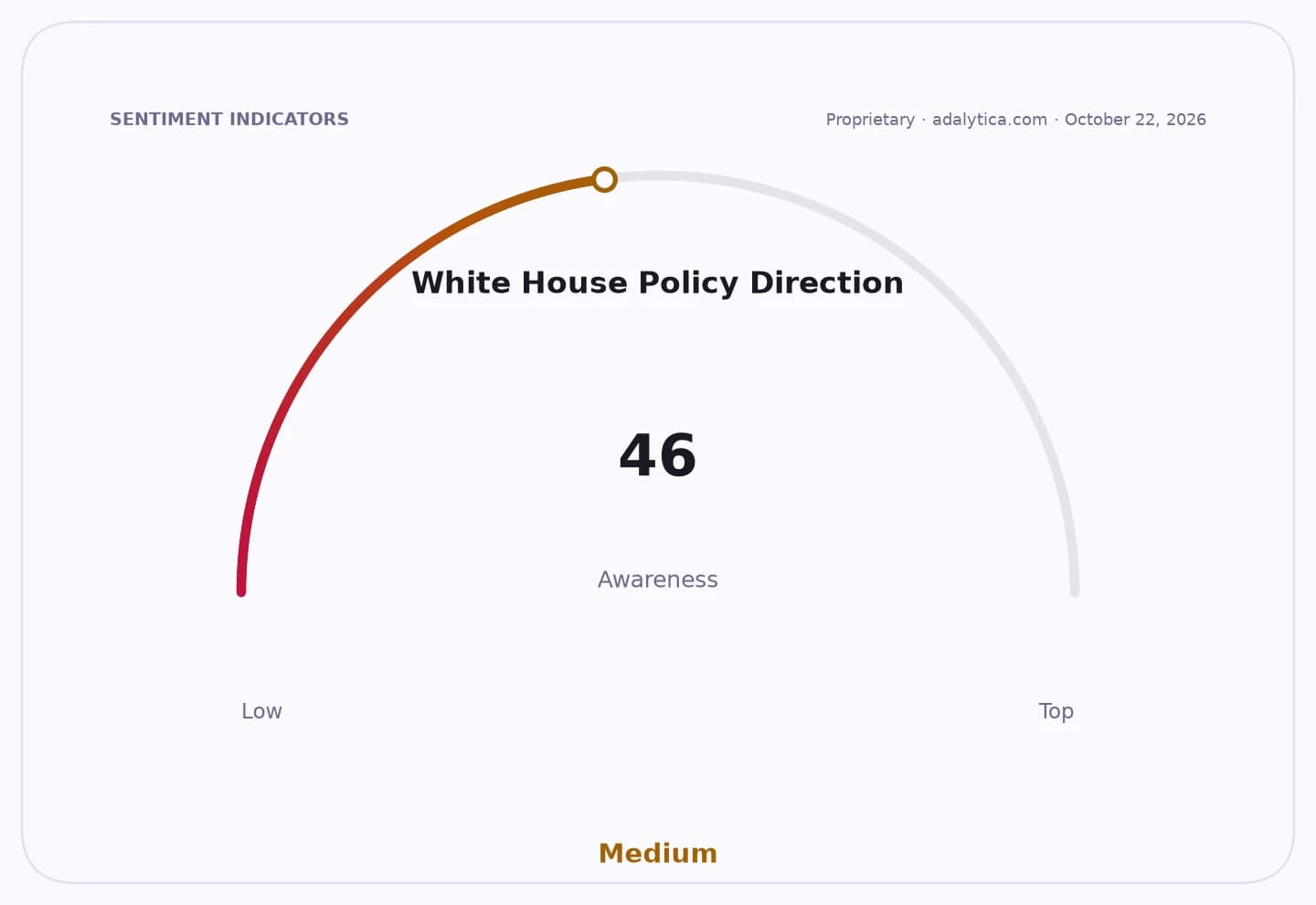
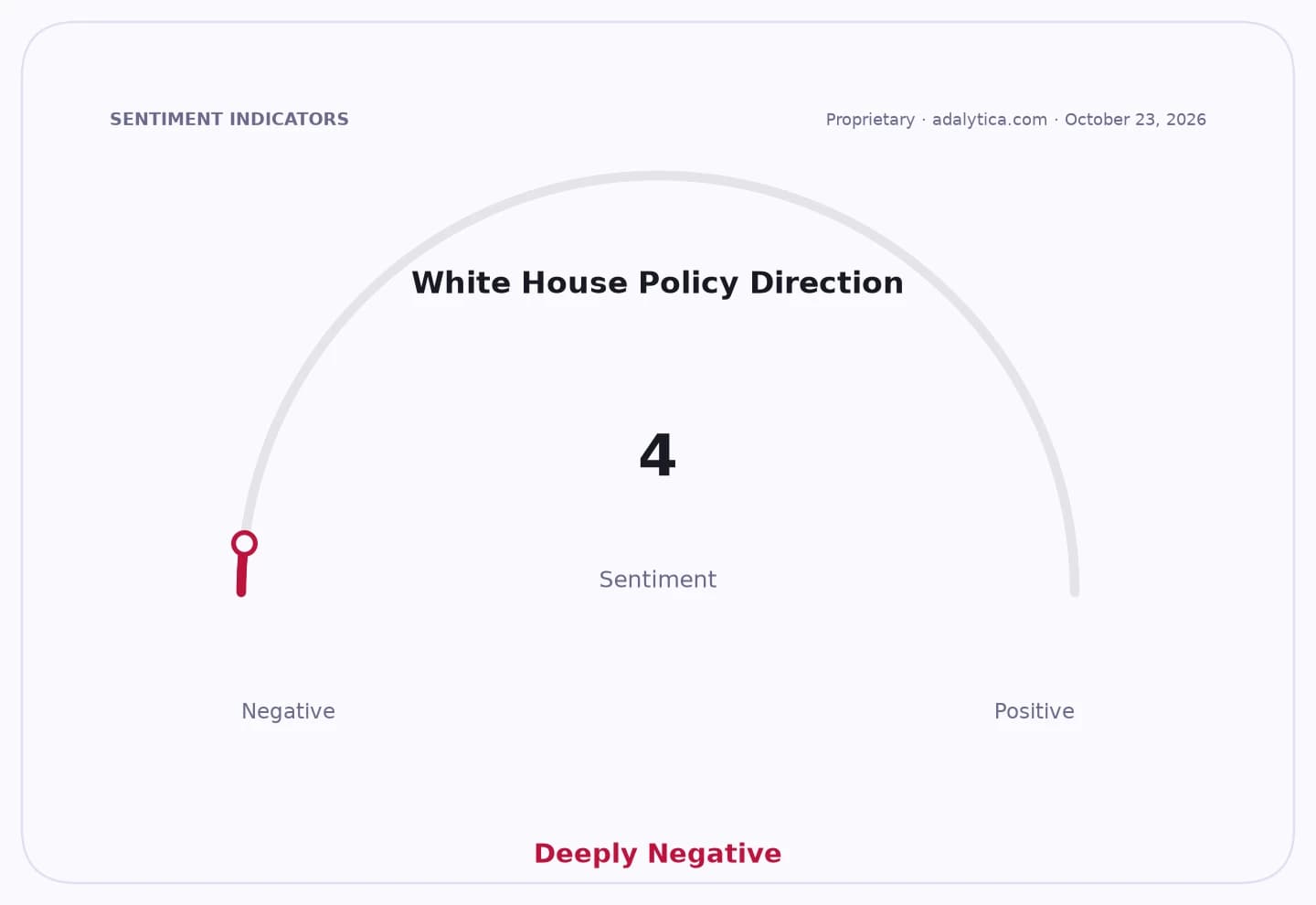
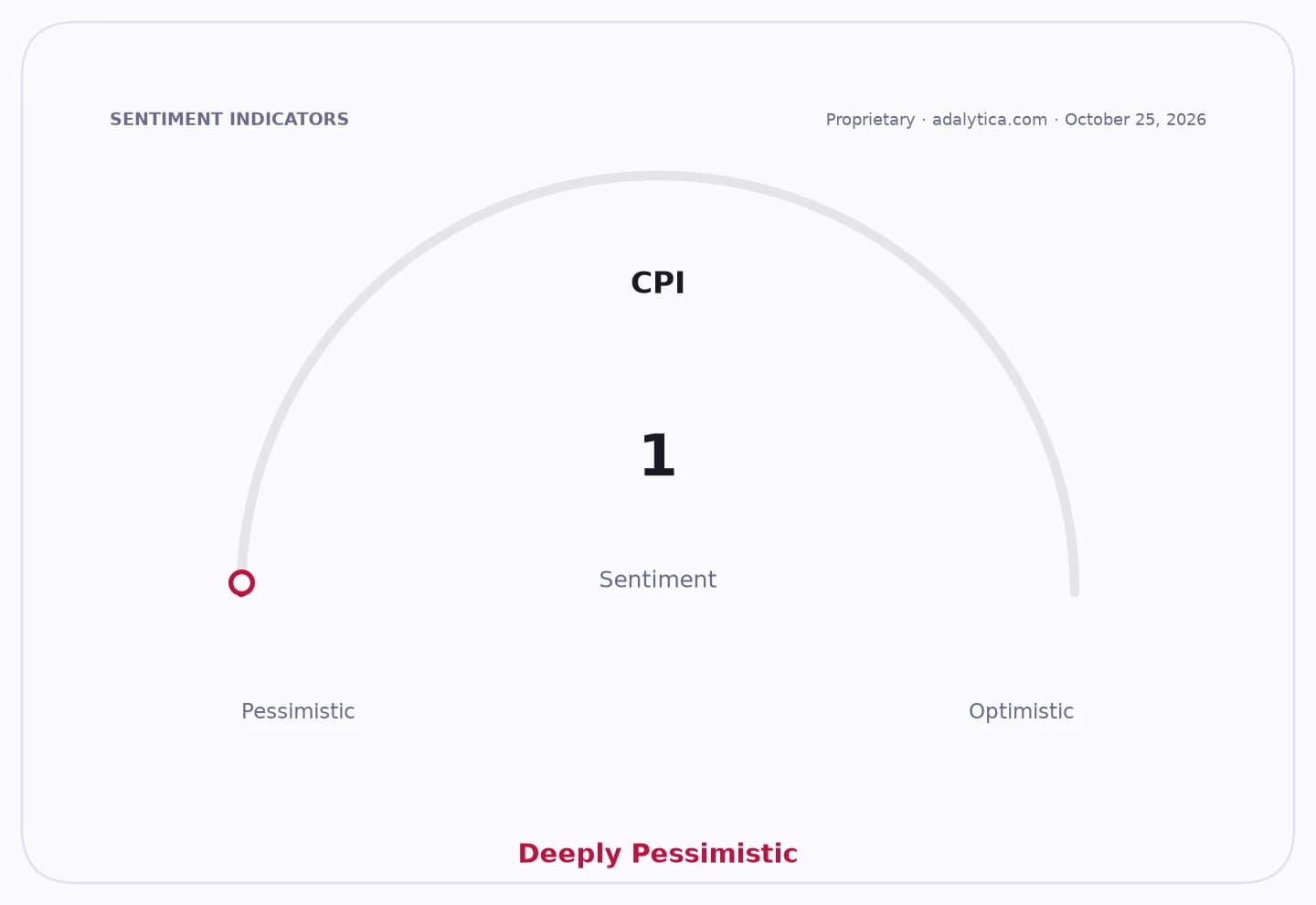
Sentiment IndicatorsⓘProprietary · adalytica.com · October 25, 2026
This is a snapshot — live sentiment, awareness and momentum for 130+ markets update continuously in the dashboard.Open AlphaPulse
The weak approval numbers are tied to economic frustration. The poll found 68% of Americans disapprove of Trump’s handling of the economy, including 37% of self-identified Republicans. That is the kind of erosion that usually matters most in swing states and competitive House districts, where voters are often less ideological and more sensitive to prices, wages and fuel costs. Rising gasoline prices after U.S. and Israeli strikes on Iran have only sharpened that pressure on household budgets.
The broader political implication is straightforward: if these numbers hold, Republicans could face a tougher battle in the 2026 midterms, when control of the House and Senate is at stake. National polls do not translate neatly into seats, but they can still shape fundraising, candidate recruitment and the mood inside both parties. A 12-point Democratic lead is the sort of polling gap that usually gets noticed well beyond Washington.
For investors, the market relevance is less about day-to-day trading than about policy expectations over the next several years. A weaker Trump standing makes it harder to count on a unified Republican agenda, while also raising the odds of more legislative gridlock. That could limit the scope for sweeping tax changes, but it also keeps open the possibility of a more cautious approach on trade and regulation if Democrats build momentum.
Trump has already tried to turn the midterms into a loyalty test, promising $5,000 “dividends” to every adult American if Republicans keep Congress. But that kind of political promise tends to matter only if voters believe the economy is improving. Right now, the poll suggests many do not.
Investors should treat this as a reminder that political risk is back on the table, not as a reason to make a big market bet on one election cycle. Over a multi-year horizon, the better approach is still diversification, patience and an eye on how policy affects earnings, margins and valuation. This is a story worth watching closely.
| Entity | Gains | Losses |
|---|---|---|
| Democrats | ▲Better midterm odds | ▼Little room for complacency |
| Republicans | ▲Stronger base mobilization risk | ▼Congressional control prospects |
| Consumers | ▲Potential policy responsiveness | ▼Higher fuel-cost pressure |
| Investors | ▲Clarity on political risk | ▼Less certainty on fiscal policy |