Inflation has turned back into a political liability for President Donald Trump just as Republicans head into midterm elections, with consumer prices running at 3.7% and fuel costs rising sharply after the Iran conflict.
Trump Inflation Midterms Fuel Prices Rise
That matters because prices, not abstract growth figures, remain the clearest yardstick for how Americans judge economic management. The economy is still expanding, but voters are being confronted with more expensive gasoline, stubborn household bills and a renewed sense that the cost of living is moving the wrong way. In a close election environment, that gap between macro resilience and household pain can decide control of Congress.
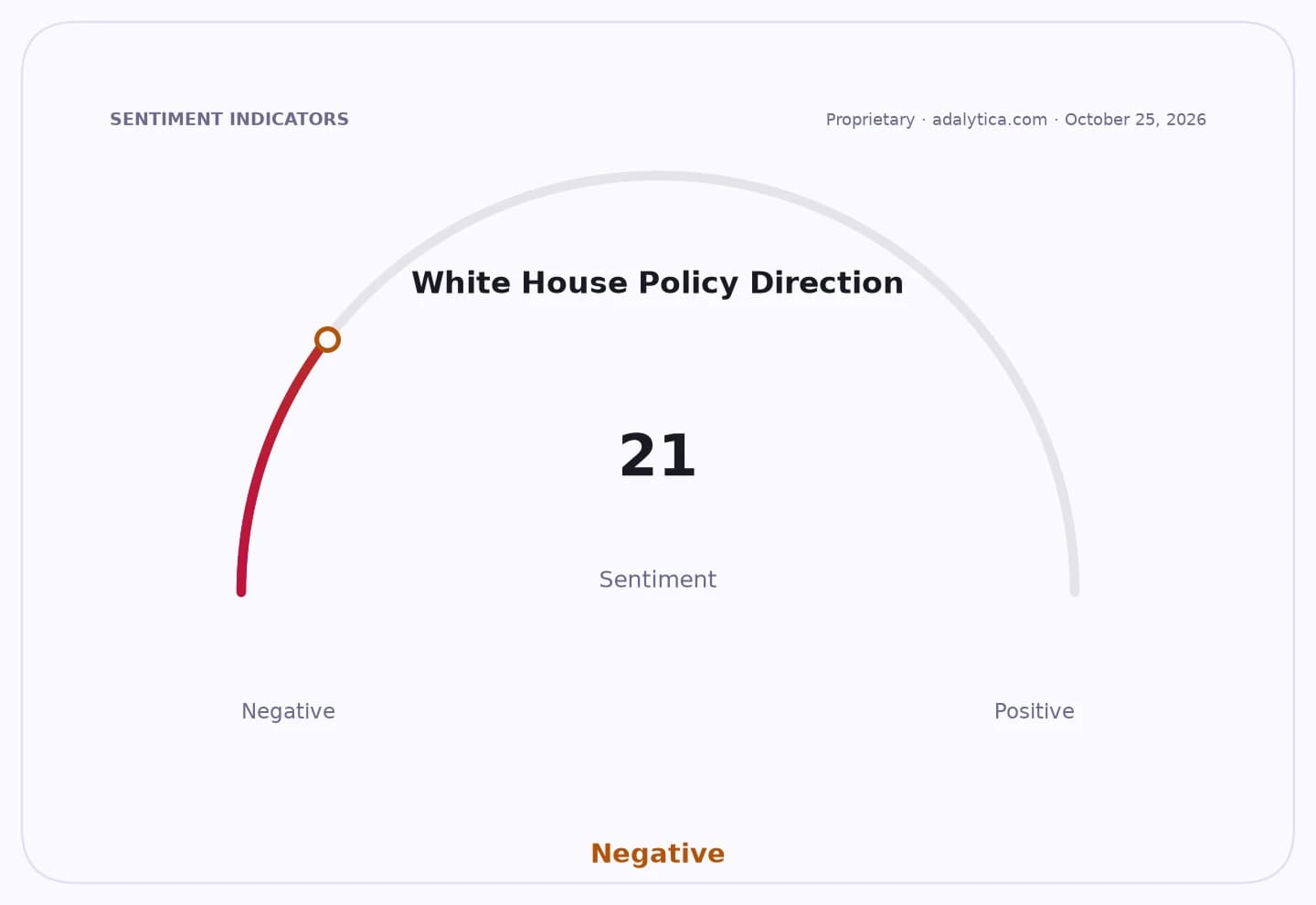
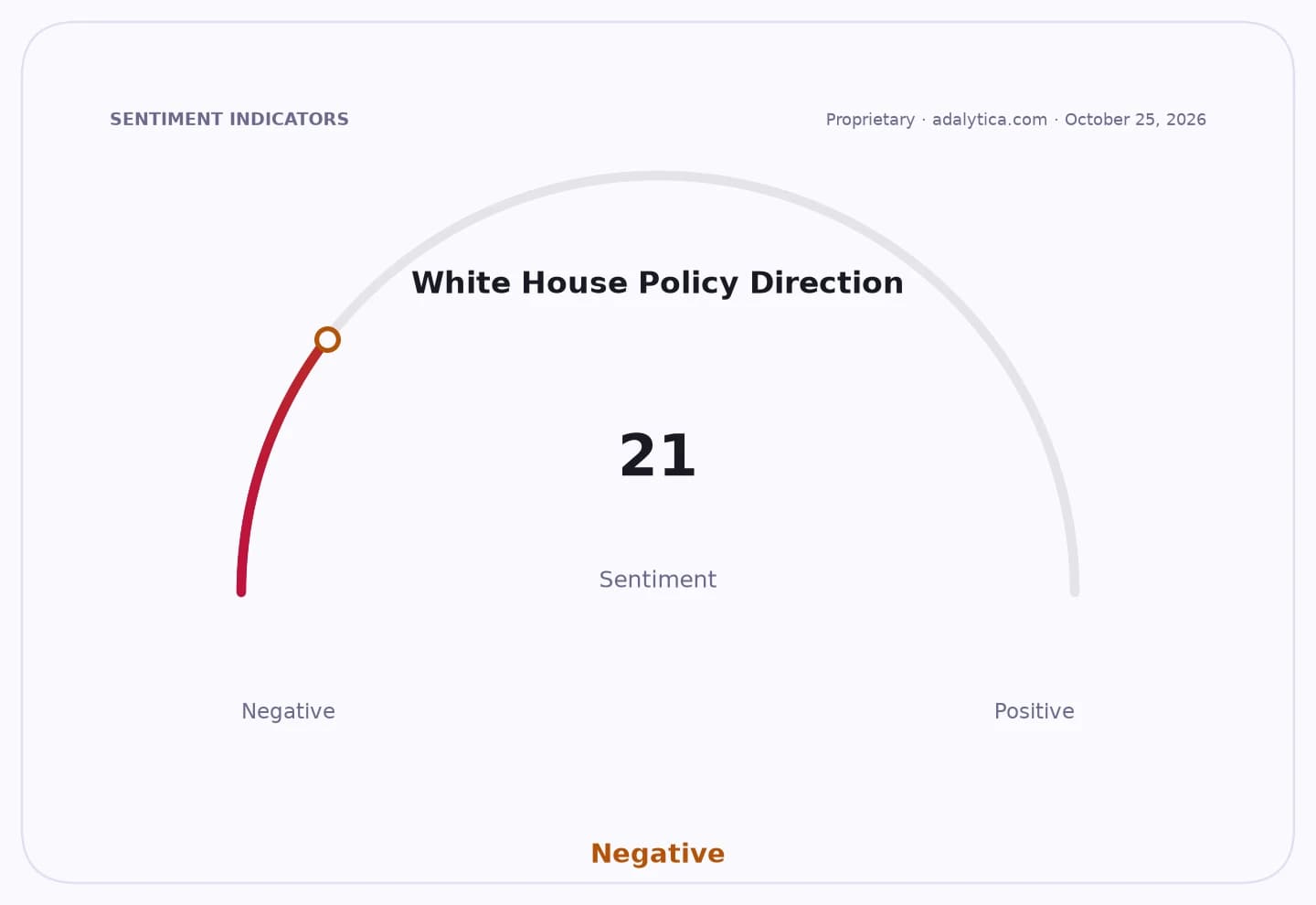
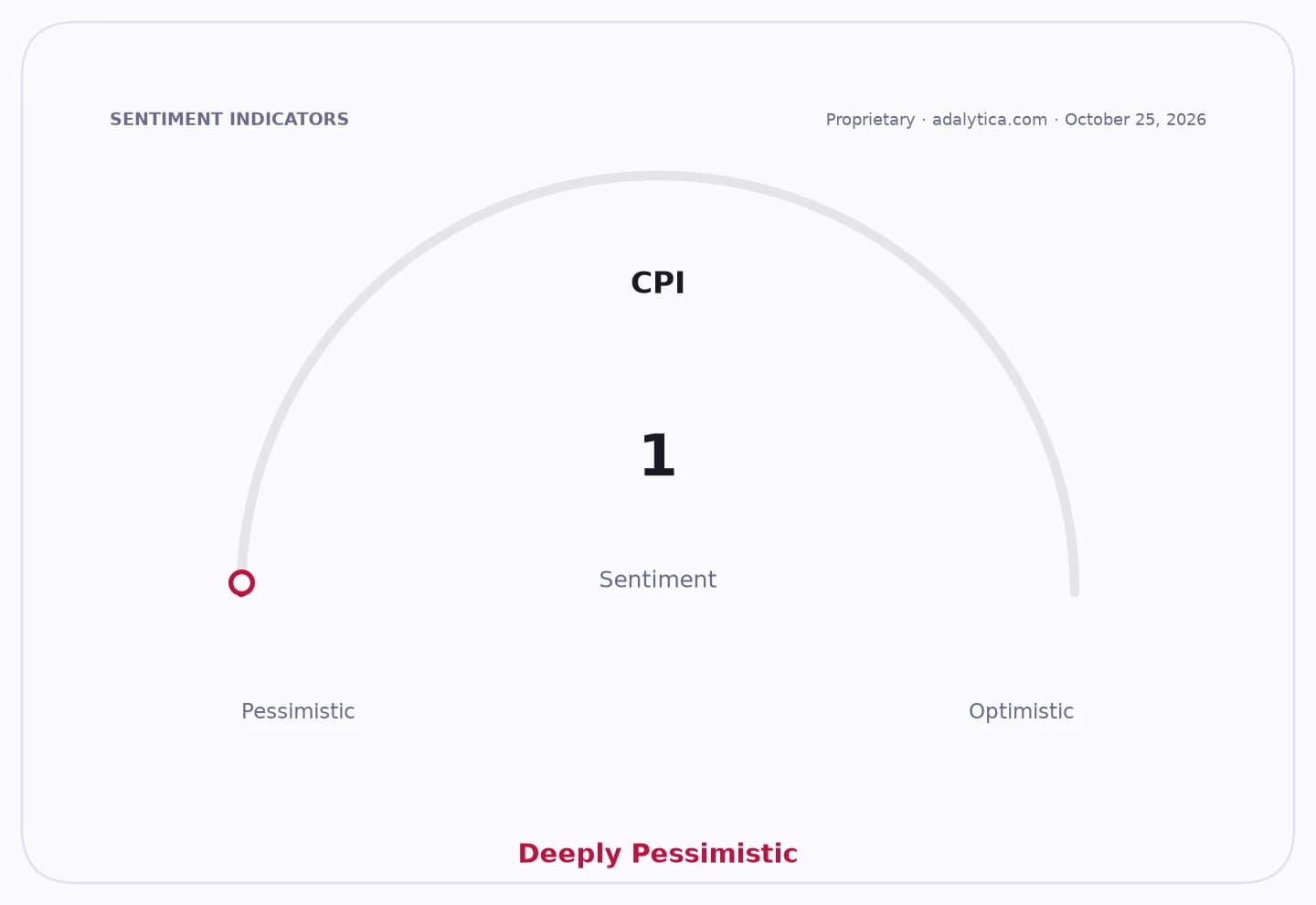
Sentiment IndicatorsⓘProprietary · adalytica.com · October 25, 2026
This is a snapshot — live sentiment, awareness and momentum for 130+ markets update continuously in the dashboard.Open AlphaPulse
Trump entered office with a strong economy and a politically useful inflation backdrop left by his predecessor. Instead, his tariff push and the energy shock tied to the Middle East conflict have helped re-accelerate price pressures. Inflation was 3.0% on the final day of Joe Biden’s presidency, then climbed to 3.7%, undercutting Trump’s argument that he had tamed prices. The White House’s attempt to blame Biden and Barack Obama is losing credibility with many voters, especially as polls show Trump’s approval near historic lows.
Gasoline remains the most visible symbol of that shift. Nationwide pump prices are around $4.30 a gallon, up from $2.98 before the Iran war began, while diesel has jumped to about $6.32 from roughly $3.63 a year earlier. That kind of increase feeds through to transport, food and other essentials, making inflation feel broader than the headline number suggests. Economically, it also acts like a tax on consumers, reducing real disposable income and complicating the policy mix for the Federal Reserve.
CPIAUCSL vs DCOILWTICO — macro contextadalytica.com
Explore this data interactively — full history, time series and cross-market comparisons.Open AlphaPulse
The broader economy is not in recession. Second-quarter annualized growth was 2.2%, and artificial intelligence investment, data-center construction and high-income spending are still supporting activity. But economists increasingly describe the U.S. as a “k-shaped” economy, where wealthier households and AI-linked sectors are pulling ahead while lower- and middle-income consumers face tighter budgets. That split is politically dangerous for Republicans because elections are won at the margin, not in the aggregate.
For investors, the risk is less about a broad collapse in demand than about policy and sentiment volatility. Persistently high fuel prices can keep inflation sticky, making rate-cut expectations harder to pin down and keeping pressure on sectors exposed to household spending. Consumer sentiment data from Adalytica show spending confidence in neutral territory while CPI-related sentiment is in extreme fear, a sign that inflation anxiety remains concentrated and politically potent.
The near-term test is whether energy prices stabilize before voters cast ballots and whether Republicans can persuade enough households that improving growth offsets higher bills. If gasoline stays elevated, the midterms may become less a verdict on GDP than on the weekly cost of filling a tank.
| Entity | Gains | Losses |
|---|---|---|
| Democrats | ▲Campaign message on affordability | ▼Broader economic ownership |
| Republicans/Trump | ▲None if inflation eases | ▼Midterm support, credibility on prices |
| Consumers | ▲Higher-income households with spending power | ▼Middle- and lower-income households |
| Energy producers | ▲Revenue from higher fuel prices | ▼Sectors hurt by weaker real purchasing power |