A top Trump ally is warning that Republicans risk squandering the most important element of their coalition — White working-class voters — just as affordability concerns are rising toward the midterm elections.
GOP Worried About White Working-Class Voters
Sen. Bernie Moreno of Ohio said the GOP is “dead as a party” if it cannot hold onto the bloc that helped propel Donald Trump to the White House and keep Republicans competitive in Congress. His warning matters because it goes to the core of the party’s electoral math: the working-class vote, especially White voters without a college degree, has been central to the GOP’s recent gains, but it is also the most sensitive to shifts in household finances, gas prices and broader perceptions of economic strain.
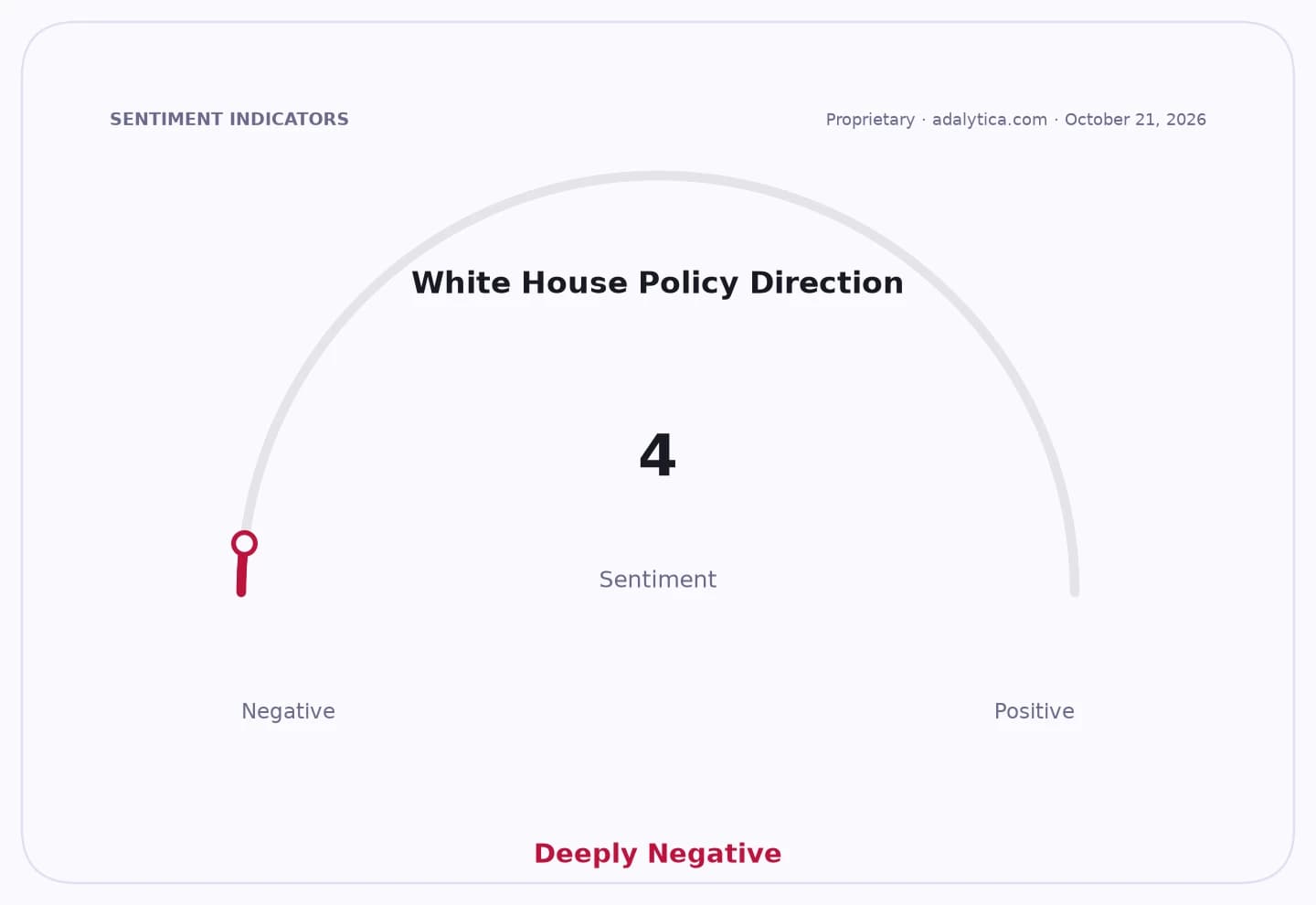
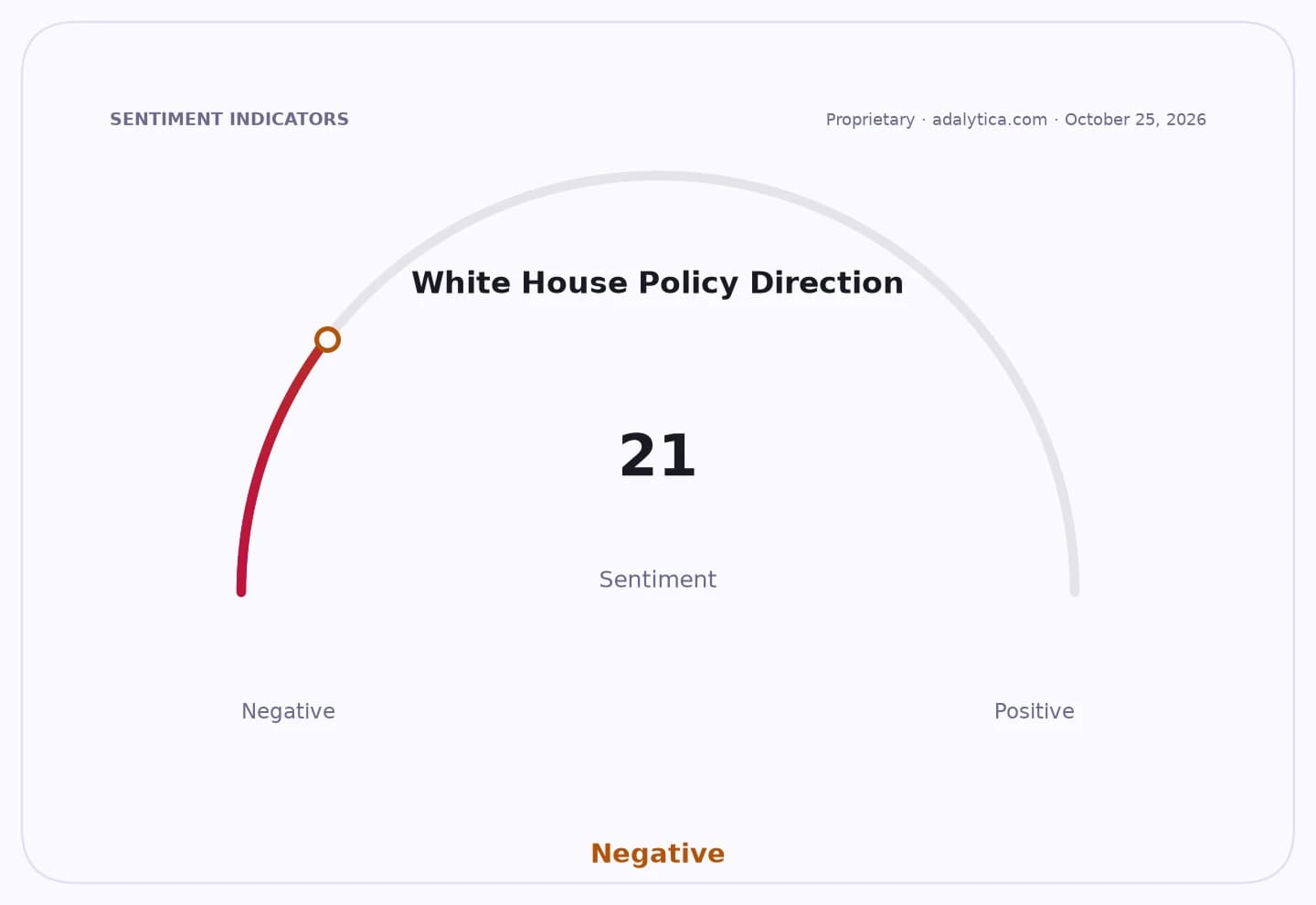
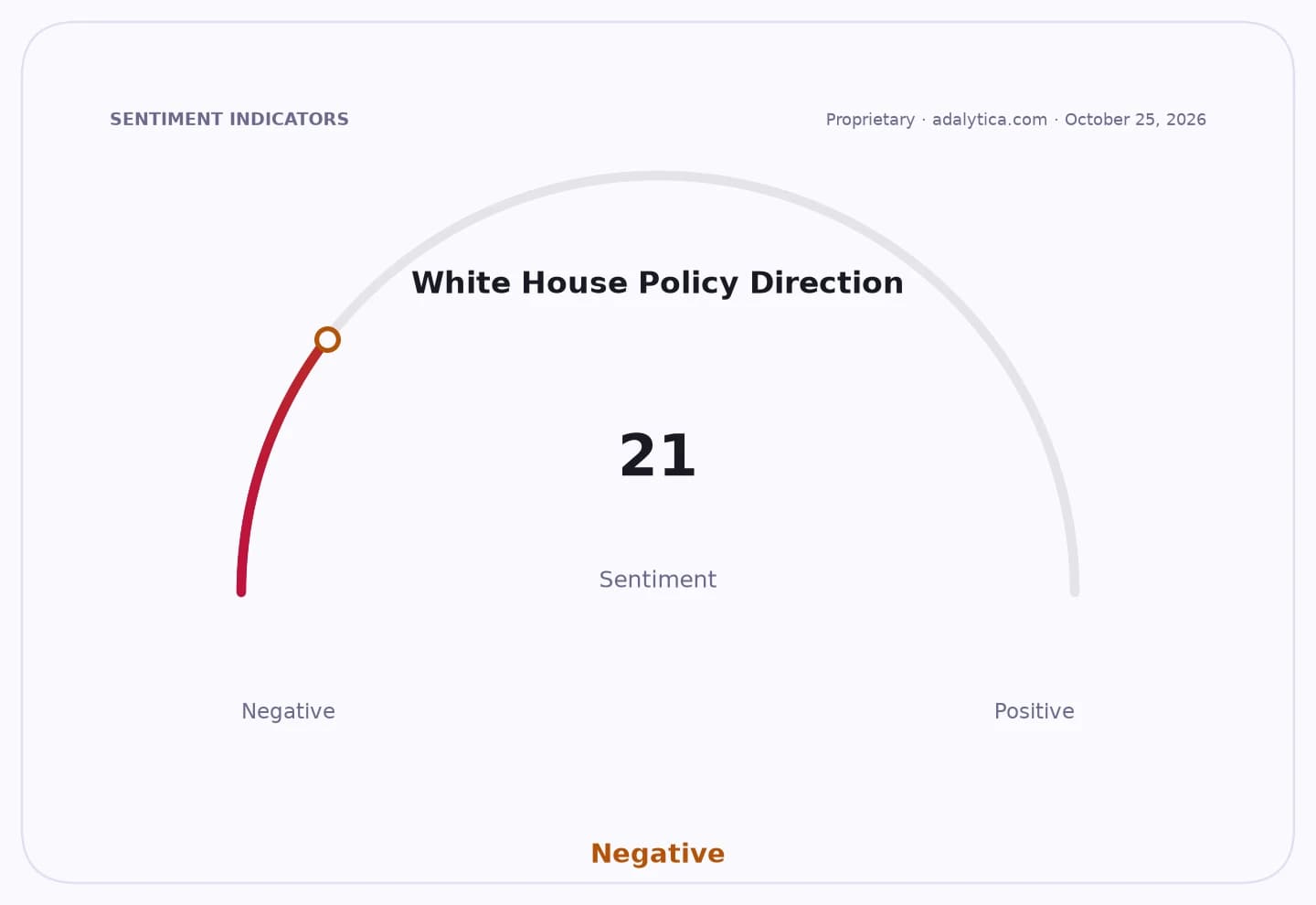
Sentiment IndicatorsⓘProprietary · adalytica.com · October 25, 2026
This is a snapshot — live sentiment, awareness and momentum for 130+ markets update continuously in the dashboard.Open AlphaPulse
Trump has consistently won roughly two-thirds of White working-class voters in presidential elections, according to exit polls cited in the source material, giving Republicans a durable base that Democrats spent decades taking for granted. That alignment was once a Democratic strength; Trump turned it into a Republican advantage by wrapping cultural grievance around economic populism. Moreno’s point is that the real test is not whether that coalition exists in theory, but whether it still holds when inflation, fuel costs and geopolitical shocks collide with everyday budgets.
That is why the timing is awkward for Republicans. A Fox News poll earlier this month found nearly 60% of voters said the economy was their top concern, while another poll in May showed 67% of White voters without a college degree disapproved of Trump’s handling of the economy. Those numbers do not suggest the GOP’s working-class edge has vanished, but they do indicate it is more fragile than Republicans would like heading into a cycle where turnout and enthusiasm matter as much as ideology.
Moreno is also acknowledging a political trade-off in real time. Republicans are trying to sell the “big, beautiful bill” and frame higher fuel prices as temporary, tied to the war with Iran. But the same conflict that may strengthen the party’s hawkish credentials can complicate its economic message if voters at the pump conclude foreign policy is worsening their finances. Moreno’s comment that working-class voters “hate” war underscores the risk: this bloc is more likely to respond to immediate household costs than to strategic arguments about deterrence or nuclear threats.
The economic backdrop helps explain the anxiety. Ten-year Treasury yields have climbed to about 5%, while the broad equity market, as reflected in the S&P 500 ETF SPY, has pulled back from recent highs and remains below its short-term average. Adalytica’s U.S. White House policy direction gauge sits in “Fear,” while its S&P 500 trade-signal snapshot shows “Extreme Fear,” a sign that market participants are increasingly sensitive to policy uncertainty and growth risks. For voters, that usually translates into a simpler question: can they afford groceries, gas and repairs?
For investors, the political significance is less about party identity than policy durability. If Republicans lose working-class support, it becomes harder to sustain a governing majority and therefore harder to keep advancing tax, regulatory and energy policy priorities that markets have already priced in to some degree. It would also raise the odds of a more divided Washington after the midterms, potentially complicating fiscal negotiations and amplifying volatility around trade, energy and deficit spending.
The counterargument is that Republicans still have a structural advantage so long as inflation and cost-of-living concerns dominate voter sentiment. Democrats are only now trying to rebuild credibility with working-class households, as Sen. Chris Murphy’s call for economic populism shows. But the party that can claim the clearest ownership of affordability — not just rhetoric about it — is likely to control the midterm narrative.
For now, Moreno’s warning is less a prediction than a reminder of how narrow the GOP’s margin for error has become. If the economy remains the defining issue and working-class voters decide Republicans are not easing their pressure, the coalition that powered Trump’s rise could become the party’s biggest vulnerability.
| Entity | Gains | Losses |
|---|---|---|
| GOP leadership | ▲Holds if working-class voters stay loyal | ▼Loses majority prospects if they drift |
| White working-class voters | ▲Gains leverage over policy priorities | ▼Loses bargaining power if ignored |
| Democrats | ▲Gains if they recapture affordability voters | ▼Loses if they cannot reconnect with workers |
| Investors | ▲Gains from policy clarity if GOP holds Congress | ▼Loses if midterm outcome lifts uncertainty |