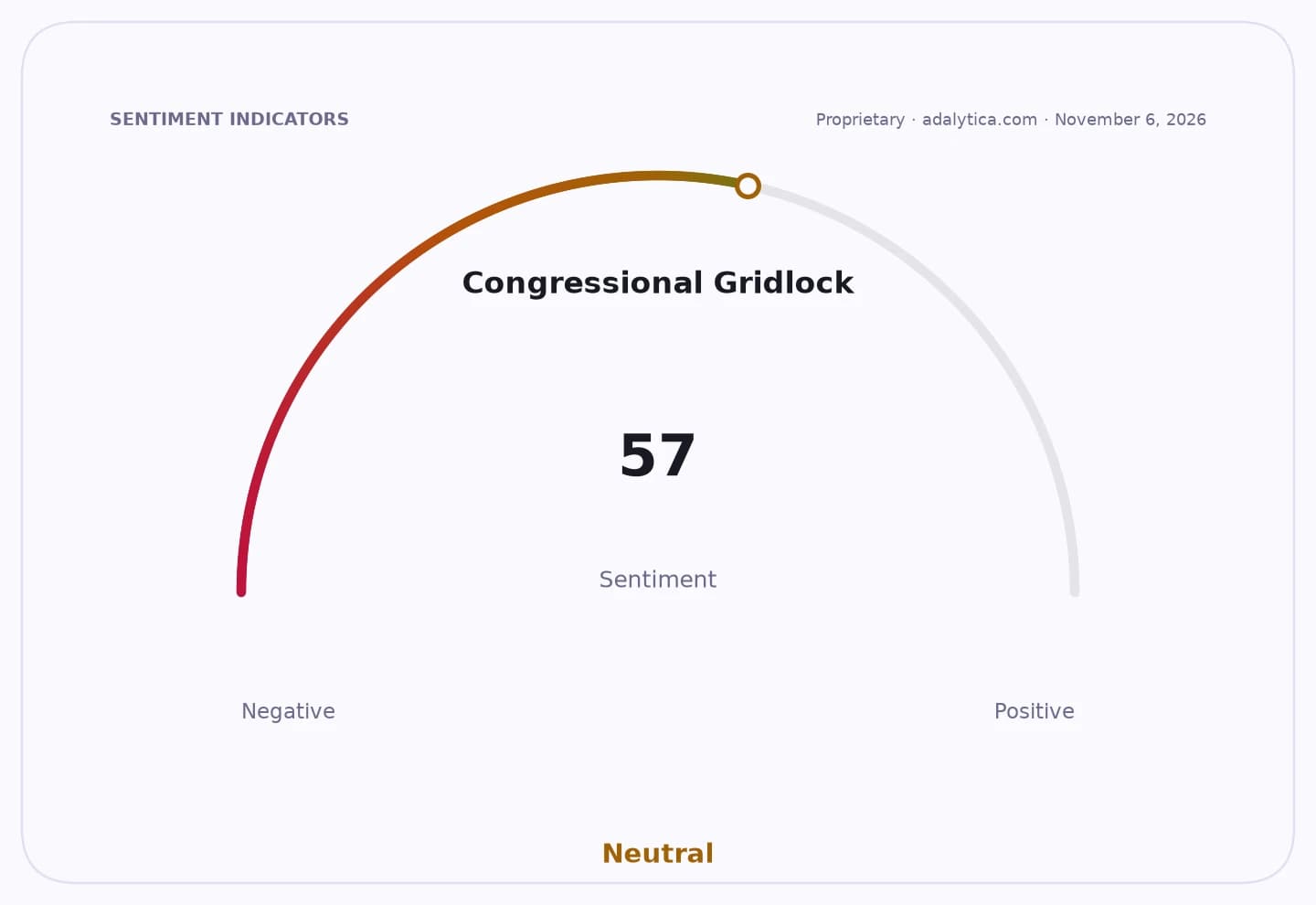
President Donald Trump’s public congratulation of Democrats after they won control of both chambers of Congress marks the most important immediate shift in Washington: a divided government that could narrow the policy agenda but also force compromise on immigration and other must-pass issues.
Trump Reacts to Democratic Congress Win
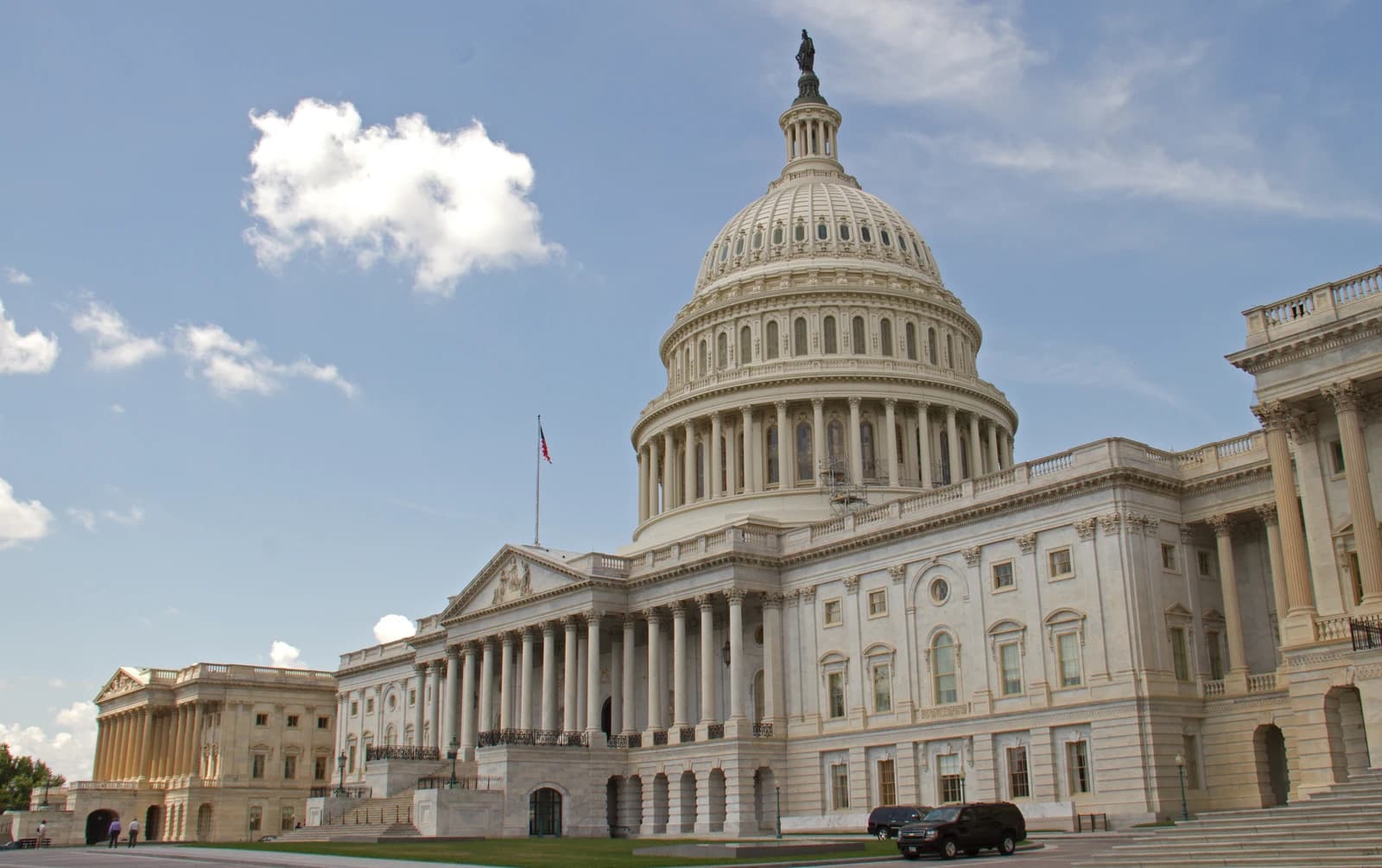
For markets, the significance is less about ceremony than about governance. A Republican loss of the House and Senate raises the odds of legislative gridlock on taxes, spending and regulation, while increasing the chance that any major policy move will depend on bipartisan bargaining. That usually lowers the near-term probability of sweeping fiscal stimulus or abrupt policy changes, but it can also reduce the risk of confrontation over budgets and shutdowns if both sides choose to cooperate.
Sentiment Indicators
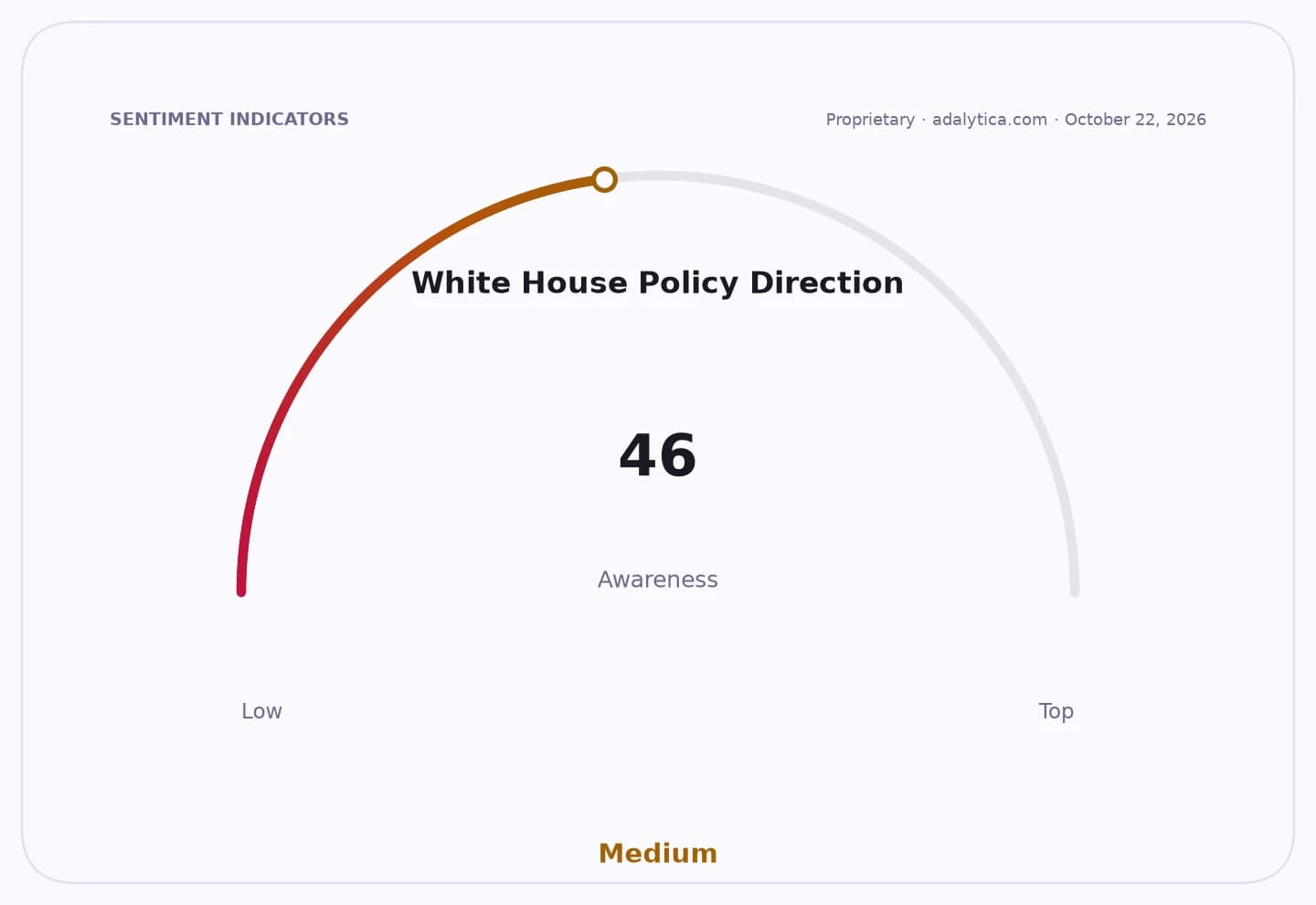
White House Policy Direction
Trump framed the result as no personal rebuke, saying Republicans had suffered because of the quality of their candidates rather than his presidency, and argued his administration still delivered “the two best years” in economic terms. The message matters because it points to continuity in his economic pitch even as the balance of power in Congress changes. It also suggests immigration could become the clearest area of compromise, which would matter for labor supply, border enforcement and sectors sensitive to migration flows, including agriculture, construction and hospitality.
The political backdrop is also feeding through to rates and risk assets. The 10-year Treasury yield was last around 4.89%, while the federal funds rate stood near 3.88%, underscoring that markets are still pricing a restrictive policy environment. The S&P 500, as tracked by SPY, fell to 737.89 after a sharp 4.4% drop on the latest close, with the fund trading below its 50-day moving average and its RSI in the mid-30s, a sign of weakening momentum. Treasuries have been steadier: TLT traded at 81.95, above its 50-day average but still below its 200-day, suggesting investors are not yet making a full-duration bet on a dramatic policy or growth shift.
The narrative for investors is that Washington is moving from election rhetoric to negotiation. That is bullish for policy stability but bearish for those expecting a fast, unified push on fiscal expansion or deregulation. For equities, the main question is whether a more cooperative Congress can preserve growth while avoiding fiscal brinkmanship. For bonds, the key issue is whether divided government restrains deficits enough to keep term premium contained. For the dollar, which Adalytica’s trade signals show at extreme fear, the market may be starting to price less policy surprise and more institutional compromise.
What to watch next is whether Trump’s willingness to work with Democrats on immigration extends to spending and budget negotiations. If it does, investors may get a more predictable policy path even if it comes with less legislative upside. If it does not, the early goodwill could fade quickly into the kind of brinkmanship that tends to rattle risk assets and lift demand for Treasuries.
| Entity | Gains | Losses |
|---|---|---|
| Democrats | ▲Leverage in Congress | ▼Need to govern under scrutiny |
| Trump administration | ▲Chance to cut a deal | ▼Agenda control |
| Immigration-focused sectors | ▲Policy clarity | ▼Uncertainty if talks fail |
| Equity bulls | ▲Lower shutdown risk | ▼Less fiscal stimulus upside |