Americans used Tuesday’s midterm elections to deliver an early economic verdict on Donald Trump’s second-term agenda, with exit polls showing widespread anger over inflation and weakening support for Republicans among several of the groups that powered his 2024 victory.
US midterms show voter anger over inflation
That matters because the vote was shaped less by ideology than by household finances. Nearly 9 in 10 voters said the cost of living was a crucial or major factor in their decision, while roughly two-thirds blamed Trump for high prices. Three-quarters said they were angry or dissatisfied with the country’s direction, a combination that suggests the affordability squeeze remains the dominant political force in the US economy even as headline inflation has eased from its peak.
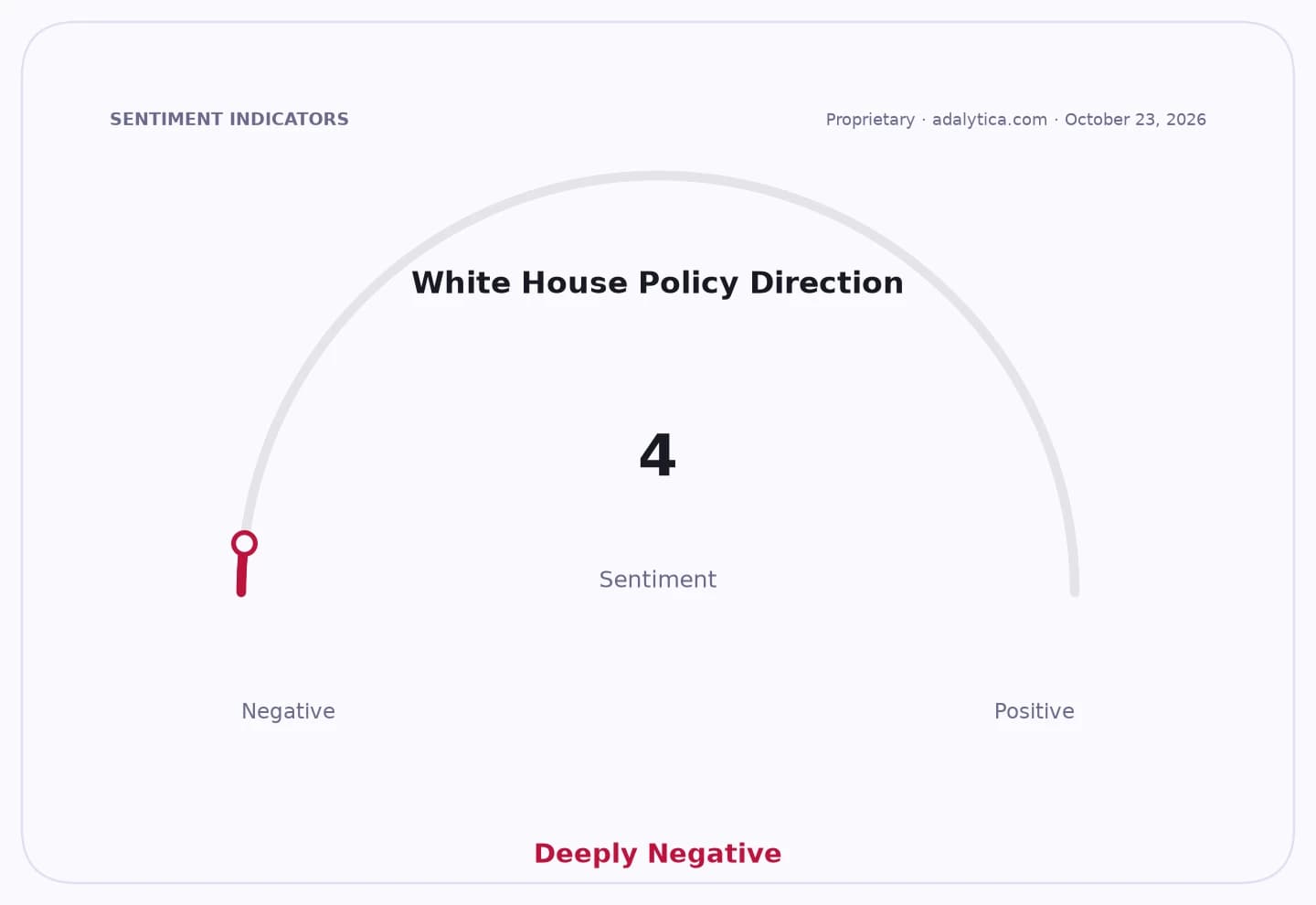
Sentiment Indicators
The results also point to a narrowing Republican coalition, which could reshape the policy outlook for the rest of Trump’s term and the 2028 race. Early exit-poll data showed sharp declines in GOP support among Black men, Latinos, younger voters, evangelical Christians and people without college degrees — all segments that helped drive Trump’s 2024 win. Support among voters aged 18-29 fell to 25% from more than 40% a year earlier, while Republican backing among Hispanics dropped to about a third from nearly half. Among Black men, it slipped to 13% from 21%.
For investors, the political signal is straightforward: affordability is again the core issue in US policy and markets, and that raises the odds of continued pressure on the White House and Congress to address prices, borrowing costs and household balance sheets. The data reinforce the view that consumers are still stretched, even with the unemployment rate around 4.2% and the economy avoiding recession. That backdrop tends to favor defensive sectors and retailers exposed to value-conscious shoppers, while limiting enthusiasm for policy swings that might worsen price pressures through tariffs or fiscal brinkmanship.
CPIAUCSL vs UNRATE — macro contextadalytica.com
Explore this data interactively — full history, time series and cross-market comparisons.
The macro implication is less about one election night than about the durability of voter discontent. If the exit polls hold up in the final count, they suggest Trump’s campaign to sell his economic record has done little to improve perceptions of the cost-of-living environment. They also hint that Republicans may struggle to replicate the coalition that delivered the White House in 2024, especially if younger and Hispanic voters remain less engaged or more willing to defect.
For markets, the immediate read-through is that consumer strain remains a live political risk, not just an economic one. That is supportive for staples and discount-oriented retailers, while potentially less favorable for discretionary spending names if households continue trading down. It also keeps pressure on policymakers to avoid steps that could re-ignite inflation or tighten financial conditions further. The next test will be whether election-day anger translates into legislative constraints on Trump’s agenda — and whether Republicans can rebuild a fraying coalition before the 2028 presidential race.
| Entity | Gains | Losses |
|---|---|---|
| Democratic candidates | ▲Anti-incumbent turnout | ▼Trump-aligned GOP |
| Value retailers | ▲Price-sensitive demand | ▼Premium discretionary sellers |
| Consumers | ▲Political focus on affordability | ▼Policy uncertainty |
| Republicans | ▲Lower turnout among older voters | ▼Youth, Latino and Black support |